Picking a marketing agency might be the highest-leverage decision you make this year. The best digital marketing companies build systems that connect traffic, leads, and revenue you can measure. The wrong one eats your budget and six months of momentum. Here is how to tell them apart before you sign anything.
What Defines the Best Digital Marketing Companies
You need more than social posts and the occasional blog article. The best digital marketing companies run integrated programs across channels and judge themselves on outcomes, not activity.
Core Competencies That Matter
Look for real capability in these areas:
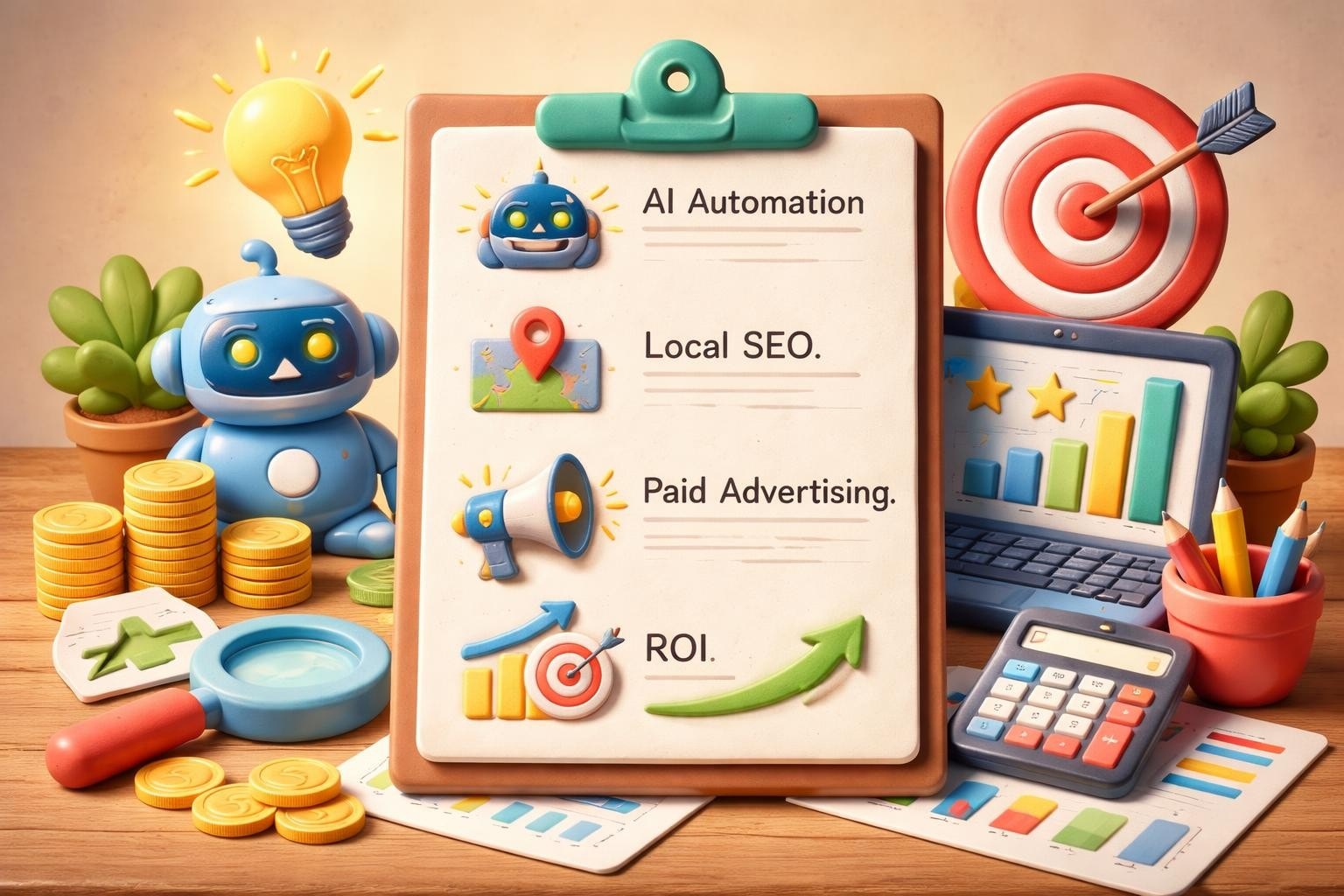
- Local search optimization that improves visibility in geographic markets
- Paid advertising management across Google Ads and Meta platforms
- Marketing automation systems that reduce manual work and increase conversion rates
- Data analytics and reporting that connect marketing activities to revenue
- AI-powered solutions for customer engagement and lead qualification
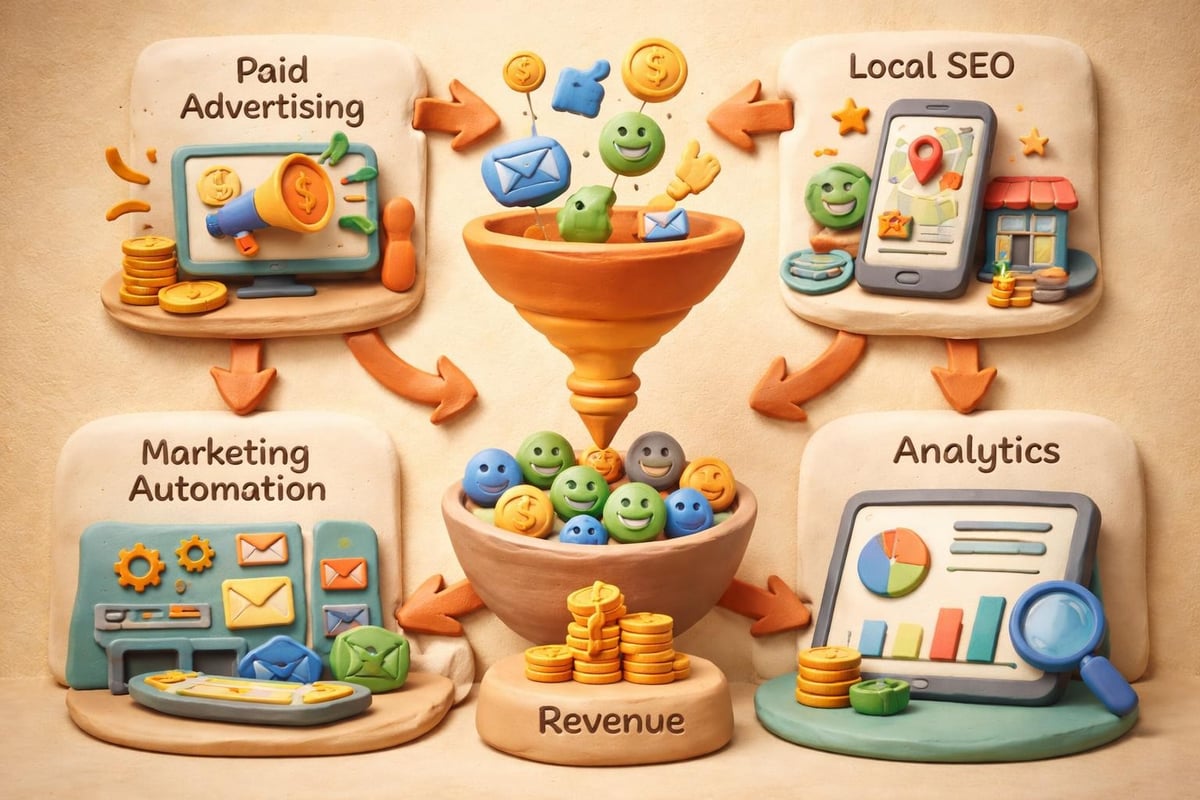
The gap between competent and exceptional usually comes down to integration. Good firms make paid media, organic search, and automation work as one system. That combination compounds in ways isolated tactics never will.
Specialization Versus General Practice
Generalists cover a lot of ground. Specialists go deep on one channel or industry. Neither is automatically better; it depends on what you need.
If you run a service business in a competitive local market, a firm that specializes in local search visibility and automation will usually beat a generalist. They know geographic targeting, review management, and how local customers actually convert.
Essential Services and Capabilities
What an agency sells tells you what it values. Here is what should be on the menu.
Search Engine Optimization and Local Visibility
SEO still carries the load for most local businesses. Treat it as a discipline, not a checklist. A real program includes:
- Technical website optimization ensuring fast load times and mobile responsiveness
- Content strategy development targeting commercial intent keywords
- Local citation management across directories and review platforms
- Google Business Profile optimization for local pack visibility
- Link building campaigns that establish domain authority
According to recent digital marketing trends, AI now shapes how leading agencies do SEO: finding content gaps, predicting ranking opportunities, and optimizing pages at scale.
| Service Component | Impact on Results | Timeline to Results |
|---|---|---|
| Technical SEO | Foundation for all organic growth | 2-3 months |
| Local Citations | Improved local pack rankings | 1-2 months |
| Content Marketing | Organic traffic and authority | 4-6 months |
| Link Building | Domain authority and rankings | 3-6 months |
Paid Advertising Management
Good agencies build paid campaigns around your customer acquisition cost and lifetime value, not around spending the budget.
Google Ads catches people ready to buy. Meta builds awareness and retargets visitors who did not convert. The best digital marketing companies connect both to landing pages built to convert.
Then they test. Ad copy, audiences, bidding, week after week. That discipline is what separates managing results from managing ad spend.
Marketing Automation and AI Integration
Automation is where agencies separate themselves now. As AI-driven marketing automation matures, the strong firms use it to handle routine customer interactions without losing the personal touch.
Advanced automation platforms now include:
- AI voice agents that qualify inbound calls and schedule appointments
- Automated messaging sequences that nurture leads through the sales cycle
- CRM integration connecting marketing activities to sales outcomes
- Behavior-triggered campaigns that respond to prospect actions in real-time
The rise of vibe marketing shows where this is headed: creative work with systems behind it. The best firms keep the brand personality and let the technology do the scaling.

Evaluation Criteria for Agency Selection
A slick pitch deck is not evidence. Evaluate the best digital marketing companies on a few concrete dimensions before you commit.
Performance Metrics and Reporting
Transparency is the first filter. Skip vanity metrics like impressions and followers. Ask what they track:
- Cost per qualified lead across all channels
- Conversion rates from visitor to lead to customer
- Return on ad spend for paid campaigns
- Local search ranking positions for target keywords
- Revenue attribution by marketing channel
Ask to see a sample report in the first conversation. If a firm gets vague about metrics or leans on “brand awareness,” it probably cannot measure its own work.
Industry Experience and Case Studies
Relevant experience shortens the learning curve. Ask for case studies from businesses like yours.
For service businesses, an agency that knows small business marketing challenges understands appointment-based sales, local competition, and what a customer is actually worth. That knowledge shows up in results faster.
Technology Stack and Proprietary Systems
Tools reveal how an agency actually operates. Ask about:
- Their CRM platform and integration capabilities
- Marketing automation tools and customization options
- Analytics and attribution systems
- Proprietary software or processes they’ve developed
- AI tools they use for optimization and reporting
The best digital marketing companies build processes around their technology, and some build their own tools. That usually beats an agency running everything off the shelf.
Regional Considerations and Local Market Expertise
Remote collaboration works fine, but local market expertise still counts for more than most owners expect.
Benefits of Regional Agency Partnerships
An agency near your market knows the local competition, the seasonal swings, and the community. That gets you:
- In-person strategy sessions that build stronger working relationships
- Local market knowledge informing keyword selection and content strategy
- Community connections that support link building and partnership opportunities
- Timezone alignment facilitating communication and campaign management
On the Colorado Front Range, this matters. Denver competition looks nothing like Colorado Springs competition, and a local agency adjusts for that without being told.
National Versus Regional Agency Models
National firms bring big resources and established processes. Regional agencies bring personal attention and local insight. Both can work.
| Agency Type | Advantages | Potential Limitations |
|---|---|---|
| National Firms | Extensive resources, proven systems, multiple specialists | Higher costs, less personalization, potential account turnover |
| Regional Agencies | Local expertise, personalized service, competitive pricing | Smaller teams, potentially narrower service range |
| Industry Specialists | Deep vertical knowledge, established best practices | May lack flexibility for unique business models |
Need specialized technical firepower? A national firm might fit. Want local visibility and someone who picks up the phone? Go regional.
Pricing Models and Contract Structures
Pricing tells you how an agency thinks. Here is what to expect before you look at a single proposal.
Common Pricing Approaches
Most agencies price one of four ways:
- Monthly retainer agreements providing ongoing services at fixed rates
- Project-based pricing for specific campaigns or deliverables
- Performance-based arrangements tying fees to results
- Hourly consulting for advisory services or specialized projects
Retainers make sense for full programs because momentum builds month over month. Good firms design the retainer around your business goals and adjust the mix as priorities shift.
Investment Expectations and ROI
Underfunded marketing fails slowly and expensively. According to industry growth trends, businesses that fund digital channels properly consistently outperform those treating marketing as an afterthought.
For small to mid-sized businesses, a real multi-channel program usually runs $3,000 to $10,000 a month. That covers strategy, execution, content, and ongoing optimization.
The right conversation is about return, not cost. An agency should be able to show you the path from their work to your revenue.
Emerging Trends Shaping Top Agencies
The industry keeps moving. Here is what the strongest agencies are doing about it.
AI and Machine Learning Applications
AI moved from experiment to table stakes. The creator economy’s growth shows how AI tools let small teams compete with much larger ones.
Practical AI applications worth asking about:
- Predictive lead scoring identifying prospects most likely to convert
- Automated content generation for product descriptions and basic copy
- Chatbot and voice agent systems handling initial customer inquiries
- Bid optimization algorithms improving paid advertising efficiency
- Sentiment analysis monitoring brand reputation across review platforms
If an agency talks about AI in the future tense, they are behind. Ask what they are running in client accounts today.
First-Party Data and Privacy-Centric Marketing
Privacy rules and browser changes killed easy third-party tracking. Strong agencies now build on first-party data and permission-based marketing.
That means email lists, SMS, and a CRM that earns contact info with genuinely useful content and offers. People who opt in convert better than people who got interrupted.
Questions to Ask During Agency Evaluation
The right questions expose an agency fast. Here is a working list.
Strategy and Process Inquiries
Start with process:
- How do you approach strategy development for new clients?
- What’s your typical campaign launch timeline?
- How frequently do you review and optimize campaigns?
- What role do clients play in ongoing strategy decisions?
- How do you handle underperforming campaigns?
Strong firms explain exactly how they work while staying flexible. Vague talk about “custom approaches” with no methodology behind it is a warning sign, not a selling point.
Communication and Reporting Standards
Then check how they communicate:
- What’s your standard reporting schedule and format?
- Who will be our primary point of contact?
- How quickly do you typically respond to questions?
- What tools do you use for project management and collaboration?
- How do you handle emergency situations or urgent requests?
Clear communication rules upfront prevent ugly surprises later. Firms that favor data-driven approaches tend to deliver more substance in their reporting than creative-first shops.
Technical Capabilities and Resources
Technical depth decides whether the strategy actually ships:
| Capability Area | Key Questions | Why It Matters |
|---|---|---|
| Technical SEO | Do you have in-house developers? What technical audits do you perform? | Complex technical issues require development expertise |
| Paid Media | What certifications do your media buyers hold? How large are typical accounts you manage? | Certification and experience indicate platform expertise |
| Analytics | What attribution models do you use? How do you track offline conversions? | Sophisticated analytics connect marketing to revenue |
| Automation | What CRM platforms do you specialize in? Can you build custom integrations? | Integration capabilities determine automation potential |
In-house skills beat subcontracted ones. Agencies that keep technical work internal move faster and control quality better.
Red Flags to Avoid
Some agencies will cost you a year and a pile of money. The warning signs are consistent.
Unrealistic Promises and Guarantees
Anyone guaranteeing rankings or instant results is either green or lying. Digital marketing has too many variables for guarantees. Honest firms talk about probable outcomes based on past work, and they say “it depends” when it depends.
“Page one rankings” without a keyword or timeframe attached is a parlor trick. Ranking for a term nobody searches helps nobody.
Lack of Transparency
If an agency will not explain its methods, assume the methods would not survive daylight. Good firms enjoy talking shop.
Warning signs include:
- Refusing to provide access to ad accounts or analytics
- Using vague language about “proprietary methods”
- Avoiding specific questions about tactics or results
- Requiring long-term contracts without trial periods
- Inability to explain strategy in clear, non-technical terms
Secretive firms deliver disappointing results often enough that you should treat secrecy itself as the result.
Overemphasis on Vanity Metrics
Follower counts and impressions are context, not results. They do not pay invoices.
Push every conversation toward qualified leads, cost per acquisition, conversion rates, and return on investment. Those numbers tell you whether the marketing works.
Building Successful Agency Partnerships
Signing the contract is the start, not the finish. The best digital marketing companies do their best work with clients who show up to the partnership.
Setting Clear Expectations
Get aligned before the first campaign launches:
- Primary business objectives and how marketing supports them
- Budget parameters and flexibility for testing new opportunities
- Communication preferences and meeting schedules
- Decision-making authority and approval processes
- Success metrics and reporting requirements
A good agency will help you set realistic targets from benchmarks and past client results. That upfront honesty prevents the month-four disappointment conversation.
Providing Strategic Input
Nobody knows your customers like you do. Share what you know about your market, your competitors, and your constraints.
Strategy sessions that mix agency expertise with owner knowledge beat agencies working in a vacuum, every time. Good firms ask for your input instead of presenting finished plans.
Measuring Partnership Success
Keep score on the partnership itself, not just the campaigns:
- Are deliverables consistently meeting quality standards?
- Does communication meet agreed-upon responsiveness expectations?
- Are recommendations aligned with business priorities?
- Does the agency proactively identify opportunities?
- Is the partnership generating positive return on investment?
Run a partnership review every quarter. Agencies worth keeping welcome the feedback.
And if you need B2B digital strategies or another specialized industry approach, look for demonstrated wins in that specific area.
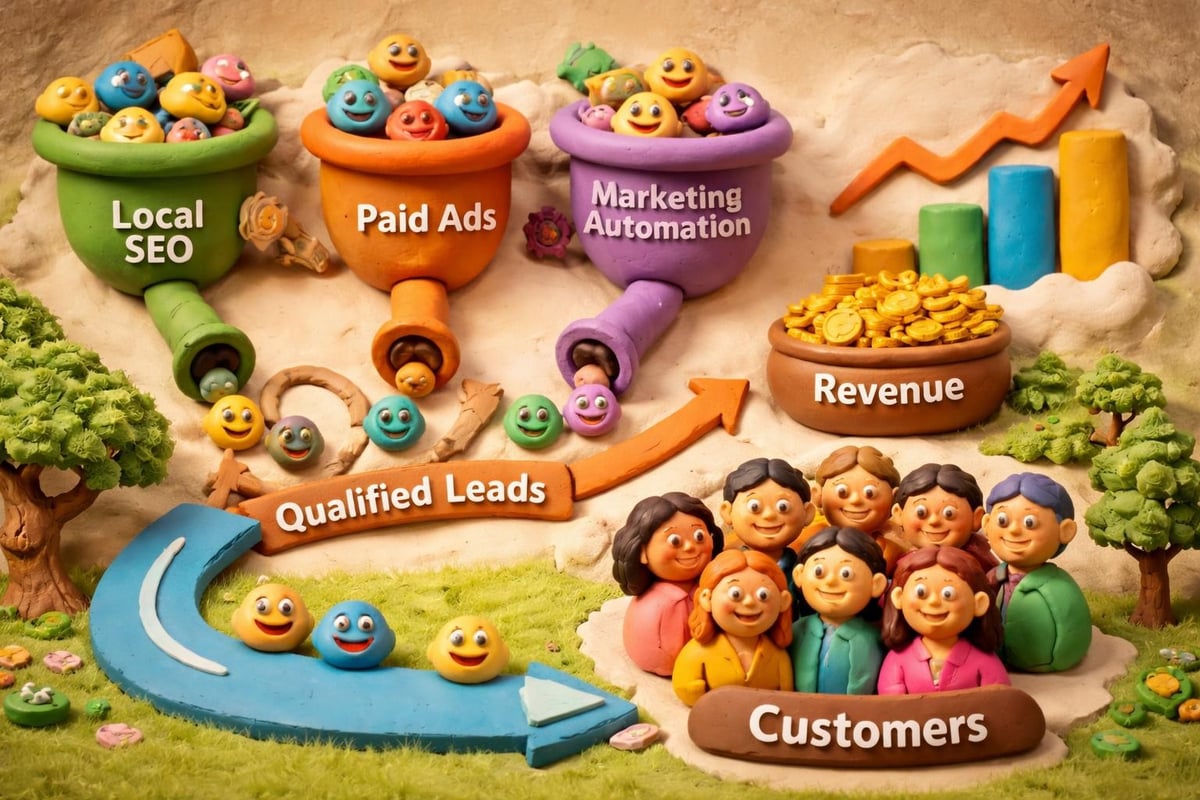
That is the whole checklist: capabilities, communication, transparency, and fit. The best digital marketing companies pair proven strategy with AI automation and prove it with numbers. If you want predictable lead flow from local SEO, paid ads, and marketing automation, Pioneer Marketing does exactly that for Colorado Front Range businesses (full disclosure: that’s us).