Businesses today face intense competition for online visibility, making professional SEO expertise more valuable than ever. Search engine optimization companies specialize in helping brands rank higher in search results, attract qualified traffic, and convert visitors into customers. These agencies combine technical knowledge, content expertise, and data analysis to navigate the complexities of modern search algorithms. For small and mid-sized businesses particularly, partnering with the right SEO firm can mean the difference between obscurity and sustainable growth in local and national markets.
Understanding What Search Engine Optimization Companies Do
Search engine optimization companies provide specialized services designed to improve website visibility across Google, Bing, and other search platforms. Their core mission centers on increasing organic rankings for keywords that matter to a business's bottom line.
Most agencies begin with comprehensive technical audits that identify crawling issues, page speed problems, mobile usability concerns, and structural deficiencies that prevent proper indexing. These technical foundations must be solid before any content or link-building strategy can succeed.
Core Service Categories
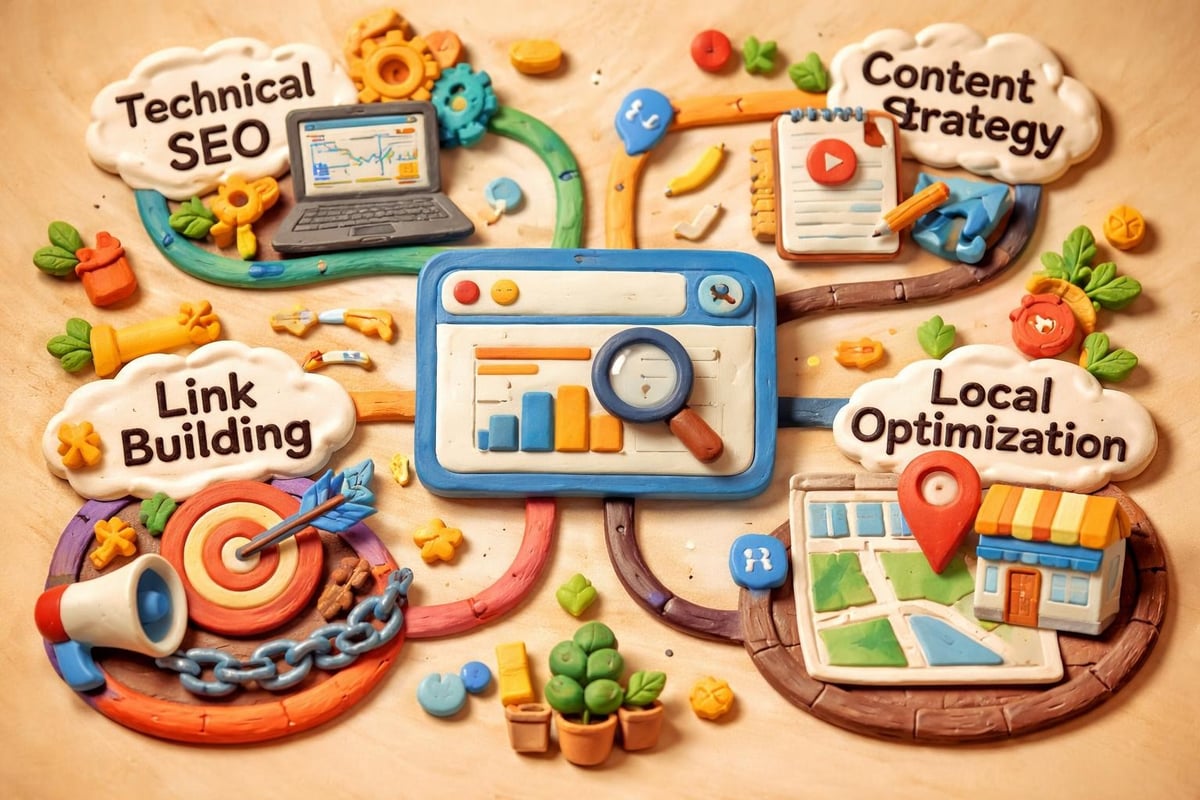
Professional SEO firms typically organize their offerings around several key disciplines:
- Technical SEO: Site architecture, crawlability, indexation management, schema markup, Core Web Vitals optimization
- On-Page Optimization: Keyword research, content optimization, meta data refinement, internal linking strategies
- Content Development: Blog articles, service pages, location pages, pillar content, multimedia assets
- Link Building: Digital PR, outreach campaigns, partnership development, citation building
- Local SEO: Google Business Profile optimization, local citation management, review generation, location-based content
- Analytics and Reporting: Performance tracking, conversion monitoring, competitive analysis, strategic recommendations
The most effective search engine optimization companies integrate these services into cohesive strategies rather than treating them as isolated tactics. Search Engine Journal regularly publishes insights on how these components work together to drive measurable results.
Pricing Models and Investment Expectations
Understanding how search engine optimization companies structure their fees helps businesses budget appropriately and compare proposals effectively.
Common Pricing Structures
| Pricing Model | Typical Range | Best For | Considerations |
|---|---|---|---|
| Monthly Retainer | $2,000-$10,000+ | Ongoing campaigns with consistent work | Predictable budgeting, relationship continuity |
| Project-Based | $5,000-$50,000 | Site migrations, audits, specific initiatives | Defined scope, clear deliverables |
| Hourly Consulting | $150-$300/hour | Strategic guidance, training, reviews | Flexibility, expertise on demand |
| Performance-Based | Variable | Results-focused partnerships | Risk sharing, alignment of incentives |
Most digital marketing agencies recommend monthly retainers for businesses seeking sustained growth. SEO requires consistent effort across months and quarters, making one-time projects less effective for competitive markets.
What Influences Cost
Several factors determine where a specific engagement falls within these ranges:
Market competitiveness plays a significant role. Ranking for "emergency plumber Denver" requires substantially more investment than "custom woodworking Colorado Springs" due to search volume and competition levels.
Geographic scope matters considerably. Local SEO campaigns targeting a single city cost less than regional or national initiatives spanning multiple markets. Businesses serving local service professionals typically face different budget requirements than e-commerce brands competing nationally.
Current website condition affects initial investment. Sites with technical debt, manual penalties, or poor content foundations require more upfront work before optimization efforts gain traction.
Industry complexity influences pricing too. Some sectors like legal, medical, and financial services face stricter content requirements and quality standards that increase production costs.
Selecting the Right SEO Partner
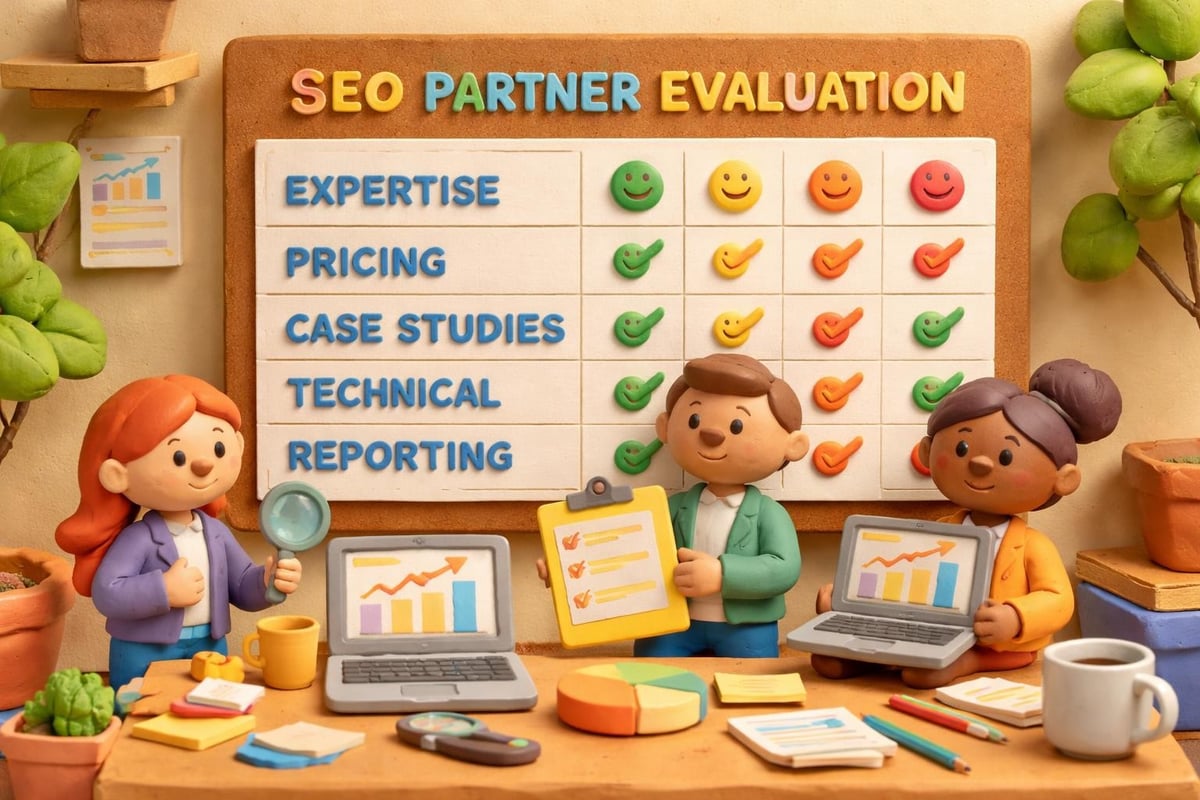
The decision process for choosing among search engine optimization companies should follow a methodical framework that evaluates both capability and cultural fit.
Essential Evaluation Criteria
Start by examining the agency's track record in your specific industry or business model. Firms with relevant experience understand sector-specific challenges, competitive dynamics, and buyer behavior patterns that generalists may miss.
Request detailed case studies showing actual results:
- Starting position: Baseline rankings, traffic, and conversions
- Strategy implemented: Specific tactics deployed over what timeline
- Results achieved: Ranking improvements, traffic growth, lead generation increases
- Timeframe: How long results took to materialize
- Sustainability: Whether gains persisted beyond initial campaign phases
Verify technical competency by discussing specific tools and methodologies. Professional agencies use platforms like Semrush for comprehensive competitive research and performance tracking. They should articulate clear processes for technical audits, keyword research, content optimization, and link acquisition.
Red Flags to Avoid
Certain warning signs indicate search engine optimization companies that may not deliver sustainable results:
- Guaranteed rankings: No agency can guarantee specific positions due to algorithm complexity and competitive factors
- Black-hat tactics: Link schemes, keyword stuffing, cloaking, and other manipulative techniques risk penalties
- Opaque reporting: Vague metrics without clear connections to business outcomes signal weak accountability
- One-size-fits-all approaches: Cookie-cutter strategies ignore unique business contexts and competitive landscapes
- Unrealistic timelines: Promises of immediate results contradict SEO's inherently gradual nature
The Modern SEO Landscape and AI Integration
Search engine optimization companies now navigate a fundamentally different environment than even three years ago. Generative AI and large language models have transformed both how people search and how search engines deliver results.
Adapting to Generative Search
Traditional SEO focused exclusively on ranking in the ten blue links. Today's strategies must account for AI-generated overviews, featured snippets, and conversational search interfaces. Research on generative engine optimization demonstrates how content creators can optimize for visibility within AI-generated responses.
Forward-thinking agencies now consider:
- Answer-focused content: Structured information that AI models can extract and synthesize
- Entity optimization: Clear signals about people, places, products, and concepts mentioned in content
- Contextual depth: Comprehensive topic coverage that supports both traditional and AI-powered search
- Conversational queries: Content that addresses how people actually ask questions, not just keyword variations
The shift toward AI-powered search engines requires search engine optimization companies to balance traditional ranking factors with new optimization paradigms designed for generative experiences.
Automation and Efficiency Tools
Leading agencies leverage AI for efficiency without sacrificing quality. Content generation platforms like Writesonic assist with first drafts, research briefs, and content expansion while human expertise provides strategic direction and quality control.
Automation now handles many repetitive tasks:
- Technical monitoring and alert systems
- Rank tracking and performance reporting
- Competitor analysis and gap identification
- Content brief creation and outline development
- Local citation management and consistency checks
This technological leverage allows search engine optimization companies to deliver more comprehensive service at sustainable price points, particularly benefiting small businesses that previously couldn't afford enterprise-level SEO.
Local SEO Specialization
For businesses serving specific geographic markets, local search optimization delivers disproportionate value compared to broader SEO investments. Small business marketing increasingly depends on dominating local search results where purchase intent runs highest.
Google Business Profile Mastery
The foundation of local visibility starts with Google Business Profile optimization. Professional search engine optimization companies implement systematic approaches:
| Optimization Element | Impact on Rankings | Implementation Priority |
|---|---|---|
| Category selection | High | Critical first step |
| Business description | Medium | Complete during initial setup |
| Photos and videos | High | Ongoing content addition |
| Posts and updates | Medium | Weekly publishing schedule |
| Review generation | Very High | Continuous process |
| Q&A management | Medium | Monitor and respond weekly |
Review velocity and quality particularly influence local pack rankings. Agencies help businesses develop systematic review request processes, respond professionally to all feedback, and leverage positive reviews in marketing materials.
Citation Building and Consistency
Local search engine optimization companies manage business information across hundreds of directories, ensuring name, address, and phone number (NAP) consistency. Inconsistent citations confuse search algorithms and dilute ranking signals.
Beyond basic directories, strategic citation building targets industry-specific platforms, local business associations, and high-authority regional sites that pass meaningful ranking value.
Integration with Broader Marketing Strategies
The most effective search engine optimization companies don't operate in isolation. They connect SEO efforts to paid advertising, conversion optimization, and marketing automation for multiplicative impact.
Coordinating Organic and Paid Channels
SEO and paid advertising work synergistically when properly coordinated. Keyword research informs both organic content development and Google Ads campaign structure. High-performing paid keywords validate topics worth pursuing through content, while organic rankings reduce cost-per-click for brand terms.
Retargeting strategies benefit from organic traffic data. Visitors who arrive through search often demonstrate higher intent and conversion readiness compared to cold prospecting audiences.
Conversion-Focused Optimization
Rankings mean nothing without conversions. Professional agencies design SEO strategies around business outcomes, not just traffic metrics. This requires:
- Landing page optimization aligned with user intent
- Clear calls-to-action that match search query goals
- Trust signals like reviews, credentials, and case studies
- Mobile experiences optimized for on-the-go conversions
- Speed and usability improvements that reduce friction
Business-to-business marketing agencies particularly emphasize lead quality over volume, recognizing that B2B sales cycles require nurture sequences and relationship development.

Measuring Success and ROI
Search engine optimization companies should provide transparent reporting that connects activities to business outcomes. Sophisticated measurement frameworks go beyond vanity metrics to demonstrate actual value creation.
Key Performance Indicators
Effective dashboards track multiple dimensions of SEO performance:
- Visibility metrics: Ranking positions, search impression volume, featured snippet captures
- Traffic metrics: Organic sessions, new users, engaged sessions, scroll depth
- Engagement metrics: Pages per session, time on site, bounce rate by page type
- Conversion metrics: Form submissions, phone calls, chat initiations, purchases
- Revenue metrics: Lead value, customer acquisition cost, lifetime value attribution
The most actionable reports segment performance by page type, topic cluster, and conversion pathway rather than presenting site-wide aggregates that obscure specific insights.
Attribution Challenges
SEO rarely functions as the sole touchpoint in customer journeys. Multi-touch attribution models help search engine optimization companies demonstrate their contribution within complex buying processes.
Tools like Conductor provide enterprise-grade analytics for understanding how organic search interactions influence downstream conversions, even when other channels receive last-click credit.
Industry-Specific Considerations
Different business models require adapted approaches from search engine optimization companies. Effective agencies recognize these nuances and customize strategies accordingly.
Service-Based Businesses
Local service providers like contractors, medical practices, and professional services prioritize geographic relevance over traffic volume. Their SEO strategies emphasize:
- Service area pages targeting specific neighborhoods and suburbs
- Emergency and time-sensitive keyword targeting
- Review generation and reputation management
- Google Business Profile optimization for Maps visibility
- Content addressing common customer questions and concerns
E-Commerce Optimization
Online retailers face unique technical and content challenges. Product page optimization, category structure, faceted navigation, and duplicate content management require specialized expertise.
Multi-Location Businesses
Franchises and companies with multiple physical locations need scalable systems for maintaining localized content, managing individual Google Business Profiles, and building location-specific authority without creating duplicate content issues.
The Evolution of Search and Future Considerations
As digital marketing continues growing, search engine optimization companies must adapt to evolving technologies and user behaviors that reshape the competitive landscape.
Voice search, visual search, and conversational AI represent more than incremental changes. They fundamentally alter how people discover information and make purchasing decisions. Forward-thinking agencies already incorporate these considerations into content strategy and technical implementation.
Research on role-augmented generative search optimization suggests that future SEO success will depend on understanding how AI systems interpret content context, authority signals, and user intent in increasingly sophisticated ways.
The agencies that thrive will combine deep technical expertise with strategic business acumen, helping clients navigate complexity while maintaining focus on measurable outcomes. They'll leverage automation for efficiency while applying human judgment to strategy, creativity, and relationship building.
Staying current requires continuous learning. Resources like Search Engine Watch help professionals monitor algorithm updates, industry trends, and emerging best practices that inform strategic decisions.
Search engine optimization companies must also demonstrate value through economic uncertainty. Businesses increasingly demand clear ROI justification for marketing investments, making transparent reporting and outcome-focused strategies essential rather than optional.
The most successful partnerships develop when agencies function as true strategic advisors rather than order-taking vendors. This requires understanding client business models, competitive dynamics, and growth objectives beyond simple traffic increases.
Search engine optimization companies provide essential expertise for businesses competing in crowded digital markets, combining technical knowledge, content strategy, and data analysis to drive sustainable visibility and growth. The right agency partnership transforms SEO from a cost center into a predictable lead generation system that scales with your business. Pioneer Marketing specializes in local SEO and AI-driven marketing automation for small and mid-sized businesses across the Colorado Front Range, delivering measurable results through data-driven strategies that connect traffic, leads, and revenue.