


Almost every customer search starts on Google now, and if your business doesn’t show up for searches in your own city, your competitors get the call. A local search engine optimization company exists to fix exactly that. Here are seven evergreen local SEO tips we use with our own clients: practical, proven, and built for steady growth.
Understanding the Fundamentals of Local SEO
Local SEO is how businesses that serve a specific area get found by the people in it. Get the fundamentals right and you have an edge most of your competitors never bother to build.
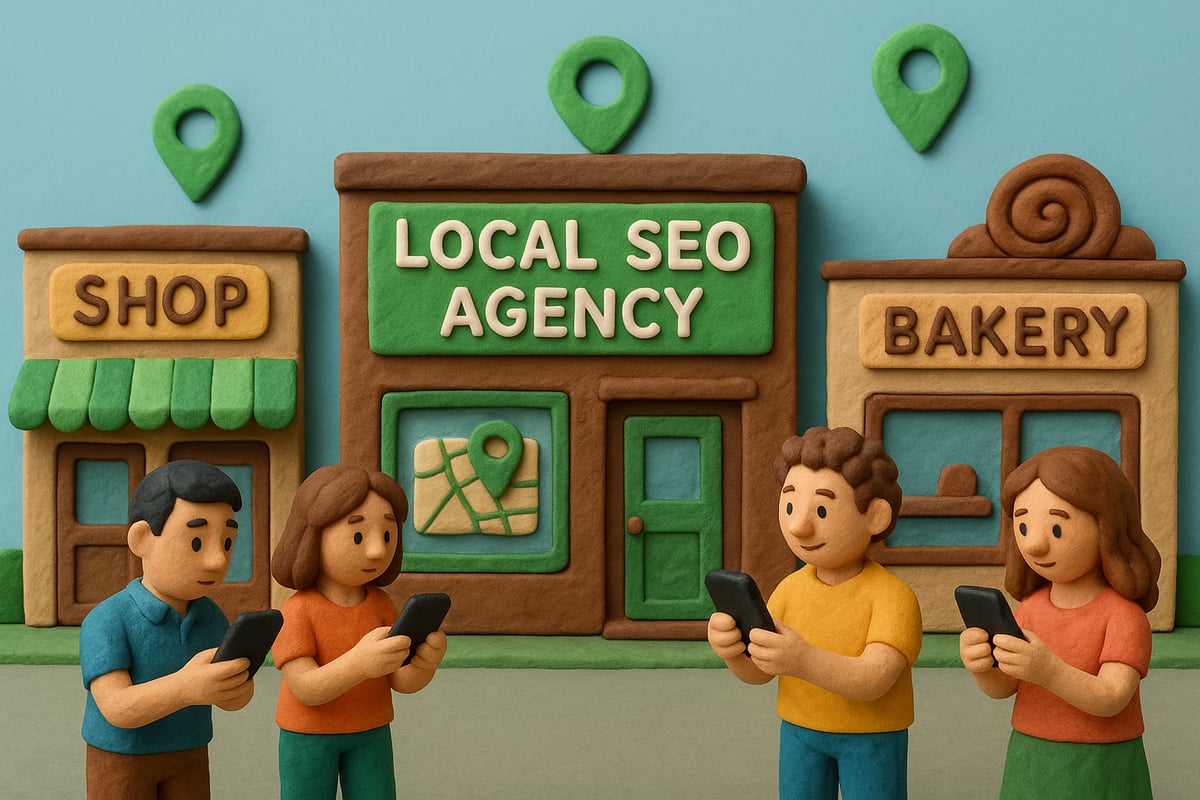
What is Local SEO and Why Does It Matter?
Local SEO is search engine optimization focused on a geographic area. Instead of competing with the whole country, you compete for the searches happening near your shop or service area.
The difference is intent. Someone searching “best coffee shop near me” is ready to act, and Google shows them a map, business profiles, and reviews for their exact location.
That visibility matters most for brick-and-mortar stores and service businesses. Showing up in Google Maps, the Local Pack, and organic results drives calls and foot traffic. And since 46% of Google searches have local intent, the audience is enormous.
The behavior data seals it: 78% of mobile local searches lead to an offline purchase. Visibility in local search converts to revenue faster than almost any other channel.
Key Local Ranking Factors
Google weighs three things in local rankings: relevance, distance, and prominence. Your job is to optimize all three.
Start with your Google Business Profile. Claim it, complete every field, pick accurate categories, add real photos, and keep it updated. Freshness signals trust.
Keep your NAP (Name, Address, Phone Number) identical everywhere. Inconsistent citations confuse search engines and drag rankings down. Tools like Moz Local and Yext make the cleanup manageable.
Reviews feed the algorithm and the customer’s decision at the same time. Ask happy customers to leave them, and respond to every one.
Local backlinks from organizations, media, and directories build authority. On the site itself, local keywords, schema markup, and location pages tell Google exactly where you belong.
Here’s the summary:
| Factor | Why It Matters |
|---|---|
| Google Business Profile | Core for map pack visibility and accuracy |
| NAP Consistency | Prevents confusion, boosts trust |
| Reviews & Ratings | Drives rankings and builds reputation |
| Local Backlinks | Increases authority and local relevance |
| On-Page Signals | Enhances keyword targeting and context |
We’ve watched this work: after cleaning up citations and business profiles for one client, their map pack rankings and local traffic jumped within weeks. Fundamentals first, always.
7 Essential Local Search Engine Optimization Company Tips
Here are the seven tips any local search engine optimization company worth hiring will run for you. None of them are glamorous. All of them work.

1. Optimize and Regularly Update Your Google Business Profile
Your Google Business Profile is the single highest-leverage asset in local search. Claim it, verify it, and complete every section: hours, categories, attributes, photos.
Then keep it alive. Post weekly about offers, events, or new work. Answer questions in the Q&A. Check the Insights tab to see how people find you.
Reviews belong here too: ask for them and respond to all of them. One local restaurant grew foot traffic 35% just by posting consistently and engaging with reviews.
A fresh, complete profile wins Local Pack and Maps placements that a neglected one never will. Make updating it a routine, not a project.
2. Ensure NAP Consistency Across All Online Listings
NAP means Name, Address, Phone Number, and it needs to match everywhere your business appears online. Mismatches cost rankings and confuse customers.
Audit your listings with Moz Local or Yext. Fix spelling differences, old numbers, and outdated addresses on Yelp, Bing Places, Apple Maps, and your industry directories.
Watch for duplicate listings too. One citation cleanup gave a service provider a measurable rankings boost almost immediately.
Consistency is boring and it works. It underpins everything else in local SEO.
3. Leverage Localized Content Marketing
Content about your own community positions you as the local authority. Build a landing page for each service area, optimized with the keywords people there actually use.
Blog about local events, news, and projects. Add schema markup so search engines can parse your location details.
Partnering with local organizations or influencers extends your reach and strengthens the local signal at the same time.
One law firm grew organic traffic 50% after publishing neighborhood guides and local resource lists. Write about where you live and work. It pays.
4. Build High-Quality Local Backlinks
Backlinks still move local rankings. The good ones come from local businesses, media, and community organizations.
Sponsor a community event. Join the chamber of commerce. Offer your expertise to local blogs and news sites.
Build things worth linking to: local guides, checklists, useful data. Study competitors’ backlinks for ideas, and skip anything spammy.
One retailer hit top-three rankings after landing local press coverage. Local links tell Google this business is part of this place.
5. Encourage and Manage Customer Reviews Effectively
Reviews decide local pack rankings and buying decisions. Build a simple system: ask by email, text, or in person right after the job.
Respond to everything, good and bad, professionally. Platforms like GatherUp or Birdeye can automate the asking.
Show your best reviews on your website and social channels. Since 88% of consumers read Google Reviews before visiting a local business, they’re often the deciding factor before anyone contacts you.
One home services company doubled its call volume after launching a review campaign. Few marketing efforts pay back that directly.
6. Implement On-Page Local SEO Best Practices
On-page work makes your site legible to search engines: title tags, meta descriptions, and headers with local keywords used naturally.
Embed a Google Map, add location schema, and give every service area its own page.
Link related pages together, keep the site fast on phones, and add an FAQ answering the questions locals actually ask.
A multi-location clinic lifted rankings and user experience by building tailored pages per city. Structure pays.
7. Track, Measure, and Adapt Your Local SEO Strategy
Set up Google Analytics and Search Console. Add call tracking and UTM parameters so you know which campaign produced which lead.
Check keyword rankings, traffic, and conversion rates on a schedule. Audit citations, reviews, and content while you’re at it.
Let the data steer. One service provider raised ROI simply by shifting effort to the keywords that were already converting.
Search algorithms and customer habits keep moving. Tracking is how you move with them instead of finding out six months late.
Advanced Strategies for Competitive Local Markets
In crowded markets, fundamentals get you in the game and advanced tactics win it. This is where a local search engine optimization company earns its fee.

Hyperlocal Targeting and Personalization
Hyperlocal targeting narrows your aim to neighborhoods or even streets: geofenced ads, location-aware website content, offers segmented by area.
Messages tuned to micro-communities consistently outperform generic ones. For more precision plays, see these Local SEO agency strategies.
Voice Search and Mobile Optimization
Voice search rewards conversational, long-tail phrasing, because people speak differently than they type. Fast, mobile-friendly pages are the price of entry.
Structure content to win featured snippets and you capture the voice assistant answers too.
Local SEO Automation and AI Tools
Automation and AI handle the repetitive parts: citations, review requests, reporting, keyword research, competitor analysis.
That efficiency compounds in competitive markets. Local SEO in Colorado Springs shows how businesses here used AI tools to pull ahead.
Common Local SEO Mistakes to Avoid
Most local SEO failures come from a handful of avoidable mistakes, and a local search engine optimization company spends half its time undoing them. Check yourself against this list.
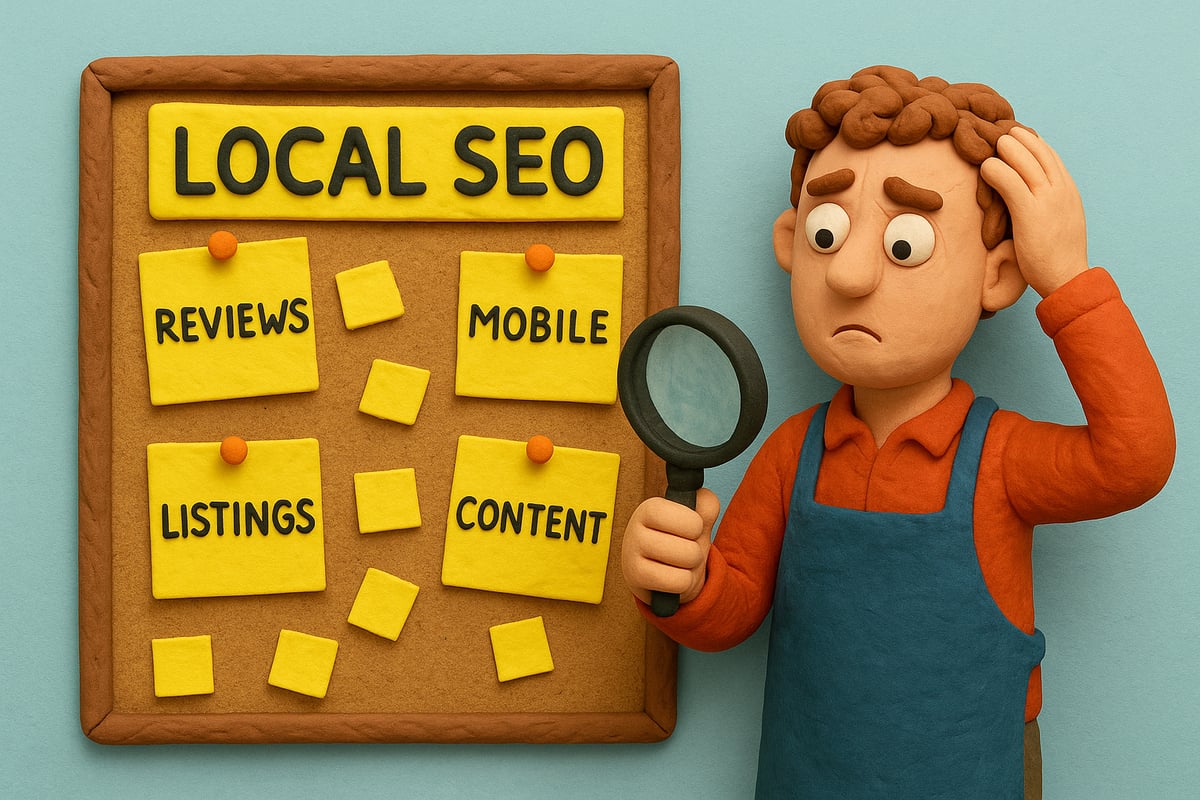
Letting your Google Business Profile go stale is the most common one. Wrong hours or an incomplete profile quietly bleeds visibility.
Ignoring reviews, or replying slowly, damages both reputation and rankings. For ways to strengthen the trust signals around your business, see Boosting local service SEO with EEAT.
Duplicate or thin location pages are another trap. Each service area page needs genuinely useful, unique content or it hurts more than it helps.
Skipping mobile optimization costs you most of your audience, since the majority of local searches happen on phones. Slow sites lose customers before the first call.
Flying blind is a choice. Without analytics you can’t tell which efforts work, so audit your numbers regularly.
And don’t stop at directory listings. Without quality local backlinks, your authority plateaus.
We’ve seen the full arc: a business ignored its citations, rankings slid, then recovered as soon as the listings were fixed. The errors are fixable. The lost months aren’t.
Avoid those mistakes, work the seven tips, and local search becomes a steady source of customers instead of a mystery. If you’d rather have a local search engine optimization company handle it, that’s literally what we do at Pioneer Marketing: Google Business Profile optimization, review systems, automated follow-up, all of it, for businesses across Colorado Springs and the Front Range. Get a Free Marketing Consultation and let’s look at your local rankings together.


