

Google AdWords PPC (Google Ads, if we are being current) gets more expensive and more crowded every year. More businesses bidding, smarter algorithms, higher costs per click. Run campaigns the way you did in 2023 and you will pay 2026 prices for 2023 results.
Done right, Google AdWords PPC gives you something few channels can: buyers searching for exactly what you sell, right now. This guide covers the whole job: account setup, keywords, ad copy, bidding, automation, measurement, and scalable lead generation.
Setting Up for Google AdWords PPC Success in 2026
A winning campaign starts before the first ad runs. You need a clean account structure, tracking you can trust, a realistic budget, and ads that follow Google’s rules. Get those four right and everything else gets easier.
Understanding the 2026 Google Ads Ecosystem
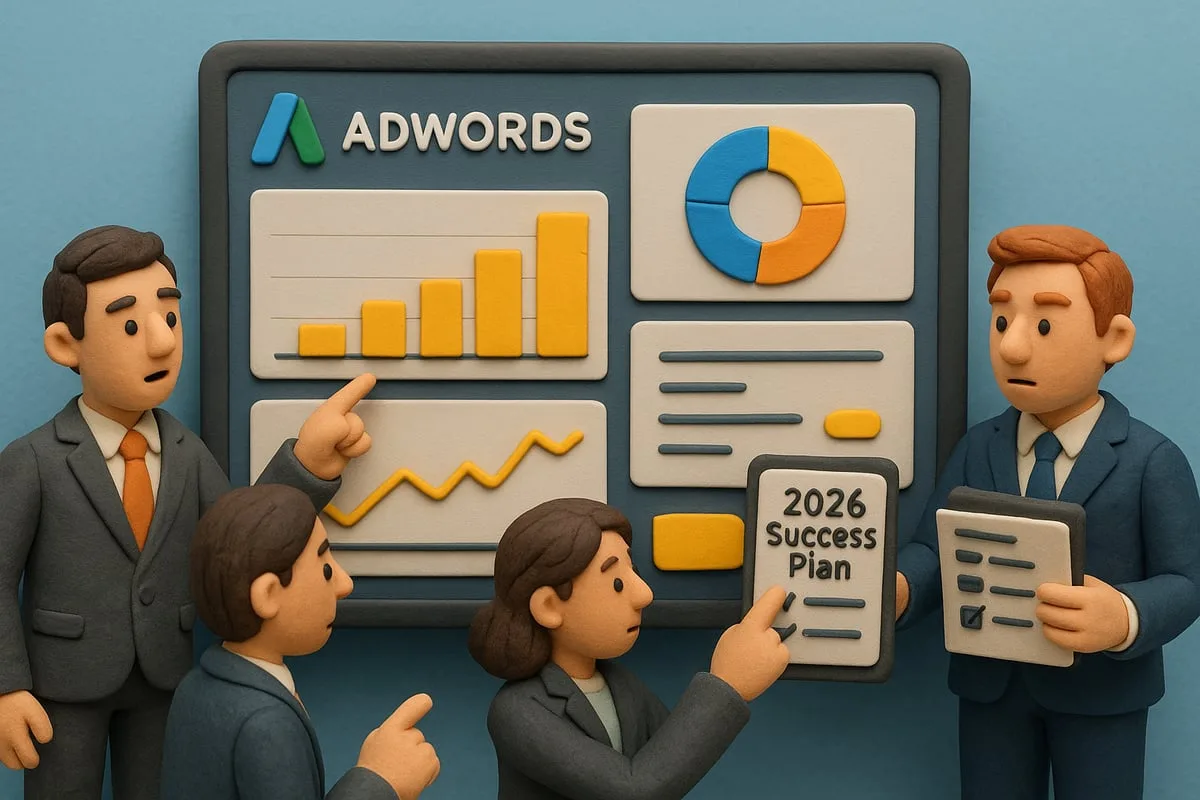
Google Ads has changed a lot since 2024. Navigation is simpler, and AI now handles most bidding, creative testing, and audience segmentation in real time.
Tighter Google Analytics 4 integration means you can follow a user’s whole journey. Performance Max campaigns bundle several ad formats under one roof, which changed how accounts get structured. And the 2025 privacy updates let you target relevant audiences without stepping on user data.
WordStream found that 82% of businesses raised their PPC budgets in 2025. More money chasing the same clicks means outdated tactics get expensive fast.
Structuring Your Account for Maximum Performance
Account structure sounds boring. It also decides whether you can tell what is working. Single Keyword Ad Groups had their moment; most accounts now run better with consolidated ad groups that give Google’s machine learning enough data to work with.
Match campaign types to goals: Search, Display, Video, or Performance Max. A roofer might run separate campaigns for repairs and full replacements, so each service gets its own budget and message.
For tactical help, check out Paid Advertising Strategies for Local Service Pros. A clean structure lifts Quality Scores and makes your reporting readable.
Conversion Tracking and Attribution Setup
If tracking is off, everything downstream is a guess. Set up Google Tag Manager and enhanced conversions so you capture calls, forms, and chats. With cookies fading, first-party data does the heavy lifting.
Data-driven attribution is the default now, and for good reason: Google reports businesses using it saw 18% more conversions in 2025. Last click still has its uses when you want a simple picture.
An HVAC company might track phone calls, chat leads, and form fills, then compare which campaigns actually book jobs. That is the data that tells you where the next dollar goes.
Budget Planning and Forecasting
Set your budget from industry benchmarks, not wishful thinking. Google’s Performance Planner forecasts results based on your history and planned changes.
Spread spend across funnel stages and campaign types. A landscaper should spend heavier in spring and pull back in January. Obvious, but plenty of accounts run flat budgets year round.
Revisit forecasts often and move money to what is working. The market will not wait for your quarterly review.
Ensuring Compliance and Ad Policy Adherence
Google updates its ad policies constantly, especially around privacy. If you are in a regulated industry like healthcare or finance, you have a second rulebook on top.
Review the current guidelines before every launch. A financial services firm, for example, should run a compliance checklist on both ads and landing pages.
Disapprovals pause campaigns. Repeat violations can suspend your whole account. Staying compliant is cheaper than getting reinstated.
Keyword Research & Targeting: Winning the Search Intent Game
Keywords are where Google AdWords PPC campaigns are won or lost. Buy the wrong clicks and no amount of clever ad copy will save you.
Advanced Keyword Research Techniques for 2026
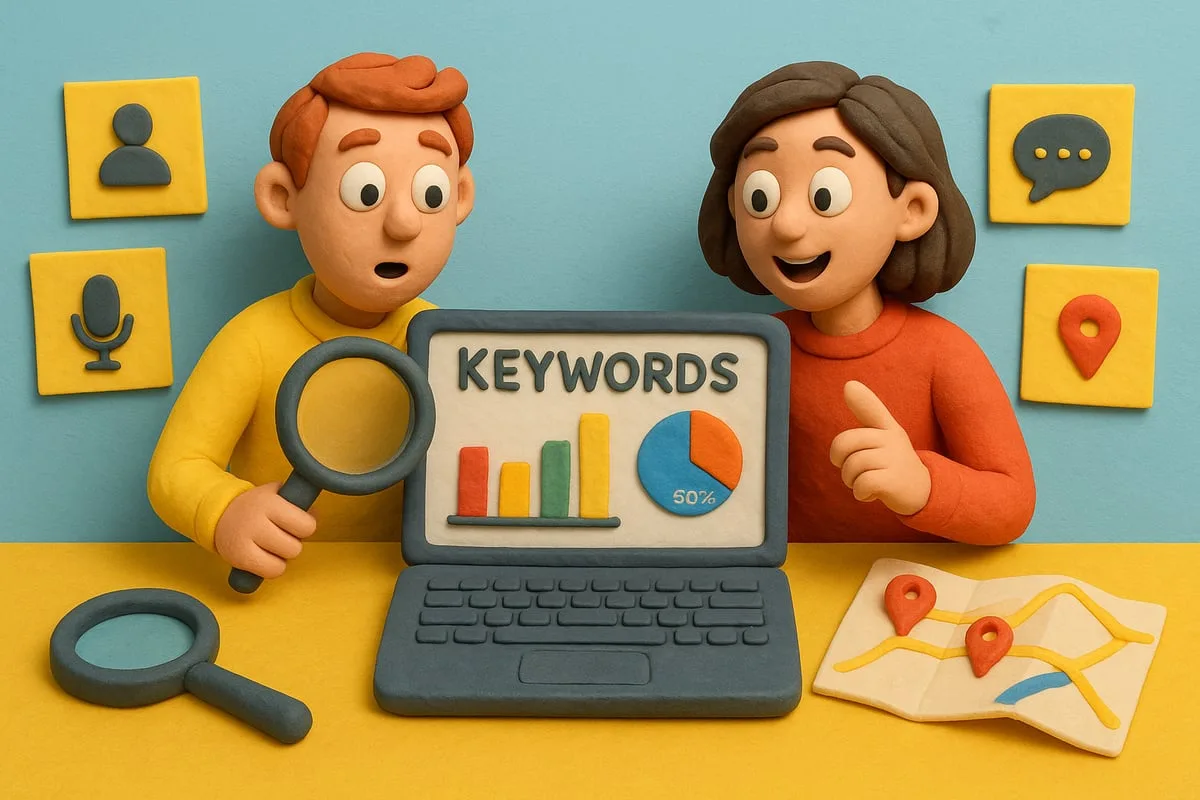
Start with Google’s Keyword Planner, then layer in AI tools that surface trending queries early. A gap analysis in SEMrush or Ahrefs shows you the keywords competitors rank for that you do not.
Local intent matters. A pizza shop wins on searches like “best pizza near downtown,” not generic terms. According to Google Ads Statistics and Trends for 2026, 58% of searches in 2025 were long-tail.
Review search trends regularly and prune your list. Keyword research is maintenance, not a one-time setup task.
Match Types, Negative Keywords & Intent Mapping
Match types have loosened up. Broad match plus smart bidding casts a wide net; phrase and exact keep control. Negative keyword lists are the unsung heroes here, filtering out clicks you would otherwise pay for and regret.
A plumber should exclude “DIY” and “free” so the budget goes to people ready to hire, not people watching YouTube tutorials.
Audit match types and negatives monthly. It is the fastest way to cut wasted spend.
Audience Targeting and Layering
You can layer audiences on top of keywords: in-market, affinity, custom intent, Customer Match. First-party data lets you show past customers and site visitors a different message than cold traffic sees.
Retargeting past visitors with a specific offer is one of the cheapest conversion wins available. Relevance goes up, cost per acquisition comes down.
Keywords tell you what someone wants. Audiences tell you who they are. Combine both and your ads work harder.
Geo-Targeting and Local PPC Strategies
For local businesses, geo-targeting is everything. Set campaigns by radius, zip code, or city, and use local extensions so your address and call button show up for nearby searchers.
A multi-location business can run one campaign per city and bid based on local demand. Google says 76% of local searches lead to a visit within 24 hours, so showing up locally pays off fast.
Keep refining. Demand shifts by season and by neighborhood.
Voice Search and Conversational Keyword Optimization
People ask their phones full questions now: “Who can fix my AC today?” Not “AC repair.”
Build ad groups around natural language phrases and question keywords. Voice is expected to drive over 30% of PPC clicks by 2026.
Catch those searches and you reach customers at the exact moment they need you.
Crafting High-Converting Ads and Landing Pages
In Google AdWords PPC, clicks are just the entry fee. The promise in your ad and the landing page that backs it up are what turn ad spend into actual customers.
Writing Compelling, Click-Worthy Ad Copy
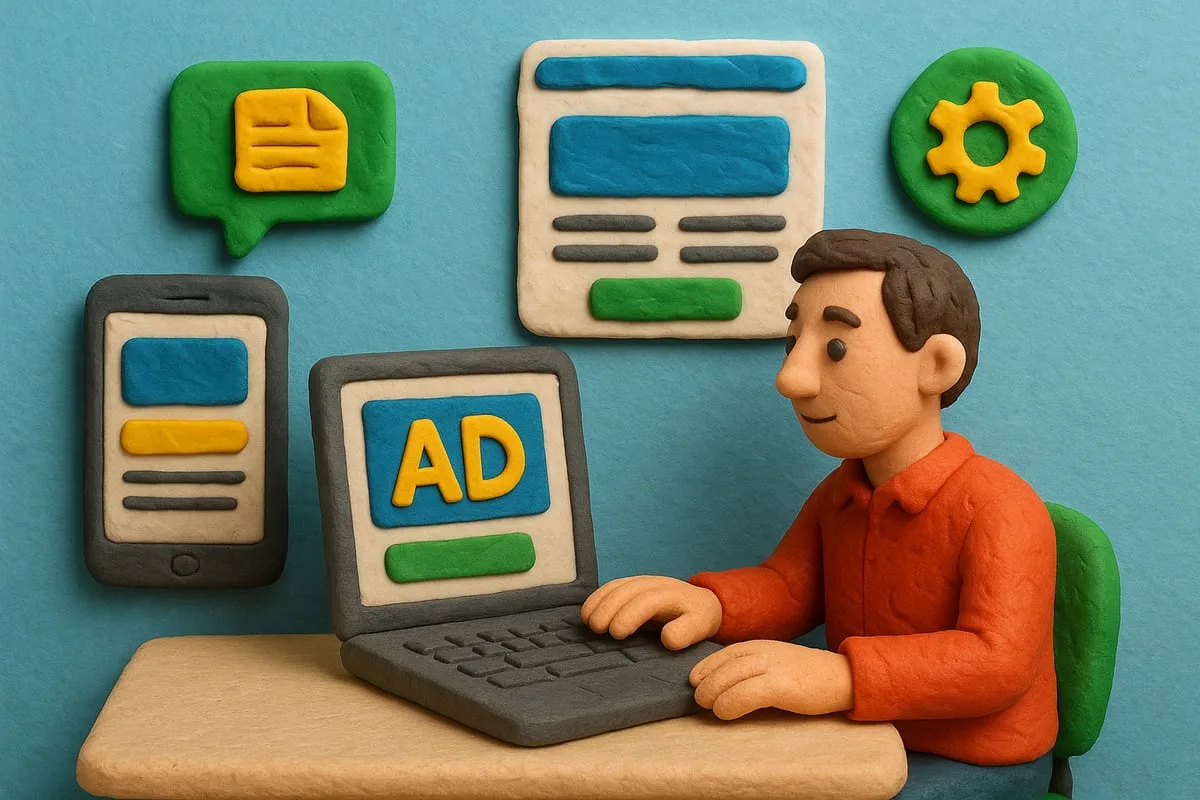
Use dynamic keyword insertion so ads mirror the search, and let responsive search ads test headline combinations for you. Google’s AI picks the winners.
Lead with a clear offer and a reason to act now. “Book a Free Estimate, Same-Day Service in Colorado Springs!” beats a vague slogan every time. Google reports responsive ads earn about 15% higher CTR, so keep feeding them fresh copy.
Leveraging Ad Extensions for Maximum Impact
Extensions are free real estate. Sitelinks, callouts, and structured snippets give people more reasons to click. Image extensions add visual punch, and local extensions put your address and phone number right in the ad.
A law firm running call extensions captures leads on the spot. A retailer can use structured snippets to list brands. More extensions mean better ad rank and higher click-through rates.
Designing Conversion-Optimized Landing Pages
The landing page does the closing. Make it mobile-first, fast, and focused: one benefit-driven headline, real testimonials, one obvious call to action.
Cut form fields to the minimum and strip out distractions. A home services page might show customer reviews, a short booking form, and instant confirmation. Test everything else.
| Landing Page Must-Haves | Why It Matters |
|---|---|
| Fast loading time | Reduces bounce rate |
| Clear CTA | Guides user action |
| Testimonials | Builds trust and credibility |
A/B Testing and Personalization Strategies
Split test headlines, images, and calls to action. Small wins compound.
A gym might test “Free Trial” against “$0 Enrollment” and find one pulls twice the sign-ups. Keep a testing calendar and write down what you learn.
Ensuring Ad and Landing Page Compliance
Landing pages have rules too. No clickbait, no misleading claims, no hidden terms.
Regulated industries need proper disclosures on every ad, and non-compliance can get an account suspended outright. For more on paid advertising done right, browse the Paid Advertising Blog Category.
Bidding, Budgeting, and Automation for Scalable Growth
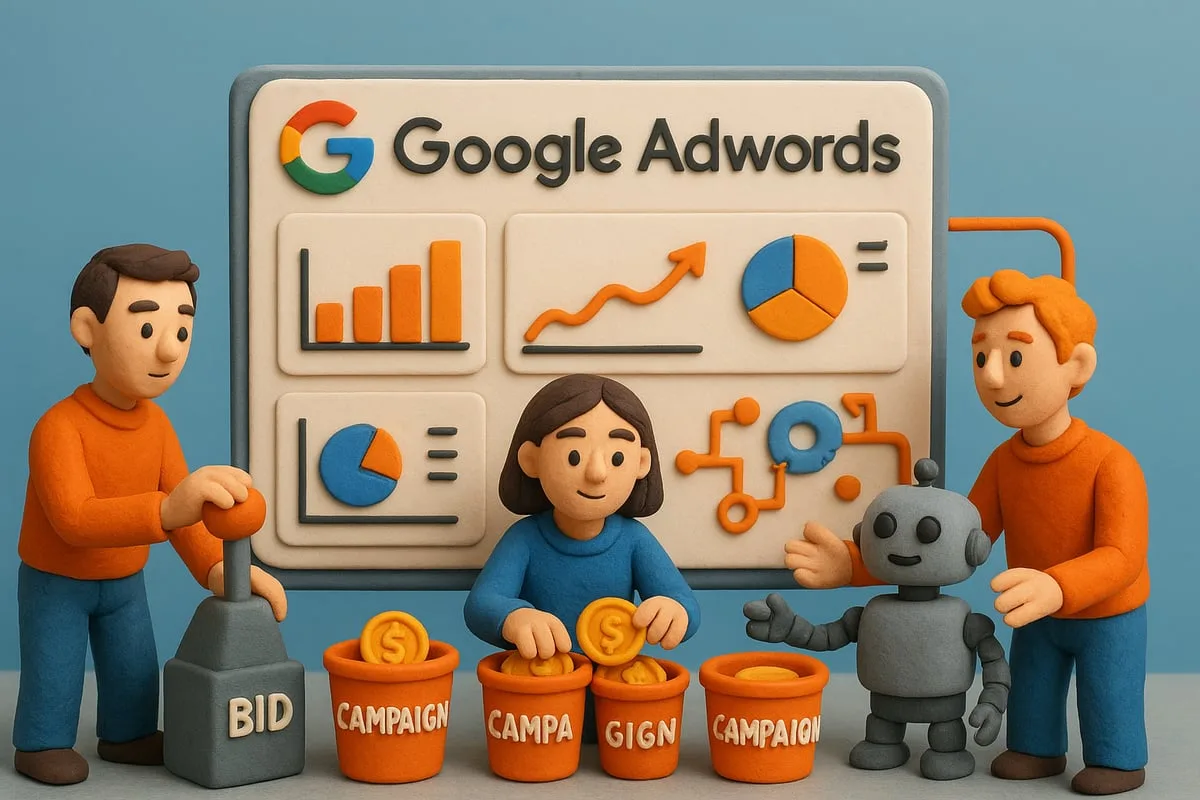
Scaling Google AdWords PPC is mostly a bidding and budgeting problem. The levers changed as automation took over, so here is how to pull them in 2026.
Choosing the Right Bidding Strategies in 2026
Smart Bidding does the heavy lifting now: Target CPA to control lead costs, Target ROAS to protect margins, Maximize Conversions when volume is the goal.
Manual bidding survives where tight control matters, like regulated sectors. For most accounts, automated bidding wins because it adjusts in real time on more data than any human can watch.
An online store chasing profit picks Target ROAS. A roofer who needs leads at a predictable price picks Target CPA. Search Engine Journal puts automated bidding adoption at 70% of advertisers.
Budget Allocation and Scaling Techniques
Spread budget across campaigns, devices, and audiences so you can see which segments earn their keep.
Consider these tactics for effective scaling:
- Incrementally increase budget on high-performing campaigns by 10-20% monthly.
- Allocate more spend during peak seasons or high-conversion periods.
- Use Performance Planner to forecast and adapt to market shifts.
Scale winners 10-20% a month rather than doubling overnight. Big jumps trigger ad fatigue and diminishing returns. Watch the numbers and adjust.
Harnessing AI and Automation Tools
Automated rules, scripts, and bid adjustments handle the daily grunt work so you can think about strategy instead.
Let AI pause underperforming ads and shift budget automatically. For a deeper look at how AI is rewriting the PPC playbook, read Beyond the Boost: AI in Google and Meta Ads.
The payoff is twofold: less busywork, and optimization opportunities you would never spot manually.
Dayparting, Device, and Demographic Bid Adjustments
Dayparting schedules your ads for the hours your customers actually search.
An electrician might raise bids over lunch when inquiry calls spike. And check your device split: WordStream reports mobile drives 72% of local PPC clicks, so bid like it.
Demographic bid adjustments push more budget toward your highest-value customers.
Monitoring, Troubleshooting, and Avoiding Wasted Spend
Wasted spend hides in every Google AdWords PPC account: non-converting keywords, junk placements, search terms you never meant to buy.
Consider this checklist:
- Pause keywords after 100+ clicks without conversions.
- Review search terms for negative keyword opportunities.
- Audit placements on Display and Video campaigns.
Every dollar you stop wasting is a dollar that goes to campaigns that convert.
Measuring, Optimizing, and Reporting for Continuous Improvement
Good Google AdWords PPC management is a loop: measure, optimize, report, repeat. Here is what to track and how to act on it.
Key PPC Metrics and KPIs to Track in 2026
These are the numbers that matter in 2026:
- Click-through rate (CTR) to gauge ad engagement
- Conversion rate to measure how well visitors become leads or customers
- Cost per acquisition (CPA) for understanding efficiency
- Return on ad spend (ROAS) to evaluate profitability
- Lifetime value (LTV) and customer acquisition cost (CAC) for long-term growth
Service businesses should track cost per booked appointment, not just cost per click. Search Engine Land found 92 percent of top-performing PPC accounts check ROAS weekly.
Using Google Analytics 4 and Cross-Channel Attribution
Linking Google Ads with GA4 shows you the full path to purchase, not just the last click.
Key steps include:
- Linking your Google Ads and GA4 accounts
- Setting up event tracking for calls, forms, and purchases
- Analyzing funnel progression across channels
Follow a lead from ad click to phone call to closed sale and you will know what each channel is really worth. That is how budgets should get decided.
Ongoing Optimization and Testing Frameworks
Optimization never finishes. Build it into a routine:
- Run weekly and monthly optimization checklists
- Test high-impact elements like ad copy, landing pages, and keywords
- Conduct quarterly account audits to uncover wasted spend and scaling opportunities
Sometimes the fix is as small as updating a negative keyword list. Those small wins stack up.
Reporting and Communicating Results to Stakeholders
Google AdWords PPC reports should answer one question: is the money working? Use dashboards that show:
- Lead volume and cost per lead by campaign
- ROI breakdowns and performance over time
- Areas of improvement and recent wins
Lead volume, cost per lead, and ROI by campaign on one screen keeps everyone honest and makes the next budget conversation easy.
Leveraging AI Insights and Predictive Analytics
Google’s AI insights flag problems before they get expensive: underperforming ads, budget sitting on losers, keywords with untapped headroom.
Predictive analytics spot seasonal swings before your competitors react. eMarketer pegs adoption of predictive tools in PPC at 40 percent growth year over year. To dig deeper, see AI-Powered Campaign Management in 2026.
Future-Proofing Your Google AdWords PPC Strategy
Privacy rules, new tech, and changing search habits will keep reshaping paid search. A durable Google AdWords PPC strategy plans for all three.
Adapting to Privacy Changes and Cookieless Tracking
GDPR, CCPA, and cookie-limiting browsers mean first-party data and user consent are the new foundation.
Set up server-side tracking through Google Tag Manager plus a consent management tool. Adapt early and you keep the measurement accuracy your competitors lose.
Embracing AI, Automation, and Emerging Technologies
Smart bidding, predictive analytics, and machine learning keep finding opportunities humans miss.
Chatbots, voice assistants, and conversational ads are changing how leads get qualified. According to Emerging PPC Trends for 2026, most advertisers plan to increase their AI investment.
Diversifying Beyond Google: Multi-Channel Paid Media
Putting every ad dollar into Google AdWords PPC alone is a risk. One policy change or one deep-pocketed competitor can hurt. Add Meta Ads, Microsoft Advertising, or programmatic to the mix.
Multi-channel coverage plus unified reporting shows where each dollar works hardest, and cross-channel retargeting keeps you in front of buyers wherever they browse.
Staying Ahead of Trends and Continuous Learning
The platform will keep changing. Follow Google Ads updates, join beta programs, and keep your team learning. The advertisers who adapt fastest win.
Test new features in beta before your competitors get them, and share what you learn across the team.
That is the playbook: tight structure, honest tracking, smart bidding, relentless testing. If you would rather have someone who does this every day run it for you, See How We Generate More Leads and let’s talk about what Google AdWords PPC can do for your business.