Should you put your marketing budget into SEO or PPC? Wrong question. The businesses that win local markets do both, run by one team that makes each channel feed the other. That’s the case for an SEO PPC agency. SEO builds visibility that compounds. PPC gets you leads this week. Together, under one roof, they turn scattered spend into a steady flow of calls and booked jobs.
Why Businesses Choose an SEO PPC Agency
Most agencies pick a lane. The SEO shop dismisses ads as burning money. The PPC shop never builds the organic foundation. You end up choosing between them.
You shouldn’t have to. Search is one ecosystem. Run SEO and PPC separately and they compete for budget and attention. Run them together and each makes the other better.
Unified Data and Insights
The biggest advantage of one agency running both channels: one set of data. PPC campaigns tell you within days which keywords convert and which messages land. That intelligence should feed your SEO strategy directly.
It works the other way too. Organic data surfaces long-tail opportunities and user intent that cut PPC costs. Integrating SEO and PPC marketing strategies creates a feedback loop where each channel keeps improving the other.
- Keyword performance across both channels
- Conversion data that informs content creation
- Audience insights that refine targeting
- Competitive intelligence from dual visibility

Budget Efficiency and Coverage
An SEO PPC agency can also allocate budget intelligently. While SEO ramps up, PPC carries the lead generation load. As rankings improve, ad spend shifts to the terms you can’t win organically yet. Nothing gets wasted.
| Strategy | Timeline | Cost Pattern | Best Use Case |
|---|---|---|---|
| SEO Only | 3-6 months to results | Low ongoing, high upfront | Established brands, long-term focus |
| PPC Only | Immediate results | High ongoing, scales with budget | Product launches, seasonal campaigns |
| Integrated SEO+PPC | Immediate + compounding | Optimized across channels | Sustainable growth, competitive markets |
Running both also protects you. Google changes its algorithm? Ads keep the leads coming. Ad costs spike? Your rankings hold the line.
Core Services Within an SEO PPC Agency
Knowing what to expect from an integrated agency makes it easier to judge the ones you’re evaluating. Offering both services isn’t enough. They have to actually coordinate them.
Technical SEO Foundation
Paid traffic can’t convert on a broken site. Landing pages need to load fast, work on phones, and give people what they came for. That’s table stakes for both channels.
An SEO PPC agency treats technical work as shared infrastructure. Faster pages cut PPC bounce rates and lift Quality Scores. Mobile fixes help rankings and ad performance at the same time.
The technical foundation includes:
- Site architecture and crawlability audits
- Core Web Vitals optimization
- Mobile usability and responsive design
- Schema markup implementation
- Conversion tracking and analytics setup
Content Strategy and Optimization
Content pulls double duty. It earns rankings and backlinks on the organic side, and it gives your paid clicks somewhere worth landing.
SEO and PPC management best practices come down to alignment. Blog posts that rank for research keywords should point readers to the commercial pages your ads support. Landing pages built for paid traffic should rank for branded searches too.
A unified content calendar ensures that:
- Blog content addresses top-of-funnel awareness
- Service pages target commercial intent keywords
- Landing pages convert paid traffic efficiently
- Supporting content builds authority and backlinks
Paid Search Campaign Management
PPC inside an SEO PPC agency looks different from a standalone ad shop. Paid campaigns borrow organic data for targeting and messaging. Keyword research covers not just what people search, but what they actually engage with.
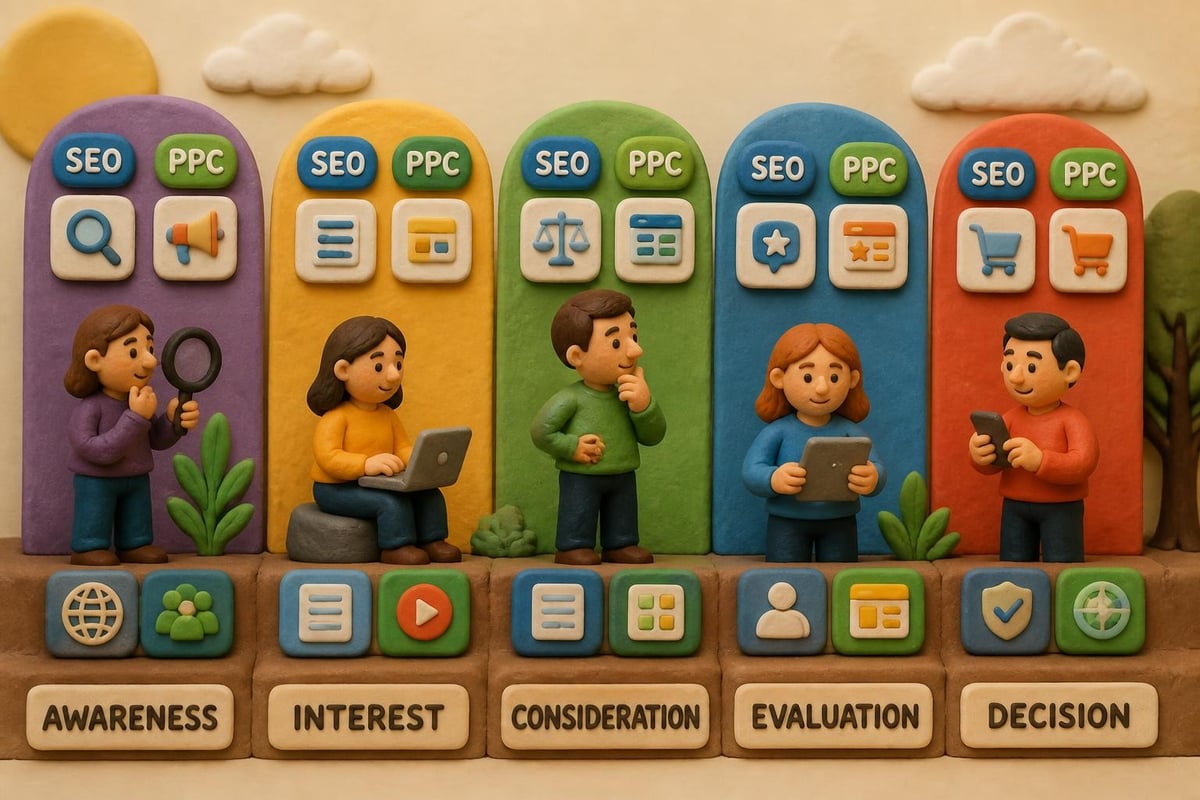
Campaign structure follows the customer journey. Awareness campaigns run broad with educational content. Comparison shoppers see detailed product info. High-intent searchers hit conversion-ready landing pages. If you’re managing paid advertising campaigns yourself, this structure alone will save you money.
Local Search Optimization
For a roofer, plumber, or HVAC company, local visibility is the whole game. A good agency pairs local SEO with location-based ads so you show up twice for the searches that matter. Your Google Business Profile feeds both your local pack rankings and your Local Service Ads.
The local strategy combines:
- Citation building and NAP consistency
- Google Business Profile management and optimization
- Local content creation and geo-targeted pages
- Location-based PPC campaigns with radius targeting
- Review generation and reputation management
When someone searches “plumber near me” and you appear in the local pack and the Local Service Ads, your odds of getting that call roughly double. Local SEO strategies get much stronger with paid placement backing them up.
Avoiding Common SEO PPC Agency Mistakes
Plenty of agencies sell both services without integrating anything. Here’s how to tell bundling from the real thing.
Siloed Team Structures
Lots of agencies split SEO and PPC into separate teams that barely talk. That recreates the problem of hiring two agencies. Keyword research gets done twice. Landing pages optimize for one channel and hurt the other.
Common SEO mistakes made by PPC agencies usually trace back to this silo problem. The PPC team builds landing pages that ignore on-page basics. The SEO team chases keywords the ad data already proved don’t convert.
The solution requires:
- Shared campaign calendars and planning sessions
- Unified reporting that shows cross-channel attribution
- Joint keyword research and content planning
- Combined budget discussions and allocation decisions
Short-Term PPC Without SEO Investment
Some agencies lean on PPC as a crutch. Leads show up fast, but nobody builds the organic foundation, so you’re stuck on a treadmill: stop the ads, lose every lead.
A responsible SEO PPC agency balances the quick wins with the long game. Ads launch immediately and generate revenue and data. That funds the SEO work. Over time your cost per lead drops as rankings capture traffic you used to pay for.
Ignoring Attribution and Multi-Touch Journeys
Customers rarely convert on the first touch. Someone finds your blog post, comes back through a branded ad, then converts off a retargeting campaign. Without decent attribution, credit lands in the wrong place and you optimize the wrong things.
Integrated agencies track customers across channels. They know an organic visit assisted by brand protection ads is worth something different than a cold click, and they don’t cut budgets to channels that quietly do the assist work.
Measuring Success Across Integrated Campaigns
SEO metrics and PPC metrics each tell half the story. Measure them together and you see actual business impact.
Unified Performance Metrics
| Metric Category | SEO Indicators | PPC Indicators | Combined Value |
|---|---|---|---|
| Visibility | Organic rankings, impressions | Impression share, average position | Total SERP presence |
| Traffic | Organic sessions, new users | Paid clicks, click-through rate | Total qualified visitors |
| Conversion | Organic conversion rate | PPC conversion rate | Overall conversion volume |
| Revenue | Organic-attributed revenue | ROAS, cost per acquisition | Blended CAC, LTV |
Combined metrics surface things single-channel reports miss. Maybe organic converts less often but at higher ticket sizes. Maybe PPC closes fast while organic builds the awareness that lifts everything.
Return on Investment Modeling
ROI for an SEO PPC agency has two clocks. PPC pays back in days and is easy to attribute. SEO builds equity that keeps paying long after the work is done.
Smart agencies model this by calculating:
- Immediate ROI from PPC campaigns (monthly revenue vs. ad spend)
- Compounding ROI from SEO (traffic value increase over time)
- Synergy ROI (improved performance when both channels work together)
- Efficiency ROI (reduced PPC costs as organic coverage expands)
That full picture is what justifies the investment, well beyond a simple ROAS number.
Competitive Market Share
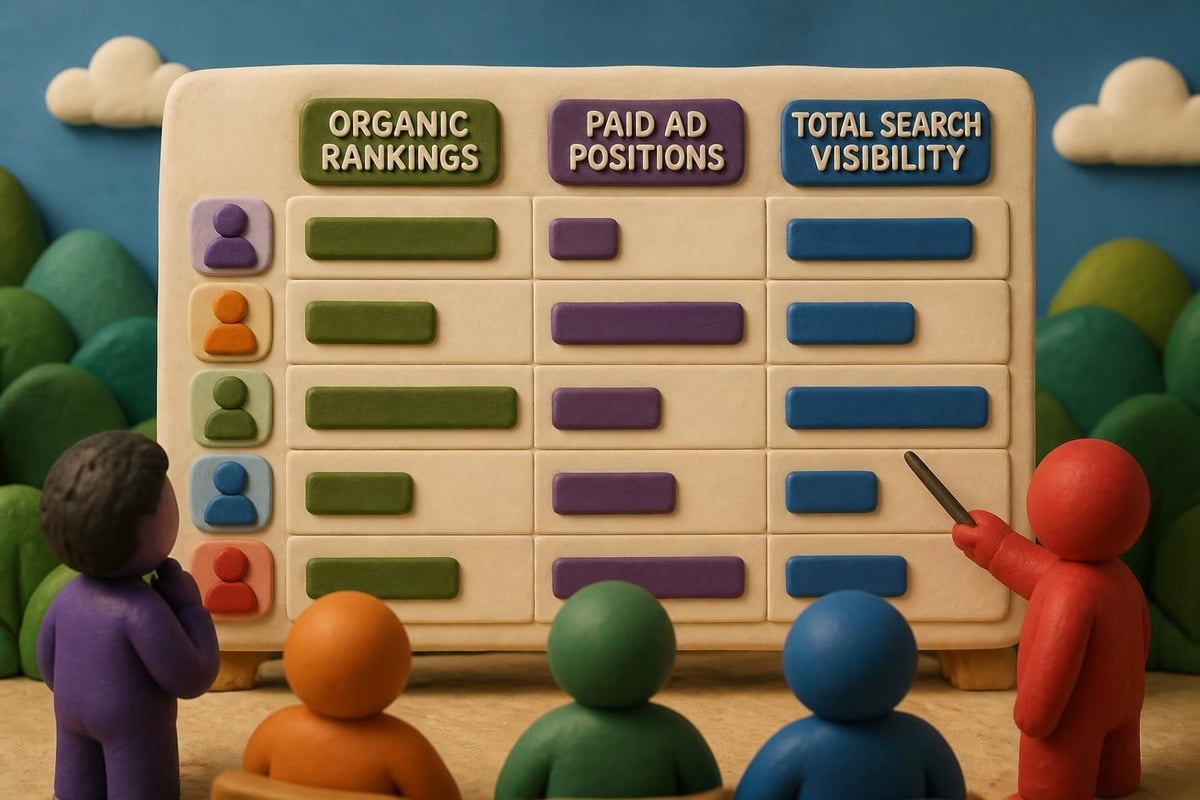
A good agency also watches your competitors: who ranks where, who’s bidding on your brand name, and where the gaps in the results are. That intelligence drives the next move.
Selecting the Right SEO PPC Agency Partner
Lots of agencies claim they do integration. Fewer actually do it. Here’s what to check.
Industry Experience and Specialization
Generic playbooks fail in specialized markets. If you’re in a regulated industry or a local service trade, find an agency that has been there. Someone who has navigated ad policy restrictions won’t get your campaigns suspended learning on your account.
For local businesses, confirm the agency has actually run Local Service Ads, location extensions, and geo-targeted campaigns. Case studies showing local SEO and PPC integration are the proof that matters.
Transparency and Reporting
The agency should show you everything. That includes:
- Detailed monthly reports showing both organic and paid performance
- Access to analytics platforms and advertising accounts
- Transparent billing with no hidden fees or markups
- Regular strategy meetings with recommendations based on data
If an agency won’t give you account access or only sends high-level summaries, they either lack confidence in the work or lack the systems to do it properly.
Technology Stack and Automation
Ask about tools: rank tracking, competitive analysis, bid management, attribution. If you’re curious about AI automation opportunities, ask how they use automation without putting strategy on autopilot.
Scalability and Growth Planning
The relationship should grow with your business. A good partner starts with foundations, maybe launching Google Ads management right away while organic authority builds, then shifts budget as rankings improve.
Building Your Integrated Search Strategy
Rolling out combined SEO and PPC works best in phases. Knowing the sequence keeps your expectations realistic.
Phase One: Foundation and Quick Wins
The first 30 to 60 days are about technical fixes and immediate visibility. Ads launch and start collecting conversion data while the SEO audit flags anything holding the site back.
Quick win activities include:
- Google Business Profile optimization
- Technical SEO fixes (speed, mobile, crawlability)
- Conversion tracking implementation
- Initial PPC campaign launch with core keywords
- Landing page optimization for primary services
The early ad revenue helps fund the SEO investment. That’s the growth cycle starting to feed itself.
Phase Two: Expansion and Authority Building
Months 2 through 4 shift toward content, links, and campaign refinement. The ad data shows which keywords and messages convert, and the content plan follows that evidence instead of guesses.
Retargeting kicks in here too. People who read your blog posts enter remarketing audiences, which raises conversion rates and lowers acquisition costs.
Phase Three: Optimization and Market Domination
By month 5 or 6, the strategy hits its stride. Rankings improve on priority keywords, freeing ad budget for more competitive terms. Strong organic presence plus strategic paid coverage means you own the searches that matter.
From there it’s continuous refinement: seasonal budget shifts, competitive monitoring, new opportunities. The agency starts operating like an extension of your team.
Cost Structures and Investment Expectations
Pricing for an SEO PPC agency reflects the coordination involved. Here’s how the fees usually break down.
Service Fee Models
Most agencies combine management fees with advertising spend in their pricing structure:
- SEO retainer: Monthly fee covering strategy, technical optimization, content, and link building ($700-$3,000+ depending on market competition)
- PPC management fee: Percentage of ad spend or flat monthly fee ($1,200-$2,500+ based on campaign complexity)
- Advertising budget: Actual spend on Google Ads, Meta, or other platforms (typically $2,000-$10,000+ monthly for local businesses)
Total investment depends on your market, size, and goals. A local service business in a moderately competitive market might put $4,000 to $8,000 a month into services and ad spend combined. Agencies serving small business marketing needs usually offer tiered packages that scale.
Return Timeline Expectations
SEO compounds while PPC pays now. Realistic timelines keep you from quitting a strategy right before it works:
| Timeline | SEO Progress | PPC Results | Combined Impact |
|---|---|---|---|
| Month 1-2 | Foundation work, minimal traffic increase | Immediate leads, conversion data | Quick wins fund long-term investment |
| Month 3-4 | Initial ranking improvements, traffic growth | Optimized campaigns, lower CPA | Synergy begins, total lead volume increases |
| Month 5-6 | Notable rankings, organic lead flow | Mature campaigns, consistent performance | Reduced dependency on paid spend |
| Month 7-12 | Strong positions, compound traffic growth | Strategic coverage, high ROI | Market dominance, predictable lead flow |
The inflection point usually lands around month 5 or 6, when organic progress starts easing the load on your ad budget while total leads keep climbing.
Integrated search marketing beats siloed campaigns, full stop. SEO builds visibility that lasts. PPC delivers leads and data now. Pioneer Marketing does exactly this integration for Colorado Front Range businesses, combining local SEO, paid ads, and AI-driven automation into systems that produce predictable lead flow. If you want more qualified leads without the guesswork, let’s talk.