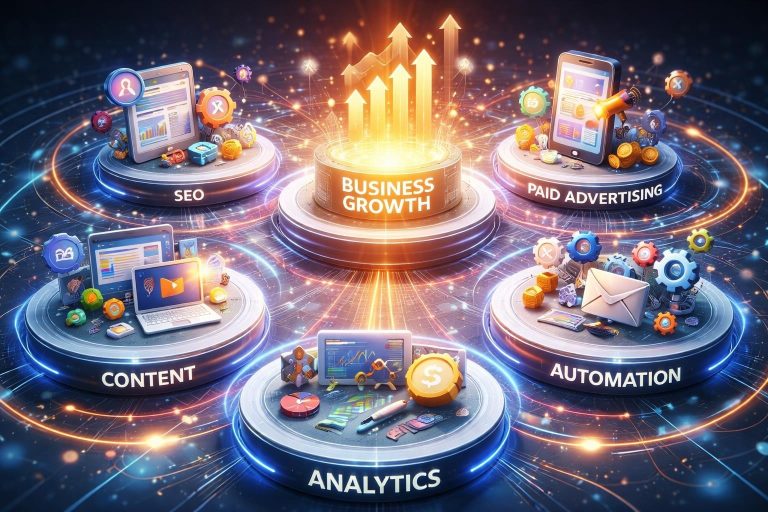
The digital landscape has transformed how businesses connect with customers, and an online digital marketing agency serves as the strategic partner that bridges this gap. These specialized firms combine technology, creativity, and data-driven strategies to help businesses establish their online presence, attract qualified leads, and convert prospects into loyal customers. As consumer behavior shifts increasingly toward digital channels, partnering with the right agency can mean the difference between stagnant growth and exponential revenue expansion.
Understanding What an Online Digital Marketing Agency Does
An online digital marketing agency functions as an extension of your business, handling the complex ecosystem of digital channels that drive modern customer acquisition. These agencies specialize in creating integrated campaigns across search engines, social media platforms, email systems, and paid advertising networks.
The primary value proposition centers on expertise and execution. While most business owners understand the importance of digital marketing, few have the time, resources, or specialized knowledge to execute campaigns effectively. According to industry statistics, agencies that leverage AI-driven tools and data analytics deliver significantly higher ROI compared to businesses managing marketing internally.
Core Service Categories
Digital marketing agencies typically organize their offerings into several distinct categories:
Search Engine Optimization (SEO) focuses on improving organic visibility in search results. This includes keyword research, technical website optimization, content creation, link building, and local search optimization for businesses serving specific geographic areas.
Paid Advertising Management encompasses platforms like Google Ads, Facebook, Instagram, and LinkedIn. Agencies handle campaign strategy, ad creative development, audience targeting, bid management, and conversion tracking to maximize return on ad spend.
Content Marketing and Strategy involves creating valuable content that attracts and engages target audiences. This includes blog posts, videos, infographics, case studies, and downloadable resources designed to establish authority and drive conversions.
Social Media Marketing covers both organic community management and paid social advertising. Agencies develop content calendars, engage with followers, run contests, and create campaigns that build brand awareness and customer loyalty.
Email Marketing and Automation includes building subscriber lists, creating email sequences, segmenting audiences, and setting up automated nurture campaigns that move prospects through the sales funnel.

Investment Models and Pricing Structures
Understanding how agencies price their services helps set realistic budget expectations and identify the right partnership model for your business needs.
Monthly Retainer Agreements
Most established agencies operate on monthly retainer models, providing ongoing services for a fixed fee. This structure ensures consistent effort and allows agencies to build momentum over time.
| Service Type | Typical Range | What's Included |
|---|---|---|
| Basic SEO | $700-$1,500/month | Keyword research, on-page optimization, content creation, reporting |
| Google Ads Management | $1,500-$3,000/month | Campaign setup, ongoing optimization, A/B testing, conversion tracking |
| Social Media Management | $1,200-$2,500/month | Content creation, posting schedule, community engagement, analytics |
| Comprehensive Digital Marketing | $3,000-$10,000/month | Multi-channel strategy, SEO, PPC, content, social, reporting |
Retainers work best for businesses seeking sustained growth and willing to invest in long-term strategic partnerships. The advertising and marketing services market shows consistent growth in retainer-based relationships as businesses prioritize predictable marketing expenditures.
Project-Based Pricing
Some agencies offer project-based engagements for specific deliverables like website redesigns, landing page creation, or campaign launches. These one-time investments typically range from $2,500 for basic landing pages to $50,000+ for comprehensive website overhauls with integrated marketing systems.
Performance-Based Models
A smaller segment of agencies operates on performance-based pricing, where compensation ties directly to results like leads generated, sales closed, or revenue produced. While attractive in theory, these arrangements require sophisticated tracking systems and clear attribution models to function effectively.
Selecting the Right Agency Partner
Choosing an online digital marketing agency requires evaluating capabilities, cultural fit, and alignment with your business objectives.
Specialization vs. Full-Service Capabilities
Specialized agencies focus deeply on specific niches or services. A local SEO specialist might exclusively serve businesses in particular geographic regions, developing unparalleled expertise in ranking factors that matter for location-based searches. These agencies often deliver superior results within their domain but may require supplemental partnerships for comprehensive marketing needs.
Full-service agencies offer end-to-end solutions across multiple channels. They provide convenience and integrated strategy but may lack the depth of knowledge that specialists bring to individual disciplines.
For service-based businesses in competitive local markets, agencies with proven expertise in local SEO strategies often deliver faster results than generalist firms.
Geographic Considerations
The question of location matters less in 2026 than ever before, yet local market knowledge remains valuable. An agency familiar with regional competition, local search behaviors, and community dynamics brings context that purely remote partnerships may miss.
- Local agencies understand regional market nuances, competitor landscapes, and can facilitate in-person strategic sessions
- Remote agencies often offer broader talent pools, specialized expertise, and potentially lower overhead costs
- Hybrid models combine local account management with distributed specialist teams
Technology Stack and Tool Access
Modern agencies leverage sophisticated platforms for analytics, automation, project management, and reporting. Ask potential partners about their technology infrastructure:
- What CRM and marketing automation platforms do they use?
- How do they track attribution across multiple touchpoints?
- What reporting dashboards and metrics will you have access to?
- Do they build proprietary tools or rely on third-party solutions?
The rise of AI-driven marketing solutions has separated agencies that embrace innovation from those stuck in outdated methodologies.

Services That Drive Measurable Business Growth
The most effective agencies focus on services that directly impact revenue rather than vanity metrics like social media followers or website traffic alone.
Lead Generation Through Paid Advertising
Paid advertising delivers the fastest path to qualified leads when executed properly. An experienced agency structures campaigns around customer intent, creating targeted ads that reach prospects actively searching for solutions.
Search advertising captures high-intent buyers already looking for your services. Google Ads Management allows businesses to appear at the top of search results for commercial keywords, generating qualified calls and form submissions from prospects ready to buy. Effective campaigns require continuous optimization of keywords, ad copy, landing pages, and bid strategies to maintain profitability.
Social media advertising builds awareness and retargets engaged audiences. Platforms like Facebook and Instagram excel at reaching specific demographics, interests, and behaviors, making them ideal for building brand recognition and nurturing prospects over time.
Conversion Rate Optimization
Driving traffic means nothing without converting visitors into leads and customers. Top agencies obsess over conversion rates, testing headlines, images, form fields, and calls-to-action to maximize results from existing traffic.
Key optimization areas include:
- Landing page design and messaging
- Form field reduction and progressive profiling
- Mobile responsiveness and page speed
- Trust signals like testimonials and guarantees
- Clear value propositions and next steps
Marketing Automation and CRM Integration
The gap between good agencies and great ones often comes down to automation sophistication. Advanced agencies implement systems that nurture leads automatically, score prospects based on engagement, and trigger personalized follow-up sequences based on behavior.
Automated follow-up ensures no lead falls through the cracks. When someone fills out a contact form at 10 PM on Saturday, automated systems immediately send confirmation emails, add prospects to nurture sequences, and alert sales teams.
Lead scoring identifies which prospects are most likely to convert based on demographic data and engagement behaviors, allowing sales teams to prioritize high-value opportunities.
Attribution tracking connects marketing activities to closed revenue, answering the critical question: which channels actually generate profitable customers?
Industry Trends Reshaping Digital Marketing Agencies
The agency landscape evolves rapidly as new technologies, platforms, and consumer behaviors emerge.
Artificial Intelligence Integration
AI has moved from experimental to essential across agency operations. Recent research on digital marketing trends shows that agencies incorporating AI into strategy, content creation, and campaign optimization significantly outperform those relying solely on manual processes.
Applications include:
- Predictive analytics that forecast campaign performance and identify optimization opportunities
- Content generation that accelerates blog post creation, ad copy variations, and email sequences
- Chatbots and voice agents that qualify leads, answer questions, and book appointments automatically
- Audience segmentation that identifies micro-segments for hyper-targeted messaging
Privacy Changes and First-Party Data
Cookie deprecation and privacy regulations force agencies to prioritize first-party data collection and activation. This shift emphasizes:
- Building owned audiences through email lists and CRM databases
- Creating valuable content that encourages direct relationships
- Implementing server-side tracking that respects privacy while maintaining attribution
- Developing retention strategies that maximize customer lifetime value
Video and Interactive Content
Video consumption continues accelerating across all demographics. Agencies now incorporate video into SEO strategies, social campaigns, email marketing, and paid advertising. Short-form video on platforms like Instagram Reels, TikTok, and YouTube Shorts demands different creative approaches than traditional video advertising.
| Content Format | Engagement Rate | Best Use Cases |
|---|---|---|
| Short-form video (15-60 sec) | High | Social media awareness, product demos, testimonials |
| Long-form video (5+ min) | Medium | Educational content, webinars, case studies |
| Interactive content | Very High | Quizzes, calculators, assessments, configurators |
| Static images | Medium | Display ads, social posts, infographics |

Evaluating Agency Performance and ROI
Measuring agency effectiveness requires defining clear success metrics and establishing regular reporting cadences.
Key Performance Indicators by Channel
Different marketing channels demand different KPIs. An effective agency provides channel-specific metrics tied to business outcomes:
SEO Performance Metrics:
- Organic traffic growth
- Keyword rankings for commercial terms
- Organic conversions and revenue
- Domain authority and backlink quality
Paid Advertising Metrics:
- Cost per lead/acquisition
- Return on ad spend (ROAS)
- Conversion rate by campaign
- Click-through rate and quality score
Content Marketing Metrics:
- Content engagement (time on page, scroll depth)
- Lead magnets downloaded
- Organic search traffic to content
- Content-attributed conversions
Attribution and Revenue Tracking
The ultimate measure of agency success connects marketing activities to closed revenue. Multi-touch attribution models assign credit across the entire customer journey, revealing which channels deserve budget increases versus cuts.
Businesses working with top marketing agencies implement tracking systems that follow prospects from first click through final purchase, often revealing surprising insights about channel contribution.
Common Pitfalls to Avoid
Understanding what separates successful agency relationships from failed ones helps set appropriate expectations and avoid costly mistakes.
Unrealistic Timeline Expectations
Digital marketing delivers compounding returns over time, not overnight success. SEO typically requires 3-6 months to show meaningful results. Paid advertising can generate leads immediately but requires ongoing optimization to maintain profitability.
Agencies that promise page one rankings in 30 days or guaranteed lead volumes without understanding your business typically under-deliver. Sustainable growth requires strategic patience combined with consistent execution.
Focusing on Vanity Metrics
Social media followers, website visitors, and page views matter less than qualified leads and revenue. Effective agencies emphasize business outcomes over impressive-sounding but ultimately meaningless metrics.
Questions to ask during performance reviews:
- How many qualified leads did marketing generate this month?
- What's our cost per acquisition across channels?
- Which campaigns drove actual revenue versus just traffic?
- What's our customer acquisition cost compared to lifetime value?
Insufficient Internal Resources
Agencies amplify your marketing efforts but cannot replace internal stakeholder involvement entirely. Successful partnerships require:
- Timely feedback on creative assets and strategy recommendations
- Access to subject matter experts for content development
- Sales team input on lead quality and follow-up processes
- Executive alignment on goals and budget allocation
According to industry research on agency trends, client-side resource constraints represent a leading cause of campaign underperformance.
Building a Productive Agency Partnership
The best client-agency relationships function as true partnerships rather than vendor arrangements.
Communication Protocols
Establish clear communication expectations from the beginning:
- Weekly status updates via email covering campaign performance, upcoming initiatives, and blockers
- Monthly strategy calls reviewing results, discussing optimization opportunities, and planning next month's priorities
- Quarterly business reviews aligning marketing efforts with evolving business goals and budget reallocation
- Shared project management platforms providing transparency into deliverables, timelines, and responsibilities
Data Sharing and Access
Agencies need appropriate access to perform effectively:
- Website analytics platforms (Google Analytics, Search Console)
- Advertising accounts (Google Ads, Meta Business Manager)
- CRM and sales data for lead tracking and attribution
- Competitive intelligence and market research
- Historical campaign performance data
Feedback Loops
Creating structured feedback mechanisms improves campaign performance over time. When sales teams report lead quality issues, marketing can adjust targeting. When customer service identifies common questions, content teams can create educational resources addressing those pain points.
Integration with Business Operations
An online digital marketing agency delivers maximum value when marketing efforts integrate seamlessly with sales processes, customer service, and overall business strategy.
Sales and Marketing Alignment
The handoff between marketing and sales determines whether leads convert to customers. Effective agencies work closely with sales teams to:
- Define lead qualification criteria and scoring models
- Establish service level agreements for lead follow-up timing
- Create sales enablement content like case studies and comparison guides
- Implement feedback loops that improve lead quality over time
Customer Journey Mapping
Understanding how customers move from awareness to purchase allows agencies to create content and campaigns that support each stage. A comprehensive customer journey map identifies:
- Awareness stage: How do prospects first discover they have a problem?
- Consideration stage: What alternatives do they evaluate?
- Decision stage: What factors influence final purchase decisions?
- Retention stage: How do we maximize customer lifetime value?
Businesses seeking to understand how digital marketing drives growth benefit from agencies that map marketing activities to specific journey stages rather than applying one-size-fits-all approaches.
Future-Proofing Your Digital Marketing Strategy
The digital landscape continues evolving rapidly. Partnering with forward-thinking agencies protects against obsolescence and positions businesses to capitalize on emerging opportunities.
Platform Diversification
Over-reliance on single channels creates vulnerability. Expert perspectives on online marketing services emphasize diversified channel strategies that reduce risk while identifying high-performing platforms.
Smart diversification doesn't mean equal investment across all channels. It means testing new platforms while maintaining strong performance in proven channels, then reallocating budget based on results.
Owned Asset Development
Building owned marketing assets creates sustainable competitive advantages:
- Email lists that allow direct audience communication without platform dependence
- Content libraries that generate organic traffic and establish thought leadership
- Customer databases that enable sophisticated segmentation and personalization
- Brand communities that foster loyalty and word-of-mouth growth
Continuous Learning and Adaptation
The most successful agencies maintain learning cultures, continuously testing new tactics, platforms, and technologies. They share insights from across their client portfolio, applying lessons learned in one industry to challenges in another.
Quarterly strategy sessions should address not just performance review but also emerging trends, competitive threats, and innovation opportunities. Agencies committed to staying ahead of industry developments bring proactive recommendations rather than waiting for clients to request changes.
Selecting and partnering with an online digital marketing agency represents a strategic decision that shapes your business growth trajectory for years to come. The right agency brings specialized expertise, proven systems, and data-driven strategies that transform marketing from a cost center into a predictable revenue driver. If you're a Colorado Front Range business looking to generate qualified leads through local SEO, paid advertising, and intelligent automation, Pioneer Marketing combines technical expertise with measurable results focused on your bottom line. Our approach connects your marketing investment directly to lead flow and revenue growth, eliminating wasted spend and missed opportunities.