A website and the occasional social post will not keep your pipeline full. You need internet marketing strategies that connect visibility to revenue: showing up where customers search, turning that traffic into lead generation and booked jobs, and following up before prospects call someone else. Whether you run a roofing crew or a growing service company, the pieces are the same. Local search, paid ads, useful content, and automation, all working as one system instead of four separate hobbies.
Building Local Search Dominance Through Strategic Optimization
Local search is one of the highest-payoff internet marketing strategies for service businesses. When someone nearby searches for what you do, showing up in the top results is the difference between a booked week and a quiet one.
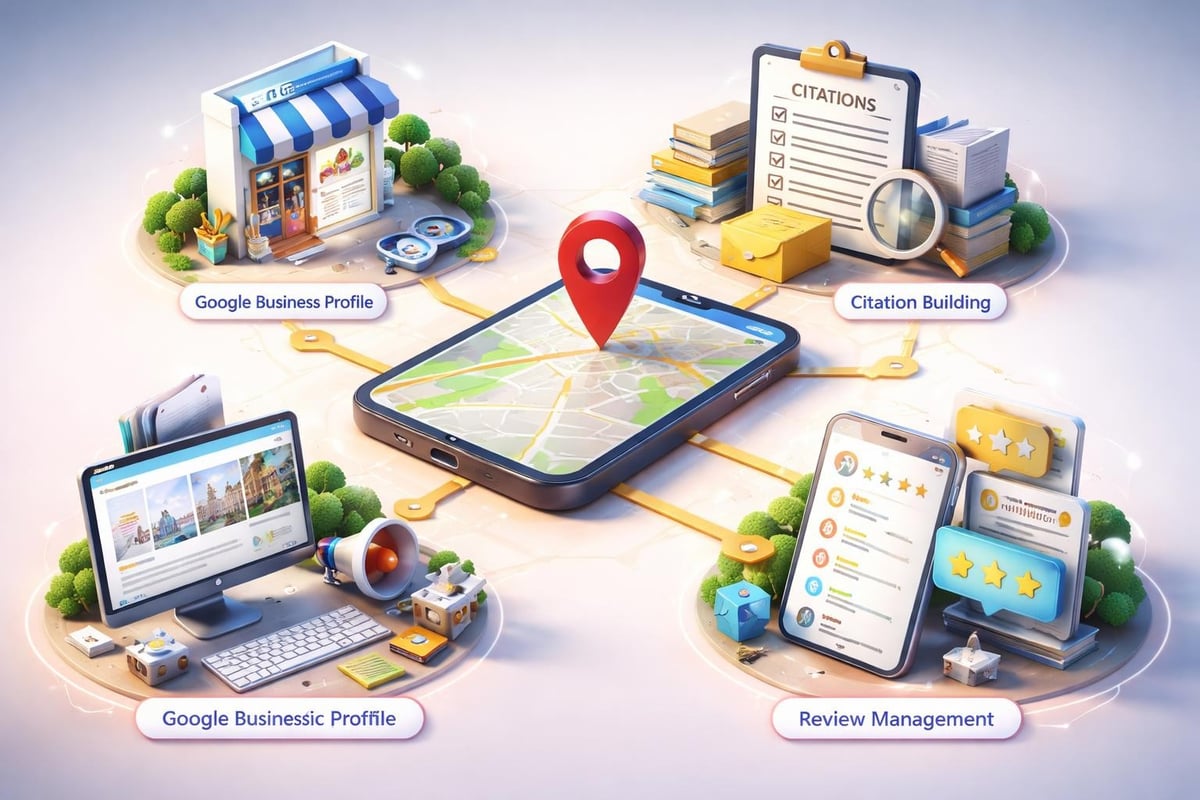
Google Business Profile Optimization
Fill out every section of your Google Business Profile: hours, service areas, categories that match how customers actually search. Add real photos of your team and your work. People check these before they ever call.
Keep the profile alive. Post updates, share offers, and answer every review, good or bad. An active profile with fresh reviews beats a stale one in the map pack, and it shows prospects someone is home.
Local Citation Consistency
Citations are boring but they work. Get listed in reputable directories and keep these details identical everywhere:
- Business name (exactly as registered)
- Address format (matching Google Business Profile)
- Phone number (primary contact number)
- Website URL (consistent across all listings)
- Business hours (accurate and updated)
Chase quality, not volume. A listing in your industry directory or the local chamber beats fifty spammy directories nobody visits.
Creating Content That Establishes Market Authority
Building authoritative content that Google and readers trust takes planning and consistency, but content still out-earns cold outreach by a wide margin, at a fraction of the cost.
Topic Clusters and Content Hubs
Organize content in topic clusters. Pick a core service, write one big pillar page that covers it broadly, then support it with focused articles answering specific questions.
That structure does three jobs at once: it shows Google what you are an expert in, keeps visitors on your site longer, and gives you natural internal links that spread authority around.
The goal is topical authority: being the obvious, complete answer on your subject. Cover every question a customer might ask instead of scattering one-off posts and hoping.
Original Research and Data-Driven Content
Original data makes you quotable. Survey your customers, compile results from your own jobs, or analyze local trends. Nobody else has your numbers.
| Content Type | Authority Impact | Link Potential | Production Effort |
|---|---|---|---|
| Original Research | Very High | Excellent | High |
| Case Studies | High | Good | Medium |
| How-To Guides | Medium | Good | Medium |
| Opinion Pieces | Medium | Low | Low |
| News Commentary | Low | Medium | Low |
That data earns links on its own as other writers cite your findings. This approach to acquiring authoritative links through data compounds: every citation builds authority that lifts everything else you publish.
Leveraging Paid Advertising for Immediate Visibility
Organic builds the asset. Meanwhile, paid advertising buys you visibility today, catching high-intent prospects at the exact moment they are ready to act.
Google Ads Campaign Structure
Start Google Ads with real keyword research focused on commercial intent. Organize by service category, then build tight ad groups where the ad matches the search almost word for word.
Search Campaign Optimization:
- Keyword selection focused on commercial and transactional intent
- Negative keyword lists preventing wasted spend on irrelevant searches
- Ad copy testing emphasizing unique value propositions and clear calls to action
- Landing page alignment ensuring message match from ad to conversion page
- Conversion tracking measuring actual business results, not just clicks
Location targeting is non-negotiable for service businesses. Target only the zip codes and radius you actually serve. Paying for clicks from two counties over is just charity.
Meta Advertising for Targeted Reach
Meta ads work differently: instead of catching demand, they create it. Facebook and Instagram let you reach people by demographics and interests before they ever search.
Custom audiences from your website visitors and customer list power retargeting that keeps you visible to warm prospects. Lookalike audiences find new people who resemble your best customers.
Implementing Marketing Automation That Scales
Manual follow-up is where leads go to die. Internet marketing strategies that build in automation respond faster, stay consistent, and scale without hiring another office person.
CRM Integration and Lead Nurturing
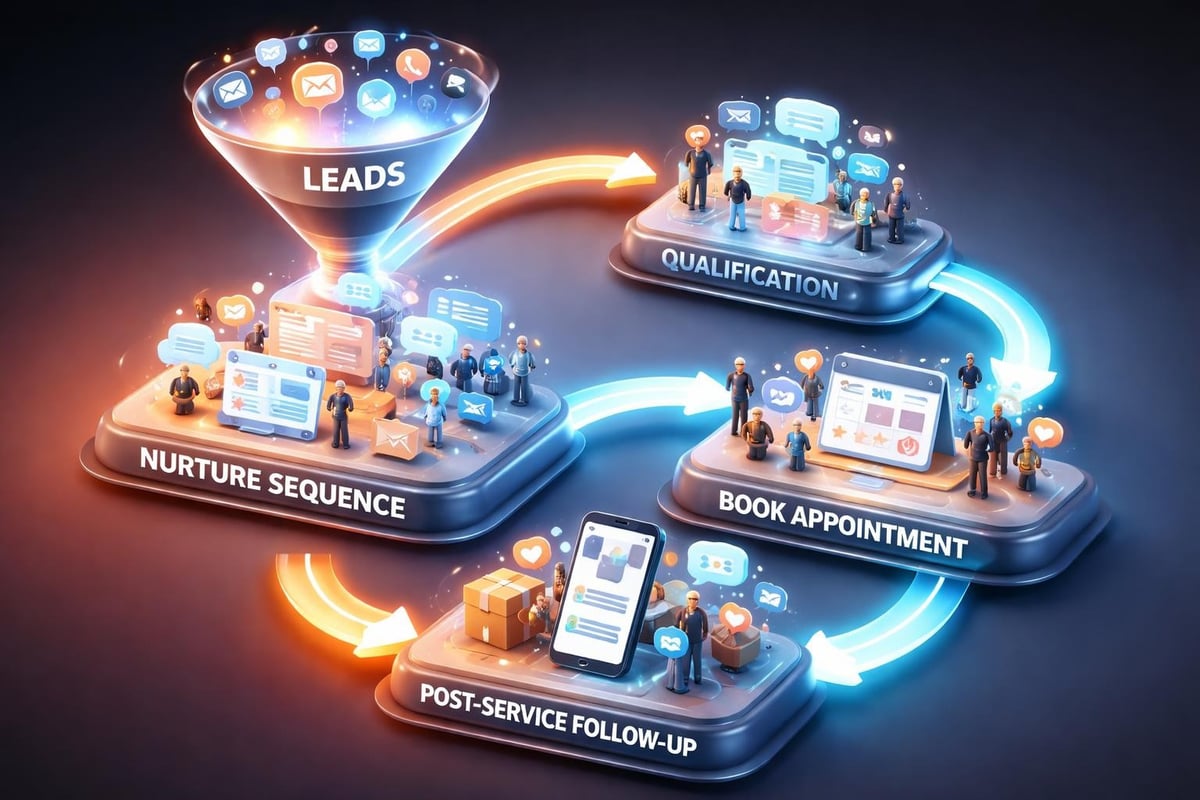
Wire every channel into one CRM. When a lead arrives from any source, an automated workflow starts the right follow-up based on where they came from and what they asked about.
Essential automation workflows include:
- Immediate response emails acknowledging inquiries
- Follow-up sequences for leads not ready to buy immediately
- Appointment reminders reducing no-shows
- Post-service review requests at optimal timing
- Re-engagement campaigns for inactive contacts
These sequences run around the clock. Nobody forgets, nobody goes on vacation, and no lead sits in an inbox until it goes cold.
AI-Powered Communication Tools
AI voice agents and chatbots answer routine questions, qualify leads, and book appointments at 2 am on a Sunday. Prospects get engaged immediately instead of waiting for business hours.
The good ones understand what callers actually want, answer the common questions, and hand the tricky ones to a human. Your team keeps the judgment calls while the machine handles the busywork.
Converting Traffic Through Optimized Landing Pages
Traffic means nothing if the page cannot convert it. A landing page built for one campaign, with one goal, will beat your homepage every time.
Conversion-Focused Design Principles
Strip out navigation, extra offers, anything that gives a visitor a reason to wander off. One page, one action: request a quote, book a call, download the guide.
High-converting landing pages feature:
- Clear, benefit-focused headlines addressing specific pain points
- Compelling subheadlines that expand on the main promise
- Trust indicators including testimonials, reviews, and credentials
- Visual hierarchy directing attention to conversion elements
- Forms requesting only essential information
- Strong calls to action with contrasting colors and action-oriented copy
Test versions against each other. A headline change or a shorter form can move conversion rates enough to change your cost per lead across every channel at once.
Message Match and Continuity
Keep the message consistent from click to page. Someone who clicks an ad about roof repair should land on a roof repair page, not your general homepage.
That continuity cuts bounce rates and raises your quality scores, which lowers your ad costs. Every gap between what the ad promised and what the page shows loses people.
Measuring Performance Through Analytics and Attribution
Internet marketing strategies live or die by business outcomes. Followers and impressions are nice. Qualified leads, conversion rates, and acquisition costs pay the bills.
Essential Metrics for Service Businesses
Track the numbers that tie to revenue, not applause. These are the ones worth watching:
| Metric Category | Key Indicators | Business Impact |
|---|---|---|
| Traffic Quality | Organic search visitors, direct traffic, referral sources | Visibility and brand strength |
| Lead Generation | Form submissions, phone calls, chat conversations | Pipeline volume |
| Conversion | Lead-to-customer rate, average deal size, time to close | Revenue efficiency |
| Customer Value | Lifetime value, repeat purchase rate, referral generation | Long-term profitability |
| Cost Efficiency | Cost per lead, customer acquisition cost, ROAS | Marketing ROI |
Watching these across channels shows you which internet marketing strategies actually earn their budget, so you can move money toward what works.
Multi-Touch Attribution Models
Customers rarely convert on the first touch. They find you in search, come back through a retargeting ad, read your reviews, then call. Attribution assigns credit across that whole path.
First-touch attribution credits the discovery, last-touch credits the closer. Models like linear or time-decay split credit across the journey, which is usually closer to the truth.
Building Authority Through Strategic Link Acquisition
Backlinks from reputable sites still signal credibility to Google and send real referral traffic. But simple link-building tactics built on quality beat mass outreach spam every time.
Creating Linkable Assets
Make things worth linking to: research reports, genuinely complete guides, calculators people actually use. One good asset keeps earning links for years.
Internet marketing services that strengthen brand authority include building these assets as part of a broader content plan. The upfront work pays out in visibility for years.
Digital PR and Relationship Building
Relationships earn links too. Contribute expert commentary to industry publications, share your research with local media, collaborate with complementary businesses.
For local companies, community involvement is a link strategy in disguise. Sponsorships, charity work, and awards get covered by local outlets, and those links punch above their weight in local rankings.

Optimizing for Voice Search and Mobile Users
Voice searches keep growing with smart speakers and phone assistants. They run longer and more conversational than typed searches, and they are usually questions.
Conversational Content Optimization
Write content that answers those questions directly: who, what, where, when, why, how. Plain language, clear answers, right near the top of the page.
FAQ sections and how-to guides fit voice search naturally. Keep answers short enough for an assistant to read aloud.
Mobile Experience Optimization
Most searches happen on phones, and Google indexes your mobile site first. Speed, responsive layout, and thumb-friendly navigation affect rankings and patience alike.
Mobile optimization priorities:
- Page load times under three seconds
- Readable text without zooming (minimum 16px font size)
- Tap targets sized appropriately (minimum 48×48 pixels)
- Forms optimized for mobile input
- Minimal pop-ups and interstitials
Get the mobile version right or nothing else matters. A great desktop site with a broken phone experience is invisible in the rankings.
Creating Personalized Experiences Through Segmentation
Generic blasts get ignored. A retiree in Monument and a facilities manager downtown have different problems, and they should get different messages.
Behavioral Segmentation Strategies
Segment by behavior, not just demographics. Someone who viewed your pricing page is warmer than someone who skimmed a blog post. Treat them accordingly.
Create segments based on:
- Service interests (specific offerings they’ve researched)
- Engagement levels (frequency and recency of interactions)
- Purchase history (past customers, repeat buyers, dormant accounts)
- Lead source (organic search, paid ads, referrals)
- Geographic location (for businesses with multiple service areas)
Messages matched to segments get opened more, clicked more, and convert more. Relevance is the cheapest performance upgrade in marketing.
Dynamic Content Delivery
Automation platforms take this further with dynamic content: the same email shows different offers or testimonials depending on who opens it.
Landing pages can adapt the same way, greeting ad clicks with one headline and organic visitors with another while the core offer stays put.
Competitive Analysis and Market Positioning
Watch your competitors, but do not copy them. Regular competitive analysis tells you which digital marketing channels deserve priority and where the market has left a gap.
Identifying Competitive Gaps
Look at their sites, content, and ads. The services they underplay, the topics they skip, and the areas they ignore are your openings.
Search your own primary keywords and study who ranks. What makes them credible? Where is their coverage thin? Then write the better page.
Differentiation Through Unique Value Propositions
Clear differentiation keeps you out of price wars. Maybe it is a specialty, a guarantee, a faster response time. Whatever it is, name it.
Then say it everywhere: ads, landing pages, website, emails. If your unique angle only lives in your head, it does not exist to customers.
Email Marketing That Maintains Engagement
Email is still the workhorse. Your list is an audience you own, no ad auction or algorithm required.
List Building and Lead Magnets
Trade something useful for the address: a service guide, a checklist, a calculator, a free assessment. Give value first and the emails follow.
Effective lead magnet characteristics:
- Solves a specific, immediate problem
- Delivers value quickly (no long reads required)
- Demonstrates your expertise and approach
- Creates desire for your paid services
- Aligns with your ideal customer profile
Promote the lead magnet on your site, your social channels, and even in ads. The list should grow every week, not once a quarter.
Segmented Email Campaigns
Do not blast the whole list with one message. Segment by interest, behavior, and stage in the customer journey.
New subscribers get a welcome series. Active prospects get answers to common objections. Past customers get reasons to come back and refer their neighbors.
Social Media Strategy That Supports Business Goals
Be honest about what social media does for a service business: awareness, customer service, and community. Direct leads are the exception, not the plan.
Platform Selection and Resource Allocation
Do not spread across five platforms. Pick the one or two where your customers actually spend time and where your content strengths fit.
Platform strengths by business type:
| Platform | Best For | Content Types | B2B vs B2C |
|---|---|---|---|
| Professional services, B2B | Articles, company updates | B2B | |
| Local businesses, community focus | Videos, events, customer stories | B2C | |
| Visual businesses, lifestyle brands | Photos, stories, reels | B2C | |
| YouTube | Educational content, demonstrations | Long-form video, tutorials | Both |
| News, trends, customer service | Short updates, conversations | Both |
Showing up steadily matters more than showing up everywhere. A dead account whose last post is from March does more harm than no account at all.
Community Engagement and Customer Service
Social gives you a direct line to customers. Answer comments and messages quickly. Responsiveness in public builds trust with everyone watching.
Customer photos and posts are gold. Encourage happy customers to tag you and share their results. Their words sell harder than yours.
Video Marketing Integration Across Channels
Video wins attention everywhere it runs. People would rather watch an explanation than read one, so a little production effort pays back across every channel you use.
Educational Video Content
Make videos that answer real questions, show your process, and explain the confusing stuff simply. One video works on your site, YouTube, social, and email all at once.
High-value video topics include:
- Service process explanations
- Before-and-after case studies
- Customer testimonials
- Common problem solutions
- Industry myth debunking
- Behind-the-scenes business operations
Cut longer videos into short clips for social. One afternoon of filming becomes a month of content.
Video SEO Optimization
YouTube is the second-largest search engine. Write real titles and descriptions with the words people search, and make thumbnails worth clicking.
Add transcripts and captions. They help accessibility and give search engines text to index. Use cards and end screens to point viewers at the next step.
Retargeting Strategies That Recover Abandoned Visitors
Most visitors leave without converting. That is normal. Retargeting brings them back when the timing is better.
Pixel-Based Retargeting Campaigns
Install the ad platform pixels on your site to build audiences of past visitors, then show them ads across display, social, and search.
Segment those audiences by behavior. Someone who abandoned your contact form gets a different message than someone who skimmed a service page.
Email Retargeting and Cart Abandonment
If you take bookings or quote requests online, abandoned-form emails recover conversions that distraction almost cost you. A simple reminder is often enough.
These campaigns post some of the best ROI in marketing because the audience already raised their hand. You are just finishing the conversation.
Reputation Management and Review Generation
Reviews drive purchases and local rankings at once. Treat review generation as a system, not something you remember to do in slow months.
Structured Review Request Systems
Ask right after the job wraps, when satisfaction peaks. Automate the request through your CRM so it happens every time without anyone remembering.
Make it effortless: direct links to your Google profile and the review sites that matter in your industry. Every extra step cuts your completion rate.
Review Response Protocols
Respond to every review. Thank the happy customers specifically. Handle the unhappy ones professionally and take the details offline.
Prospects read your responses as closely as the reviews themselves. A graceful reply to criticism is often more convincing than a wall of praise.
Effective internet marketing strategies are systems, not scattered tactics: search visibility, paid ads, content, and automation reinforcing each other instead of competing for budget. If you want that system built without doing it all yourself, Pioneer Marketing helps service businesses across the Colorado Front Range put it together, with local SEO, AI-powered automation, and paid campaigns judged by leads, not impressions.