Electronic marketing has fundamentally transformed how businesses connect with their audiences, replacing traditional advertising methods with digital channels that offer unprecedented precision, measurement, and scalability. This approach leverages technology to deliver targeted messages, build lasting customer relationships, and generate measurable returns on investment. For small and mid-sized businesses competing in local markets, understanding electronic marketing principles and implementing them strategically can mean the difference between stagnant growth and predictable lead flow. The digital landscape continues evolving rapidly, making it essential for business owners to grasp core concepts and practical applications that drive real revenue.
Understanding Electronic Marketing Fundamentals
Electronic marketing encompasses all marketing activities conducted through digital channels and electronic devices. Unlike traditional marketing that relies on print, television, or radio, this approach utilizes the internet, email systems, mobile devices, and digital platforms to reach potential customers where they spend increasing amounts of their time.
The scope of electronic marketing extends far beyond simple website promotion. It includes:
- Search engine optimization and paid search advertising
- Email campaign management and automation
- Social media marketing across multiple platforms
- Content marketing through blogs, videos, and downloadable resources
- Mobile marketing including SMS and app-based strategies
- Display advertising and retargeting campaigns
- Affiliate and influencer partnerships
What sets electronic marketing apart is its ability to track every interaction, measure campaign performance in real time, and adjust strategies based on actual data rather than assumptions. When a prospect clicks an email link, visits a landing page, or downloads a resource, businesses can capture that information and use it to refine their approach.
Why Electronic Marketing Matters for Local Businesses
For service-based businesses operating in competitive local markets, electronic marketing offers distinct advantages over traditional advertising methods. The ability to target specific geographic areas, demographics, and behavioral patterns means marketing budgets work harder and produce better results.
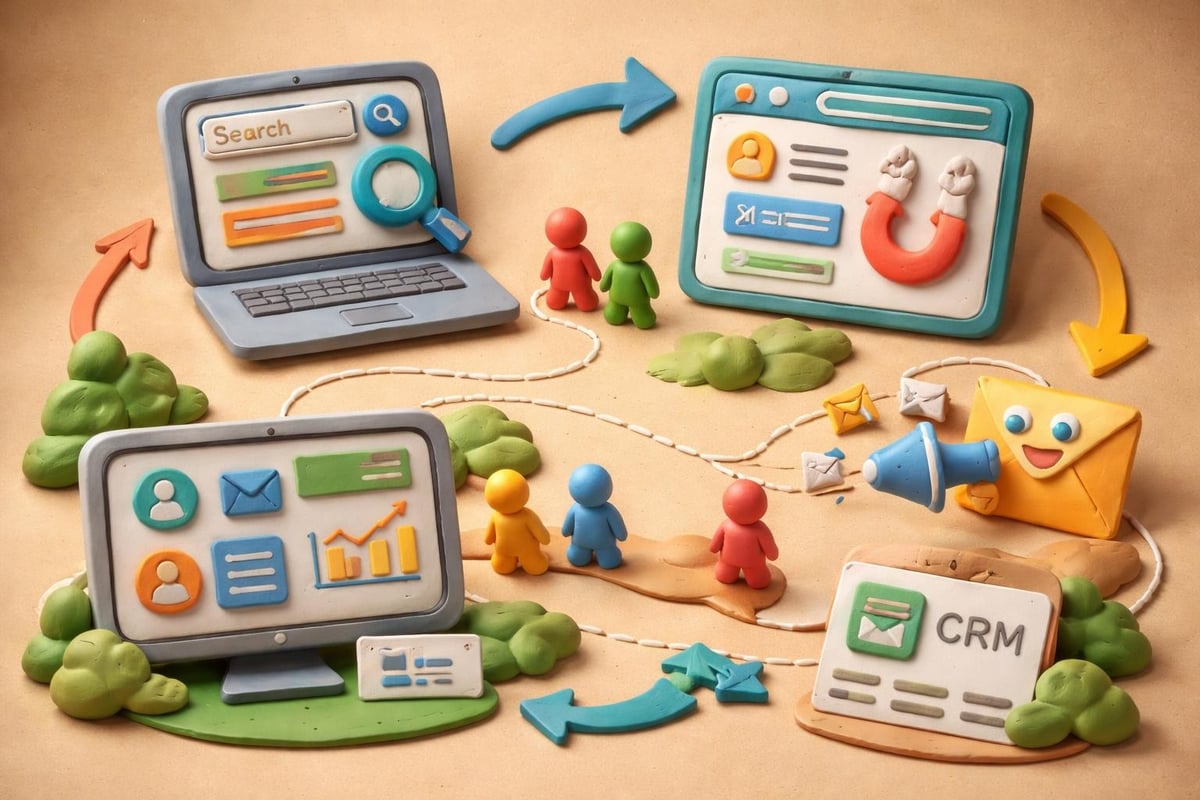
Consider the customer journey in 2026. When someone needs a service provider, they typically start with a mobile search, check Google reviews, visit the business website, and may follow up through phone or text. Electronic marketing creates touchpoints at each stage, ensuring your business stays visible and credible throughout the decision-making process.
Digital marketing strategies that combine multiple electronic channels consistently outperform single-channel approaches because they create multiple opportunities for customer engagement and conversion.
Core Electronic Marketing Channels and Their Applications
Search Engine Marketing
Search engine marketing represents one of the most powerful electronic marketing channels because it captures demand at the moment of intent. When someone searches for "plumber near me" or "martial arts classes Colorado Springs," they're actively seeking a solution.
This channel divides into two main categories:
Organic Search (SEO)
Building visibility through organic search requires optimizing website content, earning quality backlinks, and ensuring technical website health. For local businesses, this means claiming and optimizing Google Business Profiles, building location-specific content, and maintaining consistent business information across directories.
Paid Search (PPC)
Pay-per-click advertising delivers immediate visibility for targeted keywords. Google Ads campaigns allow businesses to bid on specific search terms and pay only when users click their ads. The key to profitable PPC lies in precise targeting, compelling ad copy, and conversion-optimized landing pages that turn clicks into customers.
| Channel Type | Time to Results | Cost Structure | Best For |
|---|---|---|---|
| Organic SEO | 3-6 months | Ongoing investment | Long-term visibility |
| Paid Search | Immediate | Pay per click | Quick lead generation |
| Local SEO | 2-4 months | Monthly service | Geographic targeting |
Email Marketing Automation
Email remains one of the highest-ROI electronic marketing channels, delivering an average return of $36 for every dollar spent according to recent industry studies. Modern email marketing goes far beyond newsletters, incorporating sophisticated automation that nurtures leads based on their behavior and stage in the buying cycle.
Effective email automation includes:
- Welcome sequences that introduce new subscribers to your brand
- Educational drip campaigns that build trust over time
- Abandoned cart reminders for e-commerce businesses
- Re-engagement campaigns targeting inactive contacts
- Post-purchase follow-ups that encourage reviews and repeat business
The power of email automation lies in its ability to maintain consistent communication without manual effort. When integrated with customer relationship management systems, email marketing becomes a sophisticated tool for moving prospects toward purchase decisions while providing value at every stage.
Social Media Marketing
Social platforms serve dual purposes in electronic marketing strategies. They function as discovery channels where businesses can reach new audiences through organic content and paid advertising, while also serving as engagement platforms where brands build relationships with existing customers.
Facebook and Instagram advertising offer particularly strong opportunities for local businesses. These platforms provide detailed targeting options based on location, interests, behaviors, and demographics. A martial arts school can target parents of children ages 5-12 within a 10-mile radius, while a home services company can reach homeowners in specific ZIP codes.
Meta advertising campaigns that combine compelling creative with precise audience targeting typically achieve 20-40% lower cost-per-lead compared to broader approaches that lack strategic focus.
Implementing Electronic Marketing Systems That Scale
Building the Technology Stack
Successful electronic marketing requires the right tools working together seamlessly. At minimum, growing businesses need a website with conversion tracking, email marketing platform, customer relationship management system, and analytics capabilities.
Website Foundation
Your website serves as the hub for all electronic marketing activities. It must load quickly, display properly on mobile devices, clearly communicate your value proposition, and include conversion points such as contact forms, phone numbers, and appointment scheduling tools.
CRM and Marketing Automation
Customer relationship management platforms centralize lead data, track interactions across channels, and automate follow-up sequences. When a lead comes from Google Ads, the CRM can trigger specific email sequences, assign tasks to sales team members, and track every touchpoint until conversion.
Many small businesses lose opportunities because leads fall through the cracks. AI-driven automation systems address this problem by ensuring every lead receives timely follow-up through multiple channels including email, SMS, and even voice calls.

Creating Content That Converts
Content serves as the fuel for electronic marketing campaigns. Blog posts, videos, case studies, and downloadable guides attract organic traffic, provide value to email subscribers, and give social media channels material worth sharing.
The most effective content addresses specific problems your target customers face. Rather than generic industry information, create resources that answer real questions and demonstrate your expertise. A roofing company might publish guides on "5 Warning Signs Your Roof Needs Replacement" or "How to Choose a Roofing Contractor in Colorado."
Quality content also improves search engine rankings. According to Forrester’s research on AI in digital marketing, businesses that consistently publish valuable content see significant improvements in organic visibility and lead quality over time.
Measuring Electronic Marketing Performance
Key Metrics That Matter
Electronic marketing's measurability represents one of its greatest strengths. However, tracking the right metrics requires focus on indicators that connect directly to business outcomes rather than vanity metrics that look impressive but don't drive revenue.
Critical metrics include:
- Cost per lead: Total marketing spend divided by qualified leads generated
- Conversion rate: Percentage of visitors who complete desired actions
- Customer acquisition cost: Full cost to acquire a new customer
- Return on ad spend: Revenue generated per dollar spent on advertising
- Lead-to-customer rate: Percentage of leads that become paying customers
- Customer lifetime value: Total revenue expected from a customer relationship
By tracking these metrics across different channels, businesses can identify which electronic marketing activities produce the best returns and deserve increased investment.
Attribution and Multi-Touch Tracking
Modern customer journeys rarely follow simple paths. A prospect might see a Facebook ad, visit your website, leave without converting, receive an email, search your business name on Google, read reviews, and then call weeks later. Understanding which touchpoints contributed to that conversion requires sophisticated attribution tracking.
Multi-touch attribution models assign value to each interaction rather than crediting only the last click before conversion. This provides more accurate insights into how different electronic marketing channels work together to generate business results.
Leveraging Local Electronic Marketing Strategies
Geographic Targeting and Local Search
For businesses serving specific geographic areas, local SEO strategies deserve special attention within your electronic marketing approach. Local search optimization ensures your business appears in Google's Local Pack, the map results shown for location-based queries.
Local electronic marketing tactics include:
- Optimizing Google Business Profile with accurate information, categories, and regular posts
- Building citations in local directories with consistent NAP (Name, Address, Phone)
- Generating customer reviews and responding to feedback
- Creating location-specific website content and landing pages
- Implementing local schema markup for search engines
Geographic targeting extends to paid advertising as well. Google Ads and Meta platforms allow precise location targeting, ensuring ad budgets focus on prospects within your service area rather than wasting impressions on people you can't serve.
Review Generation and Reputation Management
Online reviews have become critical components of electronic marketing success. They influence search rankings, affect click-through rates from search results, and significantly impact conversion rates once prospects reach your website.
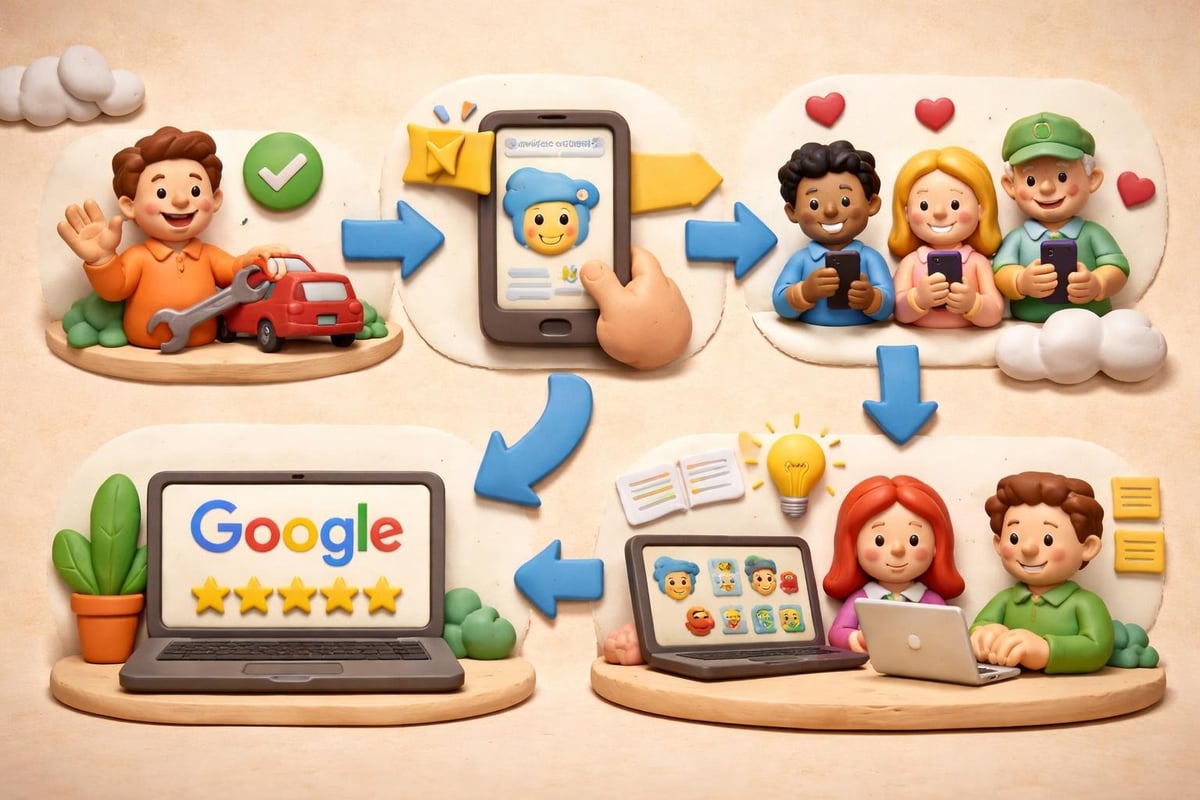
Systematic review generation requires automation. After completing a service or transaction, trigger email and SMS requests asking satisfied customers to share their experience. Make the process simple by providing direct links to your Google Business Profile or other review platforms.
Monitoring your online reputation also matters. Set up alerts for new reviews and mentions so you can respond quickly, addressing concerns and thanking customers for positive feedback. This active management demonstrates professionalism and can turn negative situations into opportunities to showcase excellent customer service.
Advanced Electronic Marketing Tactics
Retargeting and Audience Segmentation
Most website visitors leave without converting on their first visit. Retargeting uses tracking pixels to identify these visitors and show them targeted ads as they browse other websites or social media platforms. This keeps your business top-of-mind and brings prospects back when they're ready to take action.
Effective retargeting segments audiences based on their behavior. Someone who viewed your services page deserves different messaging than someone who only read a blog post. Similarly, prospects who abandoned contact forms might receive offers for free consultations, while those who spent significant time researching specific services could see case studies or testimonials.
Nielsen’s digital advertising research demonstrates that properly segmented retargeting campaigns achieve substantially higher engagement rates compared to generic approaches that treat all audiences identically.
Conversion Rate Optimization
Driving traffic through electronic marketing channels only creates value when that traffic converts into leads and customers. Conversion rate optimization focuses on improving the percentage of visitors who take desired actions through systematic testing and refinement.
Elements worth testing include:
- Headline variations that emphasize different benefits or value propositions
- Call-to-action buttons with different colors, sizes, and action-oriented text
- Form length and fields to balance information collection with user friction
- Page layouts that guide attention toward conversion elements
- Trust signals such as reviews, certifications, and guarantees
Even small improvements in conversion rates compound significantly over time. Increasing your conversion rate from 2% to 3% means 50% more leads from the same traffic investment.
For businesses investing in paid advertising campaigns, high-converting landing pages specifically designed for campaign traffic can dramatically improve return on ad spend by reducing bounce rates and increasing form submissions.
Integration and Holistic Strategy
Connecting Electronic Marketing Channels
The most successful electronic marketing strategies treat different channels as complementary components of an integrated system rather than isolated tactics. Search ads drive traffic to optimized landing pages that capture email addresses. Email nurture sequences build trust and encourage social media follows. Social content drives website traffic that converts into consultation bookings.
This integration requires consistent messaging across channels while adapting format and tone to each platform's unique characteristics. Your value proposition remains constant whether someone encounters your brand through Google search, Facebook, or email, but the presentation adapts to context and user expectations.
Automation Without Losing the Human Touch
Marketing automation enables small teams to execute sophisticated electronic marketing strategies that would otherwise require much larger staffs. However, automation works best when it enhances rather than replaces human interaction.
Use automation for:
- Immediate follow-up responses to new leads
- Scheduled content distribution across channels
- Behavioral triggered email sequences
- Data collection and organization
- Appointment reminders and confirmations
Reserve human involvement for:
- Complex questions requiring expert knowledge
- High-value prospect conversations
- Relationship building with existing customers
- Creative strategy and content development
- Analyzing results and making strategic decisions
The goal is creating systems that ensure no opportunity falls through the cracks while maintaining the personal touch that builds trust and drives conversions. Small business marketing approaches that balance automation with authentic human engagement consistently outperform purely automated or entirely manual approaches.
Emerging Trends in Electronic Marketing
Artificial Intelligence and Machine Learning
AI technology is transforming electronic marketing capabilities in 2026. Machine learning algorithms now optimize ad bidding in real time, predict which leads are most likely to convert, personalize content recommendations, and even generate initial drafts of marketing copy.
For small businesses, AI democratizes access to sophisticated capabilities previously available only to enterprises with large budgets and technical teams. Predictive lead scoring identifies which prospects deserve immediate attention from sales teams. Natural language processing analyzes customer feedback across channels to identify trends and opportunities. Automated chatbots qualify leads and answer common questions 24/7.
The key is implementing AI tools strategically rather than chasing technology for its own sake. Focus on applications that solve specific problems or create measurable improvements in your marketing performance.
Privacy Changes and First-Party Data
Electronic marketing faces ongoing challenges as privacy regulations tighten and platforms restrict third-party data access. Apple's privacy features, Google's plan to phase out third-party cookies, and evolving regulations like GDPR and CCPA all impact targeting and tracking capabilities.
This shift increases the value of first-party data collected directly from your audience through website interactions, email subscriptions, and customer transactions. Building owned audiences through email lists and customer databases provides more control and reliability than depending entirely on platform-based targeting.
Successful electronic marketing strategies in 2026 and beyond will emphasize value exchange, offering genuinely useful content and experiences in return for contact information and permission to communicate. Transparency about data usage and genuine respect for privacy preferences build trust that strengthens customer relationships over time.
Building Your Electronic Marketing Roadmap
Starting With Clear Objectives
Effective electronic marketing begins with specific, measurable objectives tied to business outcomes. Rather than vague goals like "increase brand awareness," define targets such as "generate 50 qualified leads per month at under $100 cost per lead" or "achieve 25% of new customers from organic search within six months."
Clear objectives inform channel selection, budget allocation, and success measurement. They also help prioritize activities when resources are limited, focusing effort on tactics most likely to move the business forward.
Scaling Systematically
Small businesses often make the mistake of trying to execute across too many channels simultaneously, resulting in mediocre performance everywhere rather than excellence anywhere. A better approach involves mastering one or two core electronic marketing channels before expanding to additional tactics.
For most local service businesses, this means starting with:
- Website optimization ensuring a solid foundation for all traffic
- Local search visibility capturing existing demand in your market
- One paid channel (search or social) generating immediate leads while organic efforts build
- Email automation maximizing value from captured leads
As these foundations stabilize and generate consistent results, layer in additional channels like content marketing, advanced social strategies, or video marketing. This systematic approach builds sustainable growth rather than scattered efforts that drain resources without producing returns.
Working With Specialists
Electronic marketing encompasses numerous disciplines, each requiring specialized knowledge and ongoing skill development. Search engine optimization, paid advertising, conversion optimization, email marketing, and marketing automation all involve distinct skillsets and best practices.
Many small and mid-sized businesses find that partnering with experienced specialists delivers better results than trying to build comprehensive in-house expertise. Agencies and consultants who focus specifically on electronic marketing stay current with platform changes, algorithm updates, and emerging best practices that would be difficult for generalists to maintain.
The right partners function as extensions of your team, understanding your business goals and implementing strategies aligned with your growth objectives rather than simply executing predetermined tactics.
Electronic marketing represents the most measurable, targetable, and scalable approach to business growth available to small and mid-sized companies in 2026. By understanding core principles, implementing integrated strategies across complementary channels, and consistently measuring what works, businesses can build predictable lead generation systems that fuel sustainable growth. Pioneer Marketing helps Colorado Front Range businesses implement these electronic marketing strategies through local SEO, AI-driven automation, and performance-focused advertising campaigns that connect traffic to revenue with complete transparency and measurable results.