AI has changed the day-to-day of marketing more in three years than the previous fifteen did. AI and digital marketing together deliver personalization at scale, automate the repetitive work, and pull useful answers out of data no human team could sift through. For a small business in a crowded market, that levels the playing field: enterprise-grade capability at a small business price.
Understanding AI’s Role in Modern Marketing
A few different technologies get lumped under the AI label. Machine learning predicts what customers will do next. Natural language processing powers chatbots and voice agents. Predictive analytics forecasts campaign results before you spend a dollar. Computer vision figures out which images actually hold attention.
In practice, that changes the daily workflow. AI finds micro-segments in your email list based on hundreds of signals instead of three broad buckets. It tests ad variations and shifts budget to the winners while you sleep. Your marketing adapts in real time to whatever is actually converting.
According to research on AI’s impact on consumer interaction, AI is reshaping how customers engage with brands through the whole buying process, which means old attribution models and journey maps need a rethink.
The Technology Stack Behind AI Marketing
Modern AI and digital marketing runs on connected platforms that share data and trigger actions across channels. CRMs score leads by conversion likelihood. Marketing automation platforms use machine learning to pick send times, subject lines, and content for each contact.
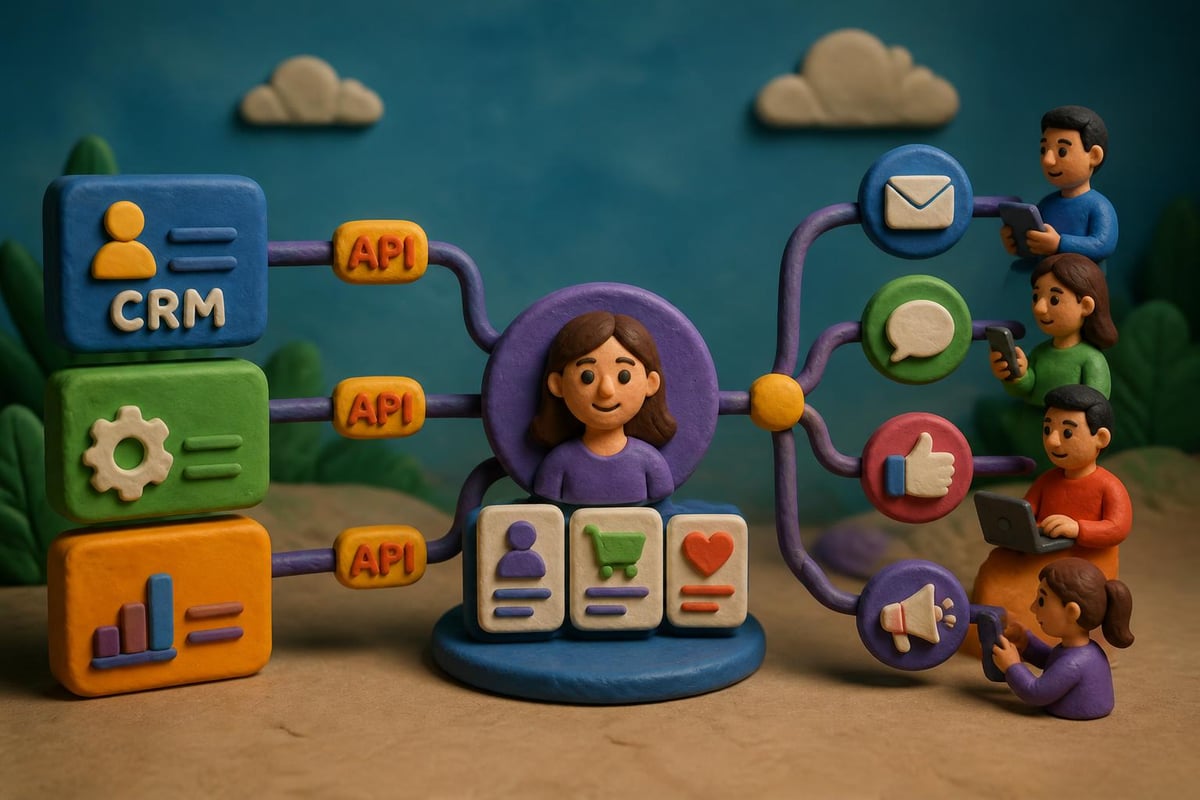
Key Components of an AI Marketing Stack:
- CRM with predictive lead scoring that identifies high-value prospects
- Marketing automation that triggers personalized sequences based on behavior
- Analytics platforms that surface insights without manual data mining
- Ad platforms with algorithmic bidding and audience optimization
- Chatbots and voice agents that qualify leads and book appointments
- Content generation tools that produce variations for testing
The magic is in the connections. A prospect visits your site, views your roof repair page, and gets an email about roof repair an hour later. That is orchestration, and it is what separates a stack from a pile of tools.
Personalization at Scale Through AI
Generic messaging gets ignored. Customers expect relevance, and AI makes real personalization possible without a big marketing team. It builds dynamic profiles from browsing behavior, purchase history, email engagement, and demographics.
Those profiles drive every touchpoint. Subject lines adjust to what each person actually opens. Website content shifts to match visitor interests. Ad creative rotates by segment. Follow-up timing adapts to how fast someone usually responds.
| Personalization Level | Manual Approach | AI-Powered Approach |
|---|---|---|
| Email subject lines | One size fits all | Individualized based on open history |
| Website content | Static pages | Dynamic content blocks per visitor |
| Ad messaging | Broad audience segments | Micro-segments with custom creative |
| Follow-up timing | Scheduled intervals | Optimized per contact’s engagement pattern |
| Product recommendations | Rule-based categories | Predictive modeling across behavior signals |
Salesforce’s comprehensive guide shows how the big platforms use these personalization plays to lift engagement and conversion.
Dynamic Content Optimization
AI tests continuously. Where a traditional A/B test takes weeks, machine learning evaluates dozens of variations at once and moves traffic to winners within hours: emails, landing pages, ad copy, buttons, whole sequences.
And it never clocks out. A headline that crushed it in January might flop in June. The system notices and swaps it before you would have.
Automating Customer Acquisition and Retention
The fastest payoff from AI and digital marketing is workflow automation. A lead fills out your form at 9 PM and instantly gets a personal follow-up, lands in the right nurture sequence, and pings your sales team, all without anyone touching it.
This automation extends across the entire customer lifecycle:
- Lead capture and qualification through chatbots that ask qualifying questions
- Immediate follow-up via SMS or email based on lead source and behavior
- Nurture sequences that adapt based on engagement levels
- Appointment scheduling with AI voice agents that handle booking
- Re-engagement campaigns triggered when customers go inactive
- Upsell and cross-sell recommendations based on purchase history
If you run SMS and email marketing automation, AI decides which channel to use when. SMS gets roughly 98% open rates; email carries the detail. Together they make sure the message lands.
Voice AI and Conversational Marketing
Voice AI now handles first conversations convincingly. It answers common questions, qualifies budget and timeline, books appointments straight into calendars, and hands complex calls to a human with full context.
One AI voice agent takes unlimited simultaneous calls, works around the clock, never forgets a qualifying question, and logs everything. For a service business, that means no missed calls during the afternoon rush and instant answers at 10 PM.
Predictive Analytics and Campaign Optimization
Traditional marketing looks backward and guesses forward. Predictive models actually forecast, drawing on millions of data points from past campaigns to spot patterns people cannot see.
Predictive analytics answers critical business questions before you commit budget:
- Which audience segments will generate the lowest cost-per-acquisition?
- What time of day and day of week drives highest conversion rates?
- Which creative elements correlate with better engagement?
- How much budget should each campaign receive for optimal ROI?
- When is a customer likely to churn, triggering retention efforts?
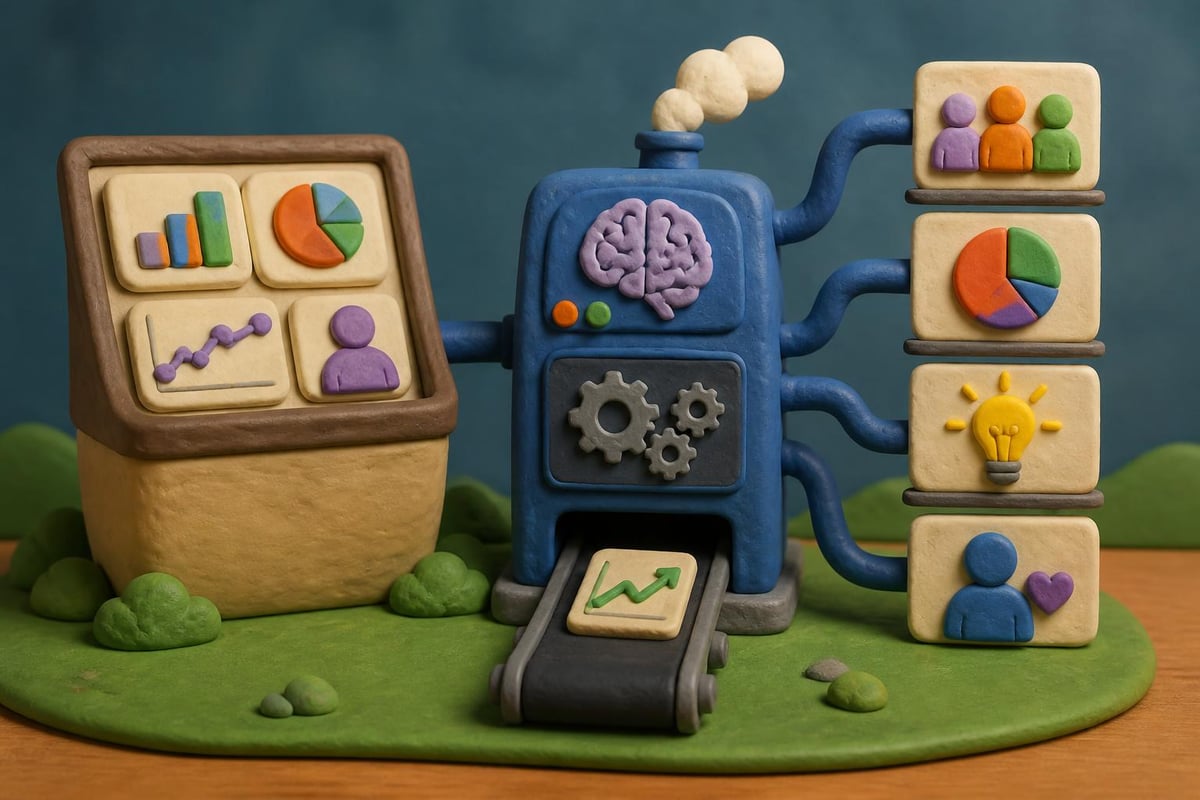
IBM’s exploration of generative AI in marketing shows these tools moving past analysis into creating new marketing assets tuned for predicted performance.
Real-Time Bid Optimization
Ad platforms lean on AI for bids and budget. The algorithms adjust hundreds of times a day based on performance, competitor moves, and conversion likelihood. Manual bidding cannot keep up.
For businesses working with PPC advertising partners, algorithmic bid strategies are no longer optional. Milliseconds matter in the auction, and humans do not operate in milliseconds.
Content Creation and Optimization
Generative AI turned content from a bottleneck into a production line: blog posts, ad copy, emails, social content, scripts. According to research from the Interactive Advertising Bureau, 86% of advertisers use or plan to use AI for video ad creation.
AI Content Applications:
- Blog post outlines and drafts that maintain brand voice
- Ad copy variations for systematic testing across platforms
- Email sequences personalized by industry, pain point, or customer stage
- Social media posts scheduled across platforms with optimal timing
- Landing page copy optimized for specific traffic sources
- Video scripts and storyboards aligned with campaign objectives
Treat AI as a collaborator. It drafts fast and wide, while you bring strategy, brand judgment, and quality control. AI generates ten options; a human picks the best one and polishes it.
SEO and Content Optimization
AI also reads the search results better than we do. These tools study top-ranking pages, map the semantic relationships engines reward, suggest internal links, and estimate how changes will move rankings.
For businesses focused on local SEO strategies, AI helps find location-specific keywords, dissect competitor content, and tune your Google Business Profile for the local pack.
Managing Advertising Budgets with AI
Wasted ad spend is one of the biggest leaks in digital marketing, and AI and digital marketing tools patch it with fraud detection, audience refinement, and smarter budget allocation. TechRadar’s investigation into AI-driven ad fraud shows the flip side: the same technology powers more sophisticated fraud, so human oversight stays mandatory.
| Budget Challenge | Traditional Approach | AI Solution |
|---|---|---|
| Fraud detection | Manual review of suspicious activity | Real-time pattern recognition and blocking |
| Audience targeting | Demographic and interest categories | Behavioral prediction and lookalike modeling |
| Budget allocation | Equal split or manual adjustment | Performance-based algorithmic distribution |
| Cross-channel attribution | Last-click or basic multi-touch | Machine learning attribution modeling |
| Creative performance | Periodic A/B testing | Continuous multi-variant optimization |
Smart budget management ties spend directly to revenue. Track customers from first click through lifetime value, then feed that back into systems that optimize for profit instead of vanity metrics.
Cross-Channel Campaign Coordination
Customers bounce between platforms before they buy: a Facebook ad, your website, an email, a Google ad, then the booking. AI attribution follows that whole journey and shows which channels actually drive revenue.
That visibility makes budget calls easier. Rather than splitting spend evenly out of habit, you allocate based on what each channel contributes. As consumer behavior research shows, AI has become the second most influential factor in shopping decisions.
Customer Data Platforms and Unified Profiles
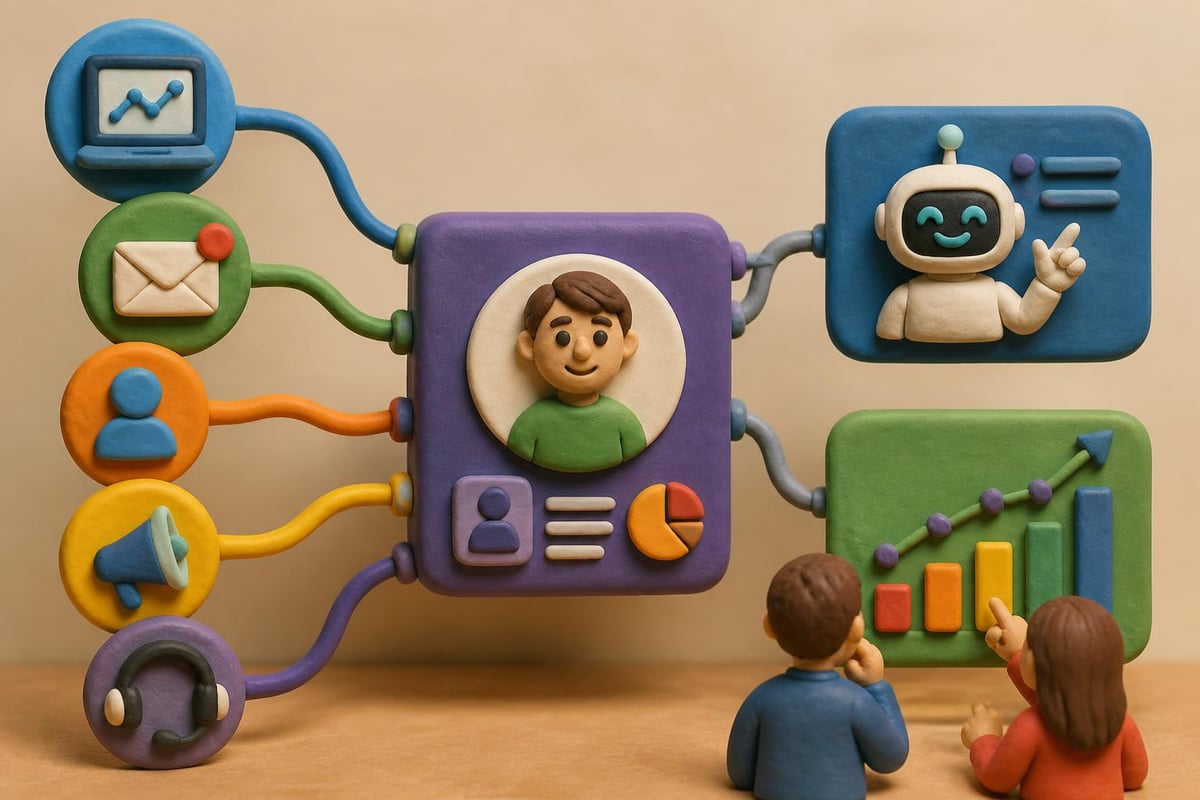
Scattered data kills personalization. Customer Data Platforms pull every touchpoint, from website visits to service calls, into one unified profile.
AI analyzes these comprehensive profiles to identify:
- Purchase propensity scores indicating likelihood to buy
- Channel preferences showing where customers prefer communication
- Engagement patterns revealing optimal contact frequency and timing
- Churn risk indicators that trigger retention campaigns
- Upsell opportunities based on purchase history and behavior
Those insights drive automation that feels personal because it is based on what that individual actually did rather than broad demographic guesses.
Privacy and Compliance Considerations
All of this has to respect GDPR, CCPA, and the growing pile of state privacy laws. Good systems capture consent, honor opt-outs automatically, anonymize where appropriate, and keep audit trails.
The best platforms build privacy in from the start: data minimization by default, deletion schedules, consent management, and plain-English data policies that earn trust.
Measuring ROI and Performance
Impressions and clicks tell you almost nothing about business impact. AI and digital marketing measurement connects activity to revenue, profit, and customer lifetime value.
Advanced Metrics Enabled by AI:
- Customer acquisition cost (CAC) by channel, campaign, and audience segment
- Lifetime value (LTV) predictions based on early behavior signals
- Return on ad spend (ROAS) calculated across entire customer journeys
- Contribution margin accounting for fulfillment and service costs
- Payback periods showing how quickly marketing investments return
- Incrementality measuring true lift versus baseline performance
The SOMONITOR framework shows how pairing explainable AI with large language models produces serious analytics for competitor analysis and planning.
That clarity makes decisions easy. When you know exactly which campaigns produce profitable customers and which just burn budget, reallocation stops being a debate.
Dashboard and Reporting Automation
AI dashboards surface the insights without the report-building marathon: live trends, anomaly flags, forecasts, and suggested optimizations.
For agencies juggling clients or businesses running many campaigns, that turns reporting from a chore into an actual decision-making tool.
Implementation Strategies for Small Businesses
None of this requires an enterprise budget or a data science team. Cloud platforms put the capability behind friendly interfaces, and agencies specializing in AI-driven marketing automation supply the expertise without a new hire.
Practical Implementation Steps:
- Start with one high-impact use case like automated follow-up or lead scoring
- Choose integrated platforms that work together rather than disconnected tools
- Establish data collection infrastructure ensuring customer information flows properly
- Train team members on AI tool capabilities and limitations
- Monitor performance closely during initial rollout to identify issues
- Iterate based on results expanding successful implementations
Do not let the option overload freeze you. Pick one clear objective, like cutting cost per lead or improving retention, then choose the tool built for exactly that.
Selecting the Right Technology Partners
Platforms vary widely. Judge them on integration with what you already run, usability for non-technical people, support quality, honest pricing, and proof they work in your industry.
comprehensive growth audits are a good starting point: they identify the specific places where AI and automation will actually move your numbers.
Challenges and Limitations
AI has real limits. It needs quality data, so thin customer records mean weak predictions until you build history. Biased training data produces biased outputs. And over-automation can make your business feel like a vending machine.
Analysis from ITPro makes the same point: balance AI efficiency with human connection, especially where relationships close the sales.
Common Implementation Pitfalls:
- Deploying AI without clear success metrics or performance baselines
- Failing to maintain data quality leading to flawed predictions
- Over-relying on automation at the expense of human judgment
- Ignoring privacy regulations in pursuit of personalization
- Expecting immediate results from systems that require learning periods
- Neglecting to test AI recommendations before full implementation
Treat AI as a powerful tool that extends your team, and it delivers. Expect it to run the business by itself, and it disappoints. The winners pair algorithmic efficiency with human creativity and judgment.
The Human Element Remains Critical
Machines are great at data processing, pattern spotting, and repetitive tasks. People are still better at strategy, creative work, and genuine relationships. Use each for what it is good at.
For a small business up against bigger competitors, that combination is the equalizer: sophisticated capability plus the personal touch the big guys cannot fake.
AI and digital marketing has moved from experiment to competitive necessity. The tools above deliver personalization at scale, automation that catches every lead, and measurement you can act on. For Colorado Front Range businesses ready to put this to work, Pioneer Marketing combines local market knowledge with AI-driven automation to build marketing that produces predictable lead flow and measurable ROI.