For service-based businesses across the Colorado Front Range, attracting qualified prospects who are ready to make purchasing decisions remains the most critical marketing challenge. Without a consistent flow of interested buyers, even the best sales teams struggle to meet revenue targets. The difference between businesses that grow predictably and those that plateau often comes down to how effectively they implement systematic approaches to identifying, attracting, and qualifying potential customers. Modern technology has transformed these processes, making it possible for small and mid-sized companies to compete with larger competitors through intelligent automation and strategic positioning.
Understanding Modern Lead Generation Fundamentals
Lead generation encompasses the entire process of attracting strangers, converting them into interested prospects, and nurturing those prospects until they become sales-ready opportunities. This systematic approach differs fundamentally from traditional outbound tactics that interrupt potential customers with unsolicited messages.
The foundation starts with creating value that naturally attracts your ideal customer profile. When service businesses establish authority through helpful content, optimized local presence, and targeted advertising, they create multiple entry points for prospects to discover their solutions. Recent lead generation statistics show that 91% of marketers cite lead generation as their most important goal, underscoring its critical role in business growth.
The Evolution of Lead Qualification
Not all prospects carry equal value. Distinguishing between casual browsers and purchase-ready buyers determines whether your sales team spends time productively or chases dead ends.
Lead scoring frameworks help businesses prioritize based on:
- Behavioral signals (website visits, content downloads, email engagement)
- Demographic fit (company size, industry, location)
- Explicit interest indicators (form submissions, phone calls, chat conversations)
- Budget and timeline readiness
Companies that implement structured qualification processes convert prospects 50% more effectively than those treating all inquiries identically. The key lies in building systems that automatically track engagement patterns and surface the highest-intent opportunities.

Local SEO as a Lead Generation Engine
For businesses serving specific geographic markets, local search visibility functions as a perpetual lead generation machine. When potential customers search for services in your area, appearing prominently in Google Maps and local search results captures high-intent traffic at the exact moment they need your solution.
The mechanics involve several interconnected elements. Google Business Profile optimization ensures your business appears for relevant local searches with accurate information, compelling images, and authentic reviews. Location-specific content answers questions your target market asks while signaling geographic relevance to search algorithms.
| Local SEO Component | Lead Generation Impact | Implementation Priority |
|---|---|---|
| Google Business Profile | Direct calls, direction requests, website visits | Critical |
| Location-based content | Organic traffic from specific service queries | High |
| Local citations | Authority signals, additional discovery channels | Medium |
| Review acquisition | Trust building, conversion rate improvement | Critical |
Our approach to local SEO in Colorado Springs demonstrates how geographic targeting creates sustainable lead flow. Service businesses that dominate local search results typically generate 30-40% of their total leads from organic visibility alone.
Converting Local Visibility Into Qualified Leads
Ranking well solves only half the equation. The prospect's experience after discovering your business determines whether visibility translates into actual lead capture.
Conversion-focused landing pages designed specifically for local search traffic should emphasize:
- Clear value propositions addressing local customer needs
- Prominent phone numbers and contact forms
- Trust indicators (years in business, local credentials, customer testimonials)
- Specific service area information
Mobile optimization matters particularly for local searches, as 76% of people who search for something nearby visit a business within 24 hours. Ensuring your contact methods work seamlessly on smartphones prevents lost opportunities.
Paid Advertising for Immediate Lead Flow
While organic strategies build momentum over time, paid advertising channels deliver immediate visibility and controlled lead volume. For businesses needing predictable pipeline growth, combining paid advertising strategies with organic methods creates both short-term results and long-term assets.
Google Ads captures prospects actively searching for your services. Unlike interruption-based advertising, search ads connect you with people already expressing purchase intent through their queries. The platform allows precise targeting by:
- Keyword match types controlling search query relevance
- Geographic boundaries ensuring local service capacity
- Scheduling aligned with business availability
- Budget allocation optimizing cost per acquisition
Meta advertising on Facebook and Instagram serves a different strategic purpose. These platforms excel at reaching prospects who match your ideal customer profile but aren't yet actively searching. Interest-based targeting, lookalike audiences from existing customers, and retargeting website visitors create awareness that feeds the top of your funnel.
Optimizing Advertising for Lead Quality
High click-through rates mean nothing if the resulting inquiries lack buying intent or budget. Research on B2B lead generation strategies emphasizes that quality metrics outweigh volume metrics for sustainable growth.
Campaign optimization focuses on:
- Negative keywords filtering out irrelevant searches
- Ad copy qualification language (pricing indicators, service specifics)
- Landing page message match preventing disconnect
- Form fields balancing conversion rates with information needs
The most effective advertisers track leads beyond initial submission, measuring which campaigns generate actual customers rather than just form fills. This closed-loop attribution reveals true cost per acquisition and prevents optimizing for vanity metrics.
Marketing Automation and AI-Driven Follow-Up
Lead generation extends far beyond initial contact capture. Most prospects require multiple touchpoints before becoming sales-ready, yet manual follow-up systems leak opportunities through delayed responses and inconsistent engagement.
AI-driven automation systems transform how businesses nurture prospects at scale. When someone submits a form or calls your business, automated sequences immediately deliver relevant information while human team members focus on high-value conversations.
Modern automation capabilities include:
- Instant response mechanisms acknowledging inquiries within seconds
- Intelligent lead routing connecting prospects with appropriate team members
- Personalized email sequences delivering value based on interest signals
- SMS follow-up campaigns maintaining engagement through preferred channels
- Appointment scheduling automation reducing friction in the booking process

AI Voice Agents and Conversational Marketing
Traditional contact forms create friction that costs businesses qualified leads. Many prospects prefer immediate answers rather than waiting for callbacks. AI voice agents and chatbots bridge this gap by engaging visitors in real-time conversations.
These systems handle common questions, qualify prospect needs, and either resolve inquiries immediately or schedule human follow-up when complexity requires expertise. The technology improves continuously, learning from successful conversations to handle increasingly sophisticated interactions.
Implementation considerations include:
- Training AI systems on your specific services and policies
- Defining escalation triggers requiring human intervention
- Maintaining conversational tone matching your brand voice
- Integrating with CRM systems for seamless data flow
Businesses implementing conversational tools typically see 25-35% increases in conversion rates from website traffic. The technology prevents leads from bouncing when team members are unavailable and creates consistent prospect experiences regardless of inquiry timing.
Content Marketing That Attracts Qualified Prospects
Content serves multiple lead generation purposes simultaneously. Well-crafted resources establish authority, improve search visibility, and provide prospects with value before they ever engage your sales team.
The most effective content strategies map to different stages of the buyer journey. Top-of-funnel educational content attracts broad audiences discovering problems you solve. Middle-funnel comparison and evaluation content helps prospects assess solutions. Bottom-funnel content addresses specific objections and demonstrates unique capabilities.
| Content Type | Journey Stage | Lead Generation Function |
|---|---|---|
| Educational blog posts | Awareness | SEO traffic, social shares, authority building |
| Comparison guides | Consideration | Competitive differentiation, decision support |
| Case studies | Decision | Proof points, objection handling, trust building |
| Video demonstrations | Multiple stages | Engagement, explanation of complex concepts |
Distribution amplifies content impact. Publishing valuable resources means little if your target audience never discovers them. According to comprehensive lead generation research, 70% of marketers actively invest in content marketing, making strategic distribution critical for cutting through noise.
Converting Content Consumption Into Lead Capture
Every piece of content should include clear pathways for interested prospects to identify themselves. Strategic lead magnets-resources valuable enough that prospects willingly exchange contact information-turn passive readers into qualified leads.
Effective lead magnet formats include:
- Industry-specific checklists and templates
- Downloadable guides addressing common challenges
- Calculators and assessment tools
- Email courses delivering value over time
- Exclusive webinars and training sessions
The key lies in relevance and specificity. Generic resources attract low-quality leads. Content addressing precise pain points your ideal customers experience generates fewer but significantly more qualified inquiries.
CRM Systems and Lead Management Infrastructure
Without organized systems for tracking and managing prospects, even the most sophisticated generation tactics underperform. Customer relationship management platforms create the infrastructure that prevents leads from falling through cracks and enables data-driven optimization.
Modern CRM capabilities essential for lead management include:
- Centralized contact databases consolidating information across channels
- Activity tracking documenting every prospect interaction
- Pipeline visualization showing deal stages and conversion likelihood
- Task automation ensuring consistent follow-up cadences
- Reporting dashboards revealing bottlenecks and opportunities
Integration between your CRM and lead sources-website forms, advertising platforms, phone systems, email marketing tools-eliminates manual data entry while ensuring no prospect gets overlooked. When someone calls, chats, or submits a form, their information automatically flows into your management system with complete context.
Data-Driven Lead Generation Optimization
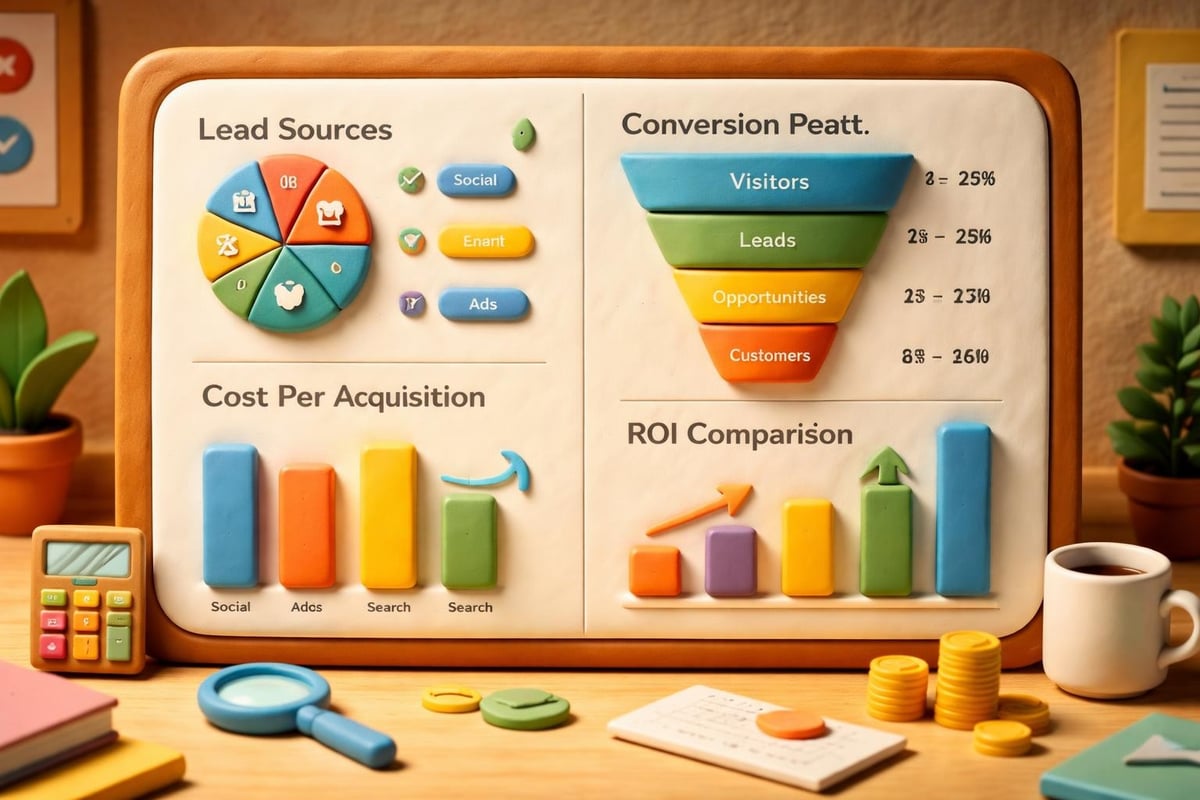
The businesses achieving the best results treat lead generation as an ongoing optimization process rather than a set-it-and-forget-it campaign. Regular analysis of which sources, messages, and offers generate the highest-quality prospects enables continuous improvement.
Key performance indicators worth monitoring include:
- Lead volume by source and campaign
- Conversion rates at each funnel stage
- Cost per lead across different channels
- Lead-to-customer conversion percentages
- Average customer acquisition cost
- Customer lifetime value by acquisition source
This data reveals which investments deliver genuine ROI versus which drain budgets without producing customers. Statistics on lead generation performance show that companies measuring and optimizing these metrics consistently outperform competitors taking less analytical approaches.
Emerging Trends Reshaping Lead Generation
The lead generation landscape evolves continuously as technology advances and buyer behaviors shift. Businesses staying ahead of emerging trends gain competitive advantages while those clinging to outdated approaches watch lead quality and conversion rates decline.
Intent-driven targeting represents a significant shift in how businesses identify prospects. Rather than relying solely on demographic profiles, modern platforms analyze behavioral signals indicating purchase readiness. When potential customers research solutions, compare vendors, or visit pricing pages, these intent signals enable precisely timed outreach.
Conversational marketing continues gaining momentum. Live chat, chatbots, and messaging apps create immediate engagement opportunities that traditional forms cannot match. The trend reflects changing consumer expectations-people increasingly prefer instant, conversational interactions over delayed email exchanges.
Privacy regulations and tracking limitations are forcing marketers toward first-party data strategies. Building owned audiences through email lists, SMS subscribers, and community platforms reduces dependence on third-party advertising platforms while creating more predictable, cost-effective lead generation channels.
Implementing Integrated Lead Generation Systems
The most successful approaches combine multiple tactics into cohesive systems where each element amplifies others. Paid advertising drives immediate traffic while content marketing and SEO build organic momentum. Automation ensures consistent follow-up while CRM systems prevent opportunities from being lost.
For service businesses across the Colorado Front Range, this integrated approach might include:
- Local SEO foundation establishing visibility for high-intent searches
- Targeted advertising campaigns filling immediate pipeline needs
- Conversion-optimized landing pages maximizing inquiry rates
- AI-powered follow-up sequences engaging prospects automatically
- CRM infrastructure organizing and tracking every opportunity
Small business marketing success increasingly depends on this systematic approach rather than sporadic tactical efforts. The businesses growing predictably build infrastructure that generates leads consistently, qualifies prospects automatically, and creates measurable paths from marketing investment to revenue generation.
Measuring Return on Lead Generation Investment
Marketing budgets deserve the same scrutiny as any business expense. Calculating true return requires tracking prospects from initial contact through customer conversion and lifetime value.
Simple formulas provide clarity:
- Cost per lead = Total marketing spend ÷ Number of leads generated
- Customer acquisition cost = Total marketing and sales costs ÷ Number of new customers
- Marketing ROI = (Revenue from marketing – Marketing costs) ÷ Marketing costs
These metrics reveal which channels and campaigns justify continued investment versus which need optimization or elimination. According to best practices for effective lead generation, businesses that rigorously track these numbers allocate budgets more effectively and achieve superior growth rates.
The threshold for acceptable metrics varies by industry, average customer value, and sales cycle length. A business with $10,000 average customer value can justify higher acquisition costs than one with $500 transactions. The critical question remains: does each dollar invested in lead generation return multiples in revenue?
Building sustainable lead generation systems requires combining strategic positioning with operational excellence across multiple channels. The businesses achieving predictable growth implement cohesive approaches where local visibility, paid advertising, content marketing, and intelligent automation work together to attract, qualify, and convert prospects consistently. If you're ready to transform sporadic inquiries into reliable pipeline growth through data-driven strategies tailored to Colorado markets, Pioneer Marketing specializes in building these integrated systems for service-based businesses. Our combination of local SEO expertise, automation infrastructure, and performance marketing delivers measurable results that connect your marketing investment directly to revenue growth.