Business owners recognize that digital marketing determines whether potential customers find their services or choose competitors instead. The challenge comes from understanding which strategies deliver measurable returns and how to implement them without draining resources. Small and mid-sized businesses particularly struggle with balancing multiple marketing channels while managing daily operations. Getting professional help with digital marketing transforms scattered efforts into cohesive systems that generate predictable revenue growth through search visibility, targeted advertising, and intelligent automation.
Understanding the Digital Marketing Landscape
The digital marketing environment continues to evolve as consumer behavior shifts toward online research and mobile-first interactions. Local businesses now compete in markets where customers evaluate options through search engines, social platforms, and review sites before making purchase decisions.
The Core Components of Modern Marketing
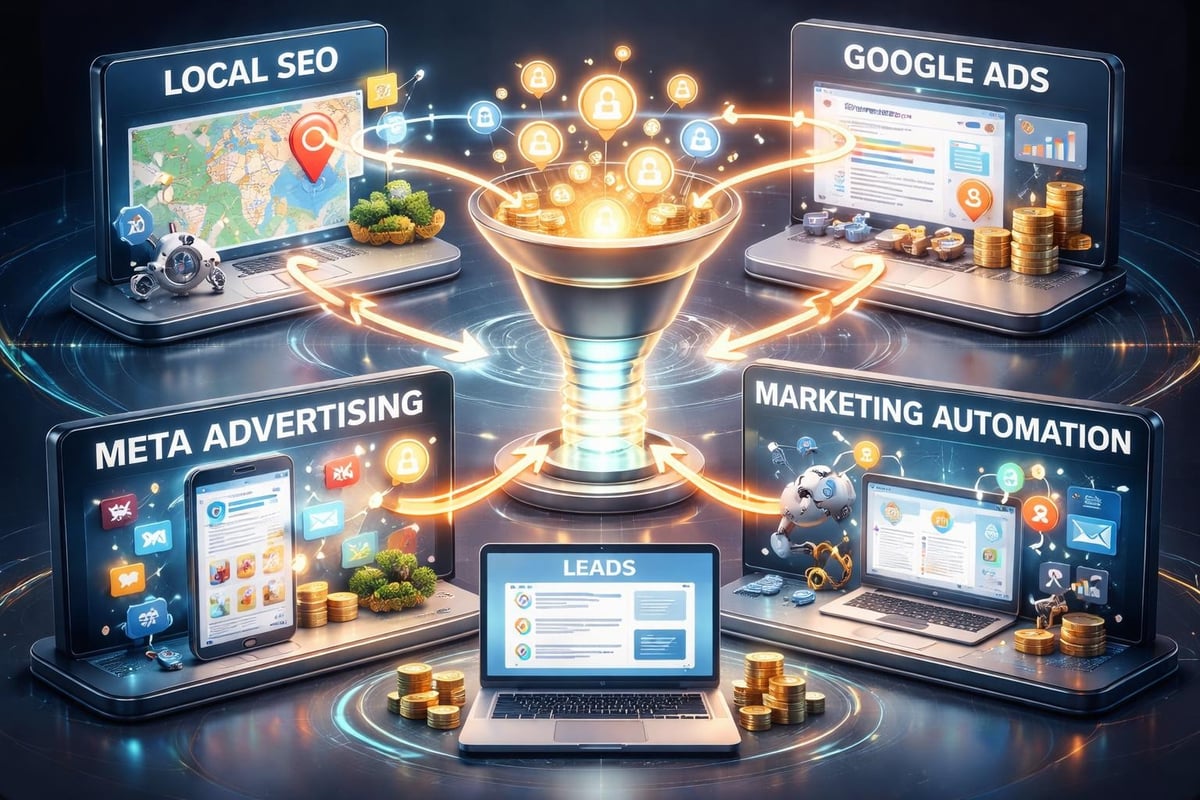
Effective digital strategies integrate multiple channels that work together rather than function as isolated campaigns. Search engine optimization remains foundational for businesses seeking sustainable organic traffic without continuous ad spend. Paid advertising delivers immediate visibility while SEO builds long-term authority. Marketing automation connects these channels through systems that nurture prospects and convert interest into scheduled appointments.
Essential elements include:
- Search visibility through optimized website content and local listings
- Paid media campaigns targeting specific demographics and search intent
- Conversion infrastructure including landing pages and call tracking
- Follow-up automation that engages leads without manual intervention
- Performance analytics connecting marketing spend to revenue
Businesses often seek help with digital marketing because these components require specialized knowledge that exceeds internal team capabilities. The investment in professional expertise prevents costly mistakes and accelerates results compared to trial-and-error approaches.
Local Search Optimization for Service Businesses
Local search dominates how customers discover service providers in their geographic area. When someone searches for emergency services, professional consultants, or home improvement contractors, search engines prioritize businesses with strong local signals.
Building Local Search Authority
Google Business Profile optimization serves as the foundation for local visibility. Complete profiles with accurate information, regular posts, and authentic customer reviews outperform incomplete listings in map results and local pack rankings.
| Local SEO Element | Impact on Visibility | Implementation Priority |
|---|---|---|
| Google Business Profile | High – appears in map results | Immediate |
| Citation consistency | Medium – validates business info | First 30 days |
| Local content strategy | High – captures specific searches | Ongoing |
| Review generation | High – influences rankings and trust | Continuous |
| Local link building | Medium – establishes authority | Monthly |
Understanding local SEO implementation requires knowledge of how search algorithms evaluate geographic relevance and business credibility. Professional help with digital marketing includes technical optimization that most business owners cannot execute effectively while managing operations.
Content Strategy for Geographic Targeting
Creating content that addresses local customer needs establishes topical authority within specific service areas. Businesses serving multiple locations benefit from dedicated pages optimized for each geographic market. This approach captures search traffic from prospects actively seeking services in those areas.
Service pages should answer common questions, address local concerns, and demonstrate expertise through detailed information rather than generic descriptions. The goal involves positioning your business as the obvious choice when customers research options.
Paid Advertising That Generates Qualified Leads
Organic search requires months to build momentum, while pay-per-click advertising delivers immediate visibility for businesses needing faster results. Effective paid campaigns target specific customer segments with messages that match their search intent or demographic profile.
Google Ads Campaign Architecture
Search campaigns capture demand from people actively looking for your services. The campaign structure determines how efficiently your budget converts clicks into qualified leads. Poor account organization wastes money on irrelevant searches while missing valuable opportunities.
Successful campaigns incorporate:
- Tightly themed ad groups matching specific services
- Negative keyword lists preventing wasteful clicks
- Location targeting focusing on profitable service areas
- Ad schedule adjustments based on conversion patterns
- Conversion tracking connecting clicks to actual business outcomes
Many businesses attempt self-managed campaigns but struggle with ongoing optimization. Getting help with digital marketing from specialists who manage substantial ad budgets prevents expensive learning curves and improves return on investment.
Meta Advertising for Brand Awareness
Facebook and Instagram campaigns excel at reaching potential customers before they actively search for services. These platforms offer sophisticated targeting based on demographics, interests, behaviors, and custom audience segments.
The strategic approach combines awareness campaigns that introduce your brand with retargeting efforts that re-engage website visitors who didn't convert initially. This layered strategy builds familiarity and trust over time.
Marketing Automation That Scales Follow-Up
The majority of leads require multiple touchpoints before becoming customers. Businesses lose revenue when manual follow-up processes allow prospects to fall through cracks or experience delayed responses.
Automated Lead Nurture Systems
Marketing automation platforms capture lead information and trigger appropriate follow-up sequences based on prospect behavior and source. A website form submission initiates different messaging than a phone call or social media inquiry.
These systems handle appointment reminders, educational email sequences, SMS follow-ups, and missed call responses without requiring staff availability. Implementing AI-driven automation reduces the manual workload while improving response times that influence conversion rates.
| Automation Function | Manual Process Time | Automated Response Time | Conversion Impact |
|---|---|---|---|
| Lead response | 2-24 hours | Under 60 seconds | +300% contact rate |
| Appointment reminders | 10 min per appointment | Automatic | -40% no-shows |
| Follow-up sequences | 20 min per lead | Triggered by behavior | +250% long-term conversions |
| Review requests | 15 min per customer | Scheduled automatically | +180% review volume |
CRM Integration and Voice AI
Customer relationship management systems centralize lead data, communication history, and pipeline tracking. When integrated with voice AI agents, businesses can handle inbound calls 24/7, qualify prospects, answer common questions, and schedule appointments without human intervention.
This technology particularly benefits service businesses that receive calls outside normal hours or struggle with call volume during peak periods. Professional help with digital marketing includes implementing these systems with proper configuration and training.
Conversion Optimization and Landing Page Strategy
Traffic volume matters less than conversion efficiency. Businesses often focus exclusively on generating more visitors while ignoring optimization opportunities that improve results from existing traffic.
Landing Page Fundamentals
Dedicated landing pages for specific campaigns convert better than generic website pages because they maintain message consistency and eliminate distractions. Each page should align with the ad or email that drove traffic there.
Effective landing pages include clear value propositions, trust indicators like reviews and certifications, strong calls-to-action, and minimal friction in the conversion process. Form length, button placement, and mobile responsiveness significantly impact conversion rates.
Key optimization elements:
- Headline matching ad message and search intent
- Benefit-focused copy addressing customer concerns
- Social proof through testimonials and case results
- Single, prominent call-to-action
- Mobile-optimized design and fast loading speed
Testing variations of headlines, images, and form fields reveals which combinations produce better results. This iterative improvement process requires consistent attention that most business owners cannot maintain alongside operational responsibilities.
Data Analytics and Performance Tracking
Marketing decisions based on intuition rather than data waste budgets on ineffective tactics while missing profitable opportunities. Proper analytics implementation connects website traffic to lead generation and revenue outcomes.
Establishing Measurement Systems
Tracking starts with defining which metrics matter for business growth. Vanity metrics like social media followers or website visitors provide limited insight compared to lead volume, cost per acquisition, and customer lifetime value.
Call tracking reveals which marketing channels generate phone inquiries and allows conversation recording for quality assessment. Form submissions, chat conversations, and email responses all contribute to understanding the full customer journey from initial contact through closed sales.
Businesses working with digital marketing agencies benefit from expertise in analytics configuration, dashboard creation, and regular reporting that highlights performance trends and opportunities.

Content Marketing and Authority Building
Search engines reward websites that demonstrate expertise through comprehensive, valuable content. Publishing regular content establishes your business as an industry authority while capturing long-tail search traffic.
Strategic Content Development
Content strategy should align with customer questions throughout their buying journey. Early-stage prospects research general information about their problems. Later-stage prospects compare specific solutions and providers.
Creating content for both stages captures broader traffic while nurturing prospects toward conversion. Blog articles, service guides, FAQ pages, and case studies each serve different purposes in this ecosystem.
Many businesses struggle with consistent content production because writing requires time and expertise. Understanding digital marketing best practices includes recognizing when outsourcing content creation produces better results than inconsistent internal efforts.
Video and Multimedia Content
Video content engages prospects differently than text and performs well in search results. Service businesses can showcase expertise through educational videos, customer testimonials, and behind-the-scenes content that builds trust.
The production quality matters less than authenticity and value. Simple smartphone videos often outperform highly produced content when they address genuine customer concerns with helpful information.
Email Marketing and List Building
Email remains one of the highest-ROI marketing channels when executed properly. Building an engaged subscriber list creates an owned audience independent of algorithm changes or platform policies.
List Growth Strategies
Offering valuable lead magnets in exchange for email addresses grows your list with interested prospects. Service businesses can provide checklists, guides, calculators, or exclusive content that demonstrates expertise while capturing contact information.
Effective lead magnets address specific problems:
- Free assessments or consultations
- Industry-specific tools or templates
- Educational courses delivered via email
- Exclusive discounts or early access offers
Regular email communication maintains awareness with prospects not ready to buy immediately. When their situation changes, your business remains top-of-mind because of consistent valuable contact.
Social Media Strategy for Service Businesses
Social platforms serve different purposes depending on business type and target audience. Service businesses typically use social media for brand awareness, community engagement, and customer service rather than direct lead generation.
Platform Selection and Focus
Attempting to maintain active presence across all platforms dilutes effort without improving results. Choosing channels where your target audience spends time concentrates resources for maximum impact.
| Platform | Best Use Case | Content Type | Posting Frequency |
|---|---|---|---|
| Community building and local awareness | Educational posts, videos, events | 4-5 per week | |
| Visual brand storytelling | Behind-scenes, project photos | Daily stories, 3-4 feed posts weekly | |
| B2B relationships and thought leadership | Industry insights, company updates | 2-3 per week | |
| YouTube | Long-form educational content | How-to videos, case studies | 1-2 per month |
Businesses seeking help with digital marketing often discover that social media requires more strategic planning and consistent execution than expected. Professional management ensures regular posting, community engagement, and performance tracking.
Reputation Management and Review Generation
Online reviews influence purchase decisions more than traditional advertising. Businesses with robust review profiles across Google, Facebook, and industry-specific platforms convert prospects at higher rates than competitors with limited feedback.
Systematic Review Collection
Requesting reviews must become a standard business process rather than occasional effort. Automated systems request feedback at optimal times in the customer journey, making review collection consistent and scalable.
Responding to all reviews, especially negative ones, demonstrates commitment to customer satisfaction. Professional, thoughtful responses to criticism often improve perception more than exclusively positive reviews.
Mobile Optimization and User Experience
Mobile devices account for the majority of local searches and website traffic. Sites that don't function properly on smartphones lose potential customers who quickly move to competitors with better mobile experiences.
Technical Performance Factors
Page loading speed directly impacts conversion rates and search rankings. Sites loading in under two seconds convert better than slower alternatives. Image optimization, code efficiency, and hosting quality all contribute to performance.
Digital marketing strategies increasingly focus on technical factors that affect user experience. Professional help with digital marketing includes technical audits and optimization that most business owners lack expertise to execute.
Navigation simplicity, readable text sizes, and easy-to-tap buttons improve mobile usability. Testing your website on various devices reveals problems that desktop-only evaluation misses.
Budget Allocation and Resource Planning
Marketing budgets should align with business growth goals and competitive landscape. Underfunding marketing limits growth potential, while overspending on ineffective channels wastes resources.
Strategic Investment Distribution
Businesses typically allocate budgets across paid advertising, content creation, automation tools, and professional services. Comprehensive digital marketing strategies balance short-term lead generation with long-term asset building.
Sample allocation for service businesses:
- 40% paid advertising (Google Ads, Meta)
- 25% professional services (agency, consulting)
- 20% marketing technology (automation, CRM, analytics)
- 15% content creation (writing, video, design)
Adjustments depend on business maturity, competitive intensity, and growth objectives. New businesses often invest more heavily in paid advertising for immediate visibility while established companies can emphasize organic strategies.
Selecting the Right Marketing Partner
Businesses recognizing the need for help with digital marketing face decisions about which agency or consultant to engage. Service quality varies dramatically across providers, making selection criteria important.
Evaluation Criteria
Effective agencies demonstrate expertise through case studies, client results, and transparent communication. They should explain strategies in understandable terms and connect tactics to business outcomes rather than focusing exclusively on marketing metrics.
Questions to ask potential partners include their experience with similar businesses, their approach to reporting and communication, and how they handle underperforming campaigns. References from current clients provide insight into working relationships and actual results.
Specialized agencies serving specific industries often deliver better results than generalists because they understand customer behavior, competitive dynamics, and effective messaging for those markets.
Successful digital marketing requires coordinating multiple strategies into a cohesive system that generates measurable business growth. The complexity of modern marketing channels, technical requirements, and ongoing optimization makes professional expertise valuable for businesses serious about scaling revenue. Pioneer Marketing helps Colorado Front Range businesses implement data-driven strategies combining local SEO, paid advertising, and AI-powered automation that create predictable lead flow and sustainable competitive advantages.