
Hiring a top digital marketing agency might be the biggest growth decision you make this year. The right marketing agency keeps your phone ringing. The wrong one burns your budget and six months of momentum. This guide walks through what actually separates the good ones from the rest, so you can pick a partner with confidence.
What Defines a Top Digital Marketing Agency
The best agencies have a few things in common. Depth beats breadth: a team that lives and breathes local search or lead generation ads will usually outperform one that dabbles in everything.
Transparency is non-negotiable. A good agency shows you clear reports, walks you through them regularly, and ties spend to revenue. They can tell you exactly how campaigns turn into phone calls, form fills, and booked jobs.
Service Integration and Technology Stack
Your marketing tools need to talk to each other. A top digital marketing agency connects your ad platforms, CRM, analytics, and automation so data moves without anyone copying and pasting.
Key technology capabilities include:
- Marketing automation platforms that trigger personalized follow-up sequences
- AI-powered tools for chatbots, voice agents, and predictive analytics
- Conversion tracking systems that connect ad clicks to closed deals
- Advanced analytics dashboards providing real-time performance visibility
- CRM integration ensuring marketing data informs sales processes

This plumbing decides whether you get vanity metrics or numbers you can act on. Automation in digital marketing also lets you scale without hiring more office staff.
Ask about tools that fit your business. A roofer needs appointment scheduling and fast lead follow-up. A retailer needs e-commerce and inventory sync.
Evaluating Core Service Offerings
No agency is great at everything. Figure out which services actually move the needle for your business before you compare vendors.
Local Search and Geographic Visibility
If you serve a specific area, local SEO matters most. The right agency optimizes your Google Business Profile, builds local citations, and helps you earn real customer reviews.
Local SEO strategies should also cover reputation management, multi-location optimization if you have several offices, and content that targets neighborhood-level searches. Geographic targeting in your paid campaigns rounds it out.
Paid Advertising Management
A top digital marketing agency knows Google Ads and Meta cold, plus LinkedIn or TikTok if that’s where your customers are. And they keep optimizing. Set-and-forget campaigns bleed money.
| Platform | Best For | Key Metrics | Typical Timeline |
|---|---|---|---|
| Google Search Ads | High-intent leads | Cost per conversion, conversion rate | 30-60 days |
| Google Local Service Ads | Service businesses | Cost per lead, booking rate | 14-30 days |
| Meta (Facebook/Instagram) | Brand awareness, retargeting | CPM, engagement rate, ROAS | 45-90 days |
| Display Advertising | Remarketing, reach | CTR, view-through conversions | 60-90 days |
Good paid advertising strategies balance quick wins with brand building. Your agency should explain budget allocation, expected cost per lead, and how they scale lead generation as campaigns mature.
Marketing Automation and AI Implementation
Automation is where modern agencies pull away from traditional marketing firms. AI voice agents, automated text follow-up, and lead scoring lift conversion rates while cutting busywork.
Consider how automation handles:
- Initial inquiry response within seconds of form submission
- Appointment reminder sequences reducing no-show rates
- Re-engagement campaigns for prospects who didn’t convert
- Review request automation following service completion
- Lead qualification scoring prioritizing high-value opportunities
AI-driven marketing automation answers every lead fast, every time, which no human team manages at 7pm on a Friday. The best agencies build workflows around your sales process instead of forcing a template on you.
Assessing Agency Performance and Credibility
Past results are the best predictor of future results. Don’t take the sales deck’s word for it.
Client Results and Case Studies
Ask for case studies from businesses like yours: similar size, industry, and market. A Fortune 500 win means nothing if you run a three-person plumbing company.
Quality case studies specify:
- Starting metrics establishing baseline performance
- Strategy implementation detailing tactics and timeline
- Results achieved with specific numbers and timeframes
- Challenges overcome demonstrating problem-solving capabilities
- ROI calculations showing revenue impact versus investment
When you compare agencies, understanding industry-specific approaches helps you spot specialists versus generalists. Focused beats scattered.
Review Analysis and Reputation Research
Read reviews on Google, Clutch, and industry sites. Skip the star count and read the details: how they communicate, how they fix problems, whether clients saw real business impact.
Warning signs include:
- Exclusively positive reviews clustered within short timeframes
- Generic testimonials lacking specific details or metrics
- Defensive or argumentative responses to negative feedback
- Inability to provide current client references
- Significant gaps between claimed expertise and reviewer experiences
Choosing the right digital marketing agency takes more than skimming a website. Talk to current clients if you can. Ask what it’s like six months in.
Understanding Pricing Models and Contract Terms
Clear pricing is a good sign in itself. A top digital marketing agency spells out costs, deliverables, and benchmarks before you sign anything.
Common Pricing Structures
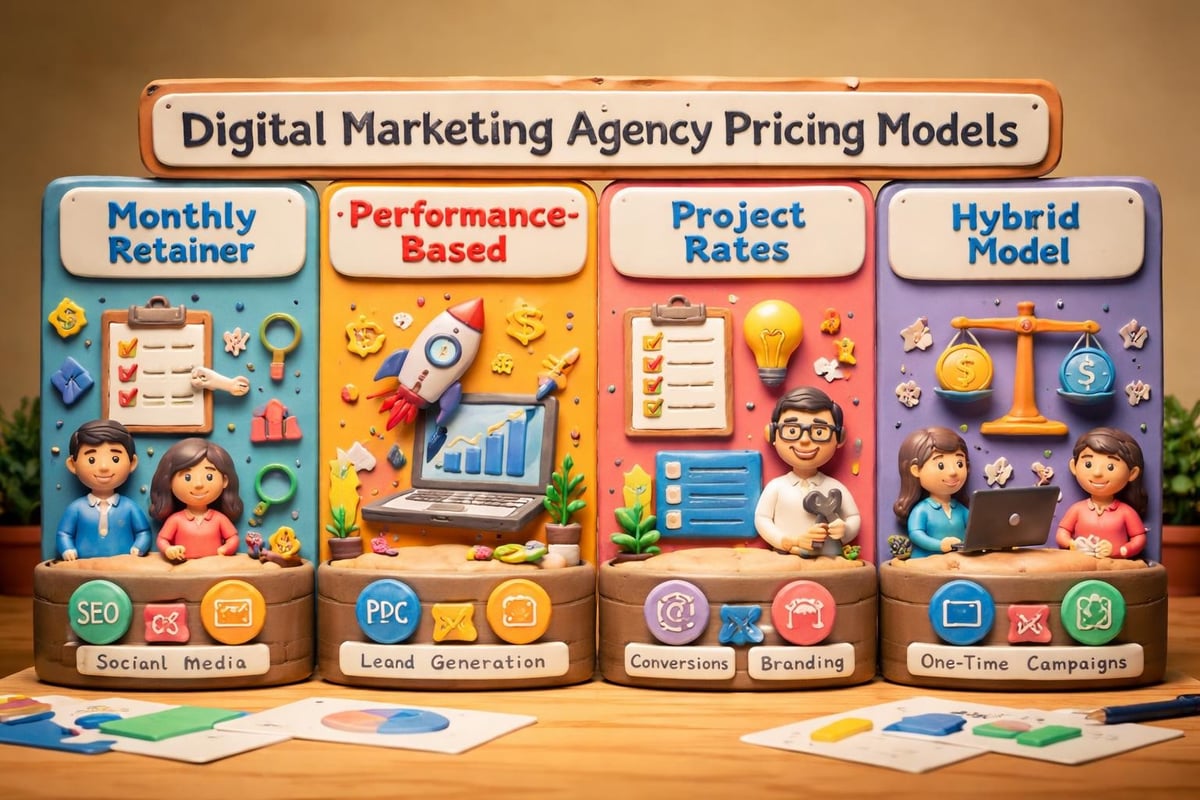
Pricing models vary, and none is automatically better. Here’s how the common ones work.
Monthly retainers give you predictable budgeting and ongoing optimization. They fit long-haul strategies better than one-off projects.
Performance-based pricing ties the agency’s pay to outcomes like lead volume or revenue. Less risk for you up front, but it usually costs more when campaigns win.
Project fees fit one-time work: a website redesign, a campaign launch, a new market entry.
Hybrid deals mix a base retainer with performance bonuses. The agency stays solvent, you stay aligned.
Contract Length and Flexibility
Start with a three-to-six-month contract. That’s long enough to see results and short enough to walk away if it’s not working. Be wary of anyone demanding a year before proving anything.
Good agencies accept performance clauses that let you leave if benchmarks aren’t met. Confidence like that tells you something.
Industry Specialization and Market Knowledge
Generic marketing loses to specialized marketing almost every time. A top digital marketing agency understands how your customers research, compare, and buy.
Vertical Expertise Benefits
Agencies focused on your industry already know what messaging works, which platforms convert, and how long deals take to close. Generalists learn that on your dime.
Industry-specific marketing strategies build on what already works in your market. An agency that serves contractors knows a hail storm changes everything for a roofer. One focused on B2B software doesn’t.
Specialists also have relationships with industry directories and media outlets you won’t reach through search and social alone.
Local Market Understanding
If you sell locally, local knowledge pays. Regional competition, seasonal demand, neighborhood demographics: all of it shapes strategy.
Digital marketing in Colorado Springs looks nothing like marketing in downtown Denver or a rural mountain town. An agency working in your market brings context no remote team can fake.
That includes knowing which local events, sponsorships, and partnerships are worth your time.
Communication and Reporting Standards
How an agency communicates matters as much as how it performs. Set expectations before you sign.
Meeting Cadence and Accessibility
Agree on a meeting cadence up front. Monthly reviews work for most businesses. If you’re running aggressive campaigns, go biweekly during the early optimization phase.
A top digital marketing agency gives you a dedicated account manager, not a rotating cast. One person who knows your business solves problems faster.
Pin down response times too. Same-business-day replies to urgent questions is a fair standard.
Performance Dashboard Access
You should have dashboard access around the clock, not just a PDF once a month. Transparency keeps everyone honest.
Quality dashboards display:
- Traffic sources showing visitor origins and channel performance
- Conversion metrics tracking leads, calls, and form submissions
- Cost data relating spend to acquisition across campaigns
- Pipeline status connecting marketing activities to sales outcomes
- Trend analysis revealing performance changes over time
Insist on reporting built around your KPIs, not a generic template. Small business marketing strategies live or die on actionable numbers, not vanity metrics.
Strategic Planning and Collaborative Approaches
The best agency relationships feel like partnerships, not vendor transactions. Planning should be a two-way conversation.
Discovery and Goal Alignment
Expect a real discovery phase. The agency should dig into your business model, competitors, growth targets, and customers before proposing anything.
Selecting ideal digital marketing partners starts with agreeing on goals and methods. Mismatched expectations about timelines or budgets sink partnerships no matter how skilled the team is.
Continuous Optimization Philosophy
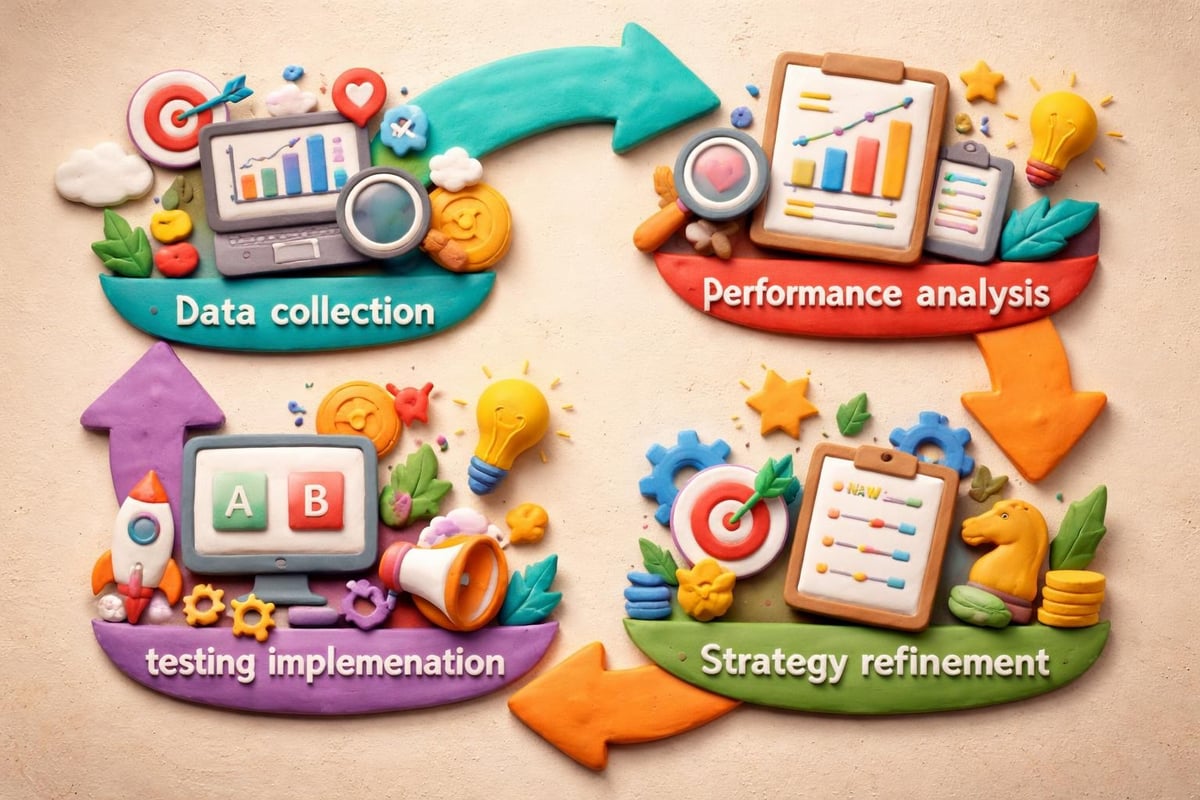
Digital marketing never sits still. Algorithms update, competitors adjust, customers change their habits. A static strategy goes stale fast.
A top digital marketing agency runs structured tests on messaging, audiences, creative, and landing pages. Small improvements compound into big gains.
Quarterly reviews should step back and reassess the whole strategy, not just tweak campaigns.
Technology Infrastructure and Data Security
The systems behind your campaigns deserve a look too. They affect everything from reporting accuracy to data security.
Platform Certifications and Partnerships
Premier partner status with Google, Meta, or HubSpot means the agency hits real performance thresholds. It also gets them priority support and early features, which benefits you.
Badges aren’t everything, though. Ask how they’ve used those platforms to get results, not just certifications.
Data Privacy and Compliance
Any agency handling customer data needs real security practices and compliance with GDPR, CCPA, and whatever applies to your industry. Ask how they store data and what happens if there’s a breach.
Knowing how to choose qualified digital marketing agencies also means checking for business insurance, liability coverage, and contract protections for your intellectual property.
Scaling Capabilities and Long-Term Growth
Early wins create a new problem: scaling without losing efficiency. Make sure the agency can grow with you.
Resource Depth and Specialization
Bigger agencies have specialists for content, technical SEO, paid media, and design. That depth helps on complex multi-channel work.
Smaller shops give you direct access to senior strategists instead of junior coordinators. Neither is automatically better. It depends on what you need.
Geographic Expansion Support
Planning to open more locations? You need an agency that has run scaled local SEO and location-based ads before. Single-location systems don’t stretch to fifty markets.
Ask them to show how they’ve helped similar businesses expand without the brand or the numbers slipping.
Warning Signs and Red Flags
Some red flags show up again and again. Learn them and you’ll dodge the expensive mistakes.
Guaranteed rankings are the biggest one. Nobody can promise a Google position, and anyone who does is either lying or doesn’t understand how search works.
Watch for proprietary platforms that lock in your data. You should own every account, analytics property, and campaign asset, no matter what happens with the agency.
If they won’t explain their methods, walk. Secrecy usually hides either thin expertise or tactics that risk penalties.
Analysis of top-performing agencies shows the same pattern: sustainable results come from ethical work and strategic thinking, not shortcuts.
Making the Final Selection Decision
When it’s time to decide, weigh everything. Don’t default to the cheapest bid or the boldest promise.
Create weighted scoring criteria reflecting your priorities:
| Criteria | Weight | Agency A | Agency B | Agency C |
|---|---|---|---|---|
| Industry expertise | 20% | 8/10 | 6/10 | 9/10 |
| Technical capabilities | 15% | 9/10 | 7/10 | 8/10 |
| Proven results | 25% | 7/10 | 9/10 | 8/10 |
| Communication quality | 15% | 8/10 | 6/10 | 9/10 |
| Pricing value | 15% | 6/10 | 8/10 | 7/10 |
| Cultural fit | 10% | 9/10 | 5/10 | 8/10 |
A scorecard like this keeps the decision honest and gives you something to show a partner who asks why you picked one agency over another.
Ask about a pilot project before you commit to the full program. Three months tells you a lot about communication, quality, and fit with low risk.
And trust your gut on fit. A technically brilliant agency you dread calling is still the wrong agency.
Picking the right partner shapes your growth for years. Look past the pitch: check specialization, systems, transparency, and results. Pioneer Marketing builds AI-powered marketing systems for Colorado Front Range small businesses, from roofers and plumbers to gyms, and ties visibility to actual revenue. If you want to talk through what that looks like for you, reach out.