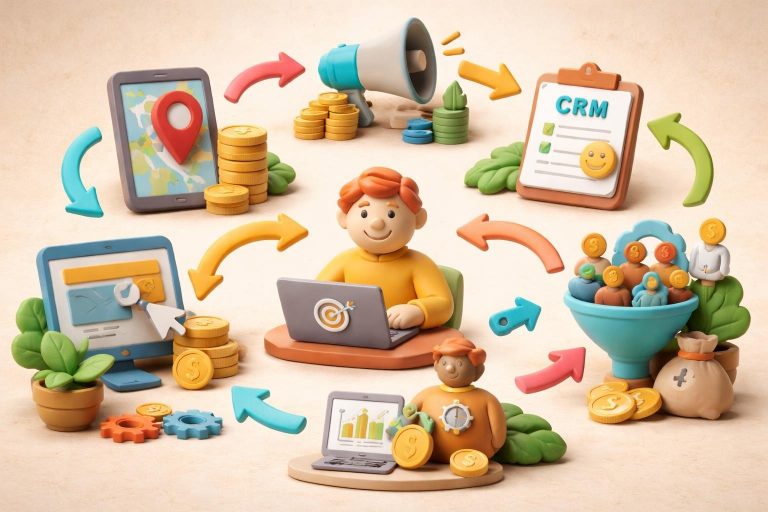
Most businesses treat marketing and strategy as two different departments with two different to-do lists. The companies growing fastest have stopped doing that.
This guide covers how the two disciplines grew together, the principles that connect them, and practical frameworks for running them as one engine.
It’s a longer read, but if your marketing plan and your business plan have never met each other, it’ll be worth it.
The Evolution of Marketing and Strategy: From Silos to Synergy
For decades the two lived apart. Marketing chased customers, strategy watched competitors. Each did its job in its own silo, and that arrangement defined early business thinking.
The milestones tell the story. The 4Ps (Product, Price, Place, Promotion) gave marketing structure. The experience curve made efficiency a strategic weapon. Holistic marketing finally pushed companies to connect customer needs with business goals.
Eventually the wall fell. You can’t understand customers without strategic direction, and you can’t out-position competitors while ignoring what customers say. Unified teams working from shared insight became the new standard.
Frameworks accelerated the merge. Porter’s differentiation strategy put unique value at the center of both disciplines, and design thinking pulled cross-functional teams into the same room. For a deeper look at unified frameworks, see the guide on Strategy for Modern Marketing.
Procter & Gamble is the classic example. Merging marketing and strategy functions cut redundant roles, sped up decisions, and produced sharper brand positioning across global markets.
Keep them separate and you get the usual problems: duplicated work, fragmented messaging, overlapping responsibilities, and customers who get a different story at every touchpoint.
Business schools mostly still teach them separately, which is part of why so many teams struggle to integrate them on the job.
The market has voted, though. CMO and CSO job descriptions increasingly overlap, and companies actively hunt for leaders who can do both.
| Milestone | Impact on Marketing and Strategy |
|---|---|
| 4Ps Model | Structured marketing planning, aligned with strategic goals |
| Experience Curve | Highlighted operational efficiency as a strategic advantage |
| Holistic Marketing | Promoted integration of customer, company, and competition |
The takeaway: unified frameworks, shared insight, and adaptable teams beat silos in any market.
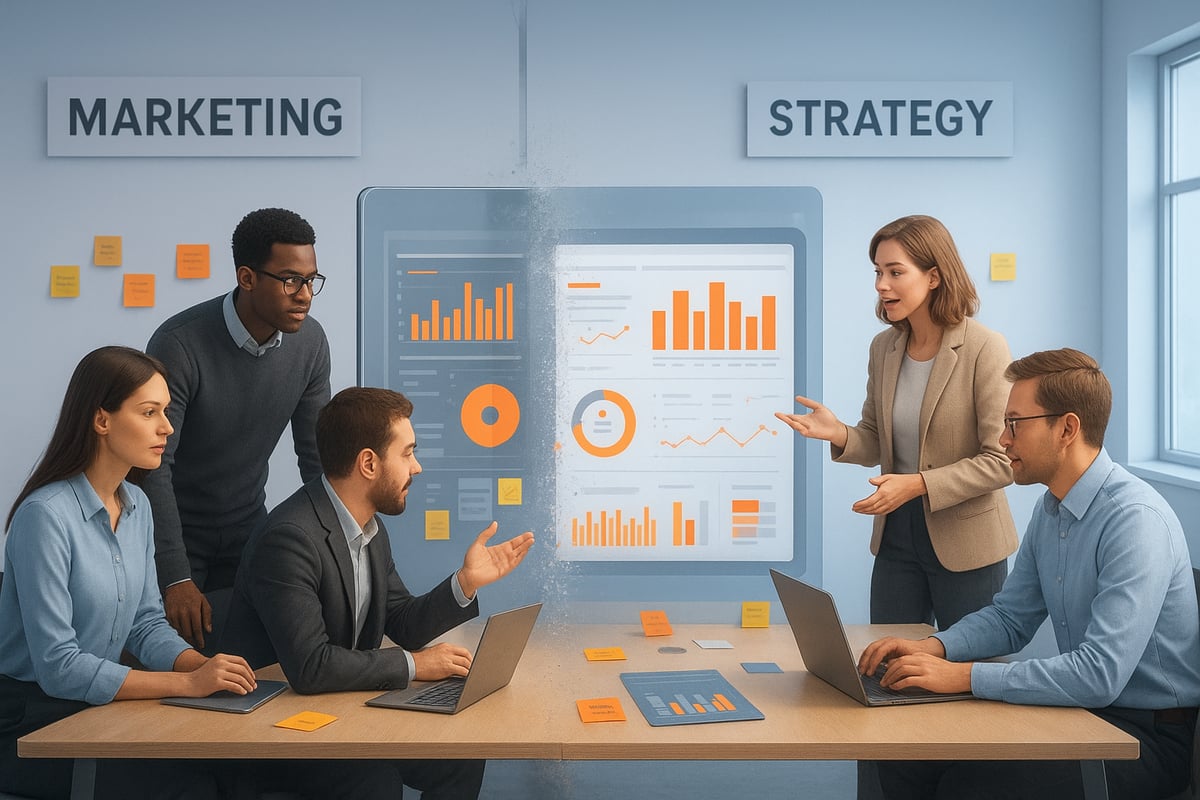
Core Principles of Modern Marketing-Strategy Integration
Modern marketing and strategy work as one discipline. Every decision should account for three things at once: your customer, your company, and your competitors.

The Tripartite Focus: Customer, Company, Competitor
Success hinges on how those three forces interact:
| Focus Area | Key Questions | Strategic Role |
|---|---|---|
| Customer | Who are we serving? | Drives value creation |
| Company | What are our unique strengths? | Guides resource allocation |
| Competitor | Who else is in the market? | Shapes positioning and response |
Weave customer insight, internal strengths, and competitor intelligence into one view and every move you make is both relevant and differentiated. It’s also the best cure for tunnel vision.
Where to Play / How to Win: Unified Decision-Making
Two questions guide everything: where to play, and how to win. Decide which markets deserve you and how you’ll stand out. When both teams answer together, the choices get sharper and the messaging matches the goals.
Deep Market Insight: Segmentation, Targeting, Positioning
Segmentation, targeting, and positioning stopped being marketing homework a long time ago. They’re strategic calls. Use data to find the profitable segments, tailor the offer, and position where you can win.
Integrating Competitive Analysis into Every Decision
Watch competitors continuously, not annually. Regular SWOT reviews and market mapping surface threats and openings while you can still act on them.
Customer-Centric Differentiation
Differentiation only works if the whole company delivers it. The promise marketing makes has to be the experience operations provides.
Feedback Loops: Data and Analytics Driving Integration
Data is the connective tissue. A/B tests, predictive analytics, and shared dashboards keep tactics and strategy honest and moving in the same direction.
Tech Companies: Product Marketing as Strategy in Action
Tech companies show the end state: product marketers sit inside the strategy process, shaping roadmaps, digesting customer feedback, and countering competitors in real time.
Common Pitfalls to Avoid
The traps are predictable:
- Siloed planning that leads to conflicting priorities
- Inconsistent messaging across channels
- Overreliance on intuition instead of data
- Slow decision-making due to unclear roles
Most of them are avoidable if you learn from people who’ve made the mistakes already. For a strategist’s perspective, explore Web Marketing Strategist Insights.
Get these principles right and you stay agile, customer-focused, and hard to catch.
Building a Unified Marketing-Strategy Engine: Steps for Success
Knowing the principles is one thing. Rebuilding how your business runs is another. Here are six steps to merge marketing and strategy into one engine.

Step 1: Break Down Organizational Silos
First, find the overlap. Teams working in isolation duplicate roles and contradict each other in front of customers.
- Assess team functions and responsibilities.
- Identify redundant processes and consolidate where possible.
- Encourage joint planning sessions to align objectives.
Leadership has to drive it. Executive buy-in makes unified goals stick, and regular cross-functional meetings keep everyone honest. Small businesses benefit too: an integrated marketing and strategy approaches approach cuts waste and improves results at any size.
Step 2: Develop an Integrated Customer-Competitor Framework
Second, build one shared picture of the market. Map the customer journey next to competitor positioning, run SWOT sessions together, and collect data as one team.
- Align insights teams for unified data collection.
- Compare customer needs against competitor offerings.
- Identify opportunities and threats collectively.
Retailers do this well: competitive intelligence feeds product launches so the messaging and the positioning never contradict each other.
Step 3: Leverage Data-Driven Decision Making
Third, make the data everyone’s data. One analytics platform, open access, and KPIs that matter to both sides, like market share and customer lifetime value.
- Use real-time dashboards for agile performance tracking.
- Encourage open access to data across departments.
- Focus on KPIs that matter for both disciplines.
SaaS companies wire CRM into analytics and adjust in real time. No guesswork, no turf wars over whose numbers are right.
Step 4: Embrace Agile Planning and Execution
Fourth, plan in quarters, not years. Iterate, experiment, and improve continuously.
- Hold regular sprint reviews and retrospectives.
- Use feedback loops for ongoing refinement.
- Empower teams to pivot quickly in response to market changes.
Digital-first brands treat every campaign as a lesson for the next one. That pace of learning is a competitive advantage all by itself.
Step 5: Foster a Culture of Collaboration and Learning
Fifth, build the culture. Cross-train people in both disciplines and reward team wins over individual ones.
- Offer continuous professional development opportunities.
- Host workshops that blend case studies from both fields.
- Promote knowledge sharing across the organization.
Companies that run joint workshops on real case studies see better alignment and more ideas worth testing.
Step 6: Measure, Optimize, and Scale
Sixth, measure and scale. Unified KPIs, regular reviews, and A/B tests before anything rolls out wide.
- Analyze results from pilot programs.
- Scale successful initiatives organization-wide.
- Adjust strategies based on data-driven insights.
Pilot first, then scale what works. Organizations with unified teams report higher ROI on marketing spend, and that gap compounds.
Emerging Trends Shaping the Future of Marketing and Strategy
The ground keeps shifting under both disciplines, and the brands that adapt first win the next few years. Here’s what’s coming.
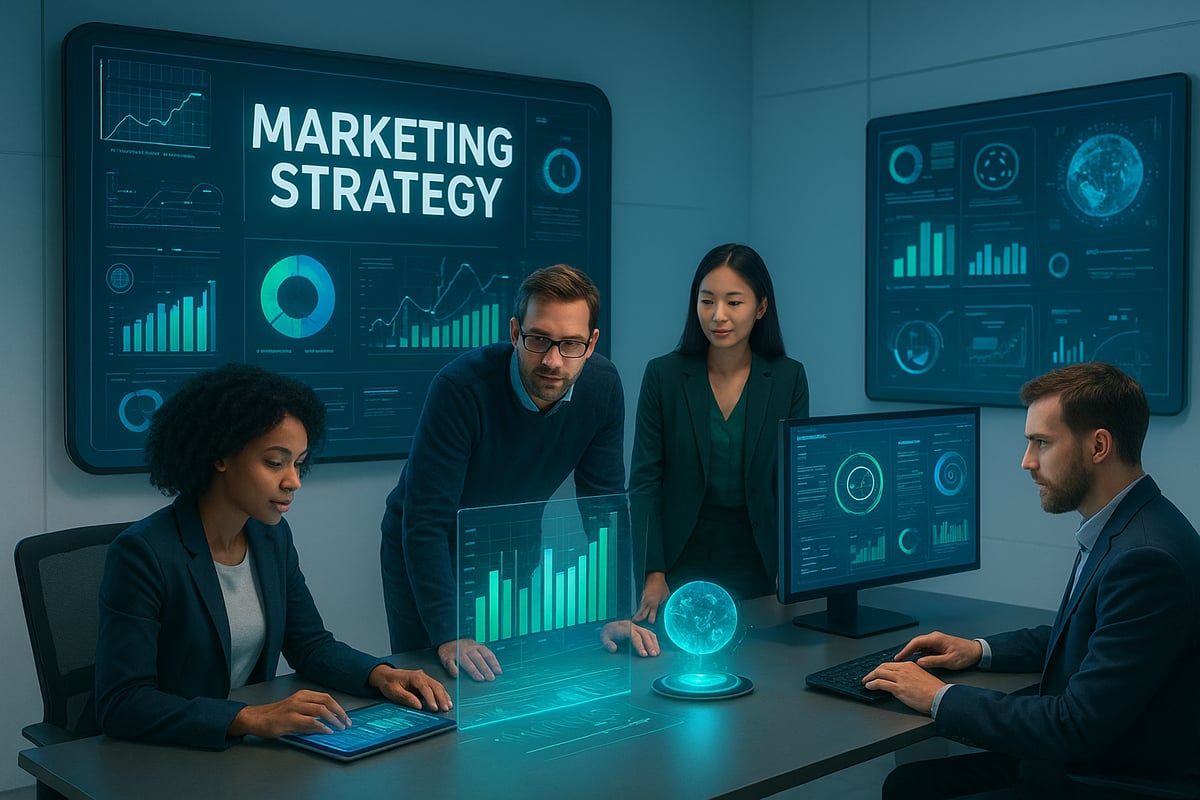
The Rise of Holistic Customer Experience
Customer experience is the battleground. Connect every touchpoint, online and in-store, and personalize at scale with data and AI. Salesforce found 73% of customers expect brands to understand their needs. The bar is officially high.
Data Privacy, Ethics, and Trust
Privacy is now strategy. GDPR, CCPA, and customers who read the fine print mean transparent data practices build trust while sloppy ones burn it. Clear privacy choices are a differentiator, not a legal chore.
Sustainability and Purpose-Driven Branding
Purpose matters too. Brands that genuinely commit to sustainability and ethical sourcing see higher loyalty and advocacy. Customers expect you to stand for something, and they can smell fake.
The Impact of AI and Machine Learning
AI is the multiplier: predictive analytics spot trends early, ad platforms optimize themselves, and McKinsey says 80% of marketers already use AI somewhere. For a deeper dive, see AI’s Role in Marketing Strategies. The trick is keeping human judgment in the loop.
| AI Application | Benefit | Example |
|---|---|---|
| Predictive Analytics | Trend spotting, risk alerts | Automated dashboards |
| Content Automation | Faster campaigns | AI-generated ads |
| Personalization | Higher engagement | Dynamic email offers |
The Democratization of Marketing Tools
The tools have been democratized. Low-code and no-code platforms let small businesses automate lead generation and outreach without an IT department. Lower barriers, tougher competition, faster game.
The Shift to Experience-First Strategies
And experience beats product. Co-creation, communities, and interactive events build the kind of emotional connection a spec sheet never will.
Actionable Frameworks and Tools for Unified Marketing-Strategy Success
Frameworks turn all this theory into Tuesday morning’s to-do list. These are the ones that pull both teams onto the same page.
The WTP/HTW (Where to Play/How to Win) Decision Model
WTP/HTW (Where to Play / How to Win) forces the focus question: which segments, which value proposition, which channels.
It clarifies which customers to chase and how to differ from competitors. Startups and established brands both use it to set goals and spot barriers before hitting them.
Key benefits include:
- Clear focus on high-potential segments
- Consistent messaging across teams
- Faster decision-making based on shared criteria
Clarity here saves both time and budget.
The Unified Marketing-Strategy Canvas
The Unified Marketing-Strategy Canvas is a one-page visual that aligns purpose, audience, and tactics. Teams fill it out together in a workshop.
Its power is exposure: gaps and overlaps show up immediately when everyone maps objectives, activities, and channels on the same sheet.
Benefits include:
- Breaking down silos between marketing and strategy teams
- Assigning clear responsibilities
- Making complex plans easy to communicate
Agencies use it to run alignment sessions that actually end in agreement.
Integrated Analytics and Attribution Models
Integrated analytics tie it all together. Multi-touch attribution connects every customer interaction to revenue.
Pull CRM data, site analytics, and sales results into one dashboard and both teams watch the same market share and lifetime value numbers in real time.
According to Automation in Digital Marketing, automation and AI deepen the insights while cutting the manual reporting grind. Companies with solid attribution report noticeably higher ROI.
Agile Planning Boards and Sprints
Agile boards bring the pace. Kanban or Scrum breaks big plans into small tasks with real deadlines.
Sprint reviews and retrospectives let teams adjust message and strategy as the market moves, instead of waiting for next year’s plan.
The payoff: faster response to feedback, better collaboration, and visible accountability.
- Faster response to customer feedback and competitor moves
- Improved collaboration across disciplines
- Greater accountability through transparent workflows
Digital-first companies run entire go-to-market launches this way, testing and refining in real time.
Customer-Competitor Mapping Templates
Customer-competitor mapping templates round out the kit. Side by side, customer needs and competitor offerings reveal the white space.
A typical template covers segments, pain points, current solutions, and competitor strengths. The gaps are where you innovate.
It keeps product development and campaigns answering the same question: what do our customers need that nobody else delivers?
- Guiding both product development and campaign creation
- Ensuring messaging addresses unique customer needs
- Aligning market research with competitive intelligence
Retailers and tech brands use these sessions to launch genuinely differentiated products.
Continuous Learning Systems
Last, build continuous learning into the calendar: knowledge sharing, training, monthly learning labs.
Cross-trained teams produce more innovative answers because they see both halves of the problem.
Key practices include:
- Sharing insights from market experiments and campaign results
- Hosting workshops on emerging frameworks and analytics tools
- Recognizing and rewarding collaborative learning
Keep learning and the edge keeps renewing itself.
That’s the case for running marketing and strategy as one engine: shared data, shared goals, faster decisions, better results. If you want help building that system for your business, Book a Strategy Call and we’ll talk through your goals, your market, and the fastest path to measurable growth.