Every business owner I talk to wants the same thing: more people who are actually ready to buy. A lead generation agency exists to solve exactly that problem. Instead of one-off campaigns, it builds a system for lead generation that attracts prospects, qualifies them, and turns them into customers. If you run a service business, where lead quality and cost per lead make or break the math, that system is the difference between random sales months and a predictable pipeline.
What Separates Professional Lead Generation from Marketing
A lead generation agency has a different job than a traditional marketing firm. That difference decides how success gets measured and what you actually get for your money.
Revenue-Focused Metrics Replace Vanity Numbers
Traditional agencies report impressions, reach, and engagement. A lead generation agency reports cost per lead, lead quality, conversion rates, and revenue. Every campaign ties back to pipeline value, not awareness.
That takes different tools. Lead gen specialists build tracking that follows a prospect from first click to closed deal: CRM integrations, call tracking, form analytics, and attribution models that show which channels actually produce customers.
Key performance indicators that matter:
- Cost per qualified lead (CPL)
- Lead-to-customer conversion rate
- Customer acquisition cost (CAC)
- Return on ad spend (ROAS)
- Pipeline velocity and deal progression
- Lifetime value to CAC ratio
You feel the difference in the weekly reporting meeting. Nobody talks about likes and shares. You talk about lead volume, qualification rates, and revenue.
Core Services That Define Lead Generation Agencies
Good agencies build systems, not one-off tactics. Knowing the full menu helps you figure out what you actually need versus what just sounds impressive.
Paid Media Management for Immediate Results
Google Ads, Meta, LinkedIn, and display are the workhorse channels for paid leads. A good agency runs them with obsessive attention to conversion tracking and cost. A roofer with a $12,000 average job needs a very different setup than a gym selling $50 memberships.
Service businesses with big-ticket jobs usually get the most from Google Ads Management built around local intent and qualified phone calls, not raw clicks. Regulated industries add another layer: ad policy and compliance become real skills.
Organic Channel Development for Sustainable Growth
Paid ads work fast. Organic channels compound. SEO, content, and authority building keep producing leads months and years after you pay for them.
For local businesses, that means geographic search terms and your Google Business Profile. Understanding local SEO dynamics in specific markets helps an agency win the “near me” searches and local pack rankings where buyers actually look.
| Channel Type | Time to Results | Cost Structure | Best For |
|---|---|---|---|
| Google Search Ads | 1-2 weeks | Pay per click | High-intent buyers |
| Meta Ads | 2-4 weeks | Pay per impression/click | Awareness + retargeting |
| SEO | 3-6 months | Monthly retainer | Long-term growth |
| Content Marketing | 4-8 months | Production + promotion | Authority building |
| Email Automation | Immediate | Platform + management | Nurturing existing leads |
Conversion Optimization and Landing Page Systems
Traffic means nothing if it doesn’t convert. Lead generation agencies build and test landing pages, forms, and conversion paths: headlines, offers, form fields, calls to action.
The good ones look past the landing page too. Phone scripts, chat widgets, booking systems, and follow-up sequences all decide whether a prospect becomes a customer. Balancing inbound and outbound marketing strategies gives buyers more than one way to say yes.
Automation Infrastructure That Scales Lead Processing
Slow follow-up kills conversions. The longer a lead sits, the colder it gets, and most businesses are slower than they think.
CRM Integration and Lead Routing
Real lead generation needs a real CRM. New leads should route instantly to the right person, get tagged by source and behavior, and trigger follow-up while interest is hot.
Modern CRMs tie your ads, forms, phone system, and email into one database. That’s what makes attribution possible: you can see which marketing dollars produce customers and which just produce traffic.
Setup should match your business. A plumbing company needs different routing than a B2B consulting firm. Lead scoring, qualification criteria, and nurture sequences have to fit how you actually sell.
Automated Follow-Up Sequences That Nurture Prospects
Most leads aren’t ready to buy today. Email sequences, SMS, and retargeting keep you visible while they decide. The agency’s positioning and systematic client acquisition approach shows how consistent touchpoints lift conversion rates without adding manual work.
Essential automation components:
- Immediate response confirmations acknowledging lead submissions
- Educational content sequences that build trust and authority
- Appointment booking workflows with calendar integration
- Abandoned form recovery for partial completions
- Re-engagement campaigns for cold leads
Automation doesn’t replace people. It just makes sure no lead gets forgotten because someone was busy.

Selecting the Right Lead Generation Partner
Not every agency delivers. A few checks separate the real ones from the ones that overpromise.
Industry Specialization and Proven Track Records
Generic marketing skills don’t automatically transfer to your industry. An agency with vertical experience already knows your regulations, your customers, and your competitors.
Ask for case studies in your industry. Ask for references you can actually call. Check whether they understand your sales cycle and average job value. Working with a marketing company that understands small business constraints keeps expectations realistic and recommendations honest.
Technology Stack and Attribution Capabilities
An agency’s tools tell you how serious they are. Basic shops lean on native platform reports. Advanced partners run cross-platform attribution, call tracking, form analytics, and revenue reporting that ties spend to closed deals.
| Technology Category | Purpose | Why It Matters |
|---|---|---|
| Multi-touch attribution | Track customer journey across channels | Reveals actual conversion paths |
| Call tracking | Monitor phone lead quality | Optimizes for conversations, not just rings |
| Heat mapping | Analyze on-page behavior | Identifies conversion barriers |
| A/B testing platforms | Systematically improve performance | Compounds results over time |
| Marketing automation | Scale personalization | Increases nurture efficiency |
Ask to see the actual reporting dashboard you’d get. Find out if data updates in real time or weekly. And confirm you keep ownership of your ad accounts, analytics, and customer data if you ever part ways.
Pricing Models and Performance Guarantees
Most agencies price with monthly retainers, performance-based fees, or a hybrid. Each structure creates different incentives.
Retainers give you a predictable budget but no lead guarantee. Performance pricing ties the agency’s paycheck to your results but usually costs more per lead. Hybrids split the difference with a base fee plus bonuses.
Be suspicious of anyone promising a specific lead count before they understand your qualification criteria. A thousand junk leads cause more problems than fifty good ones. Get lead quality standards, acceptable cost per acquisition, and optimization timelines in writing.
Common Lead Generation Challenges and Solutions
Even good partnerships hit bumps. Knowing the common ones helps you set expectations and spot real value.
Lead Quality Versus Lead Volume Trade-Offs
Chasing volume usually costs you quality. Plenty of businesses learn that after their sales team burns a month on contacts who were never going to buy.
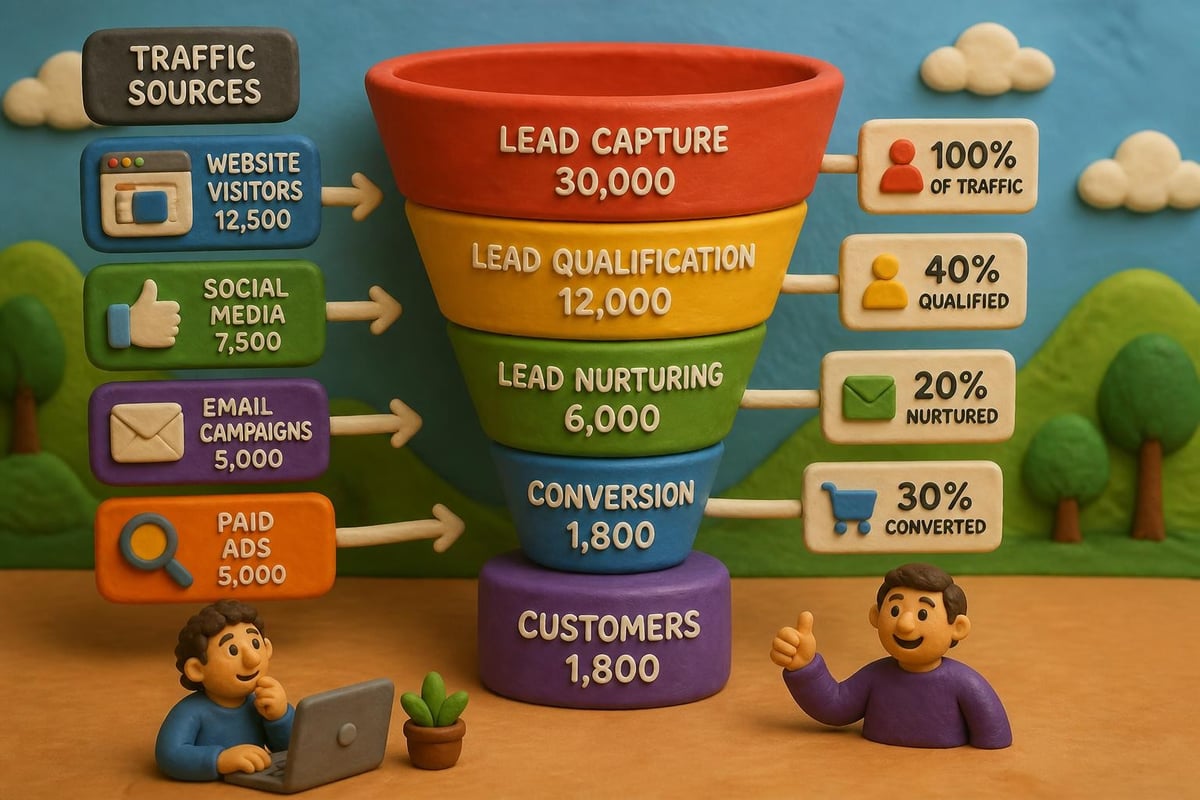
Good agencies fix this with layered qualification. Targeting filters who sees your ads. Form questions and phone scripts screen for fit. Scoring systems rank leads by how likely they are to close.
Progressive qualification stages:
- Traffic filtering: Ad targeting limits who sees offers
- Landing page alignment: Messaging attracts right prospects
- Form qualification: Strategic questions screen for fit
- Speed-to-lead processes: Fast response while interest peaks
- Human qualification: Sales confirms budget, need, and timing
Layered qualification keeps volume up while close rates improve and sales cycles shrink.
Attribution Complexity in Multi-Touch Journeys
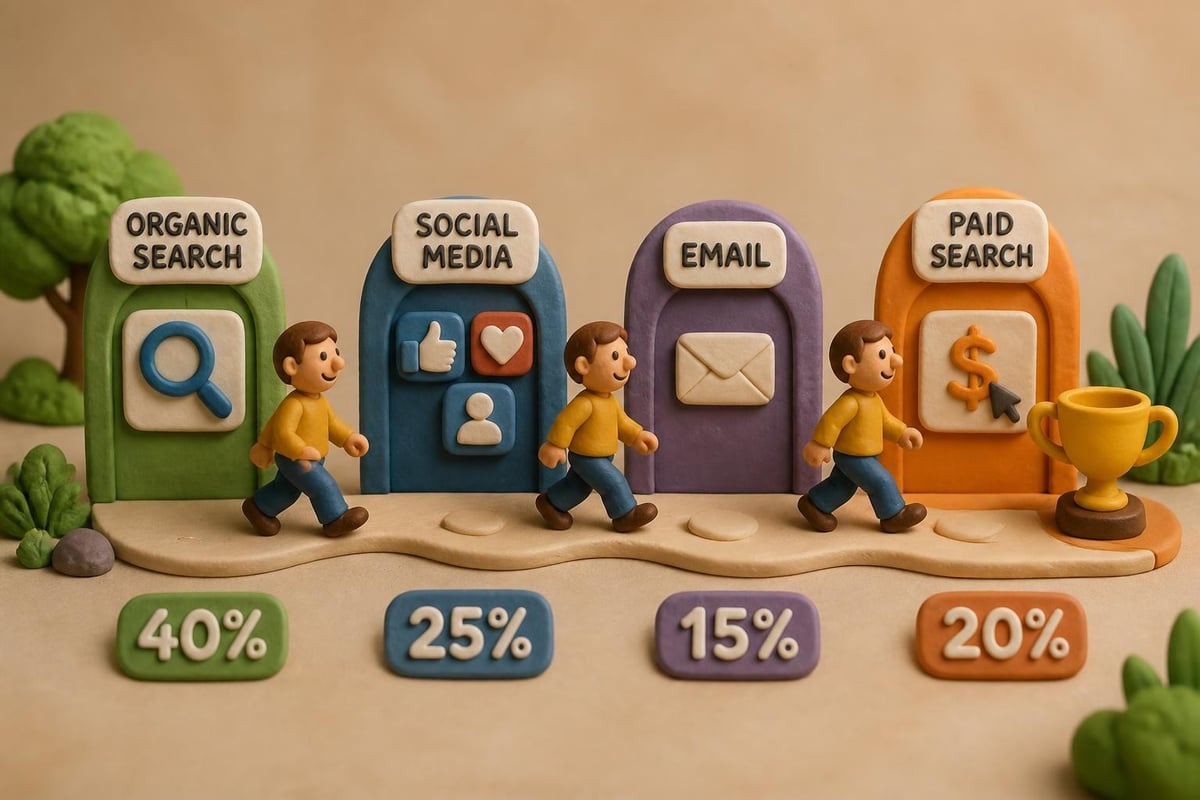
Almost nobody converts on first exposure. People research, compare, read reviews, and touch your brand five times before calling. Last-click attribution gives all the credit to the final touch and lies to you about the rest.
Research into lead marketing ecosystem practices shows just how tangled the journey gets across data brokers, retargeting networks, and multiple touchpoints. Better agencies use attribution models that credit every meaningful interaction.
This matters when you set budgets. Under last-click, awareness channels look useless, so businesses starve the top of the funnel that was quietly feeding conversions. Good attribution protects long-term growth.
Building Internal Capabilities Versus Outsourcing
Should you hire in-house or partner with an agency? It depends on your scale, the expertise you need, and what you want to own.
When In-House Teams Make Sense
In-house makes sense when you run high-volume campaigns on a few channels every day. The usual threshold: monthly ad spend over $50,000 with campaigns that need daily hands-on optimization.
Internal people know your brand cold. They sit in your meetings, know your products, and live your culture. If your positioning is unusual or your sales process is complex, that’s worth a lot.
But one hire can’t cover paid search, SEO, conversion optimization, automation, and analytics. Building that bench costs real money, and turnover erases it.
The Agency Partnership Advantage
A lead generation agency gives you that whole bench at once. You get people who have optimized thousands of campaigns instead of learning on your budget. Platform certifications and agency support channels don’t hurt either.
Under about $30,000 a month in marketing spend, agencies usually win on cost. One retainer replaces several salaries. Exploring how digital marketing agencies combine multiple specialties shows why the integrated model works.
Agencies also come with an exit. Expectations live in a contract, and you can switch providers if results disappoint. Try doing that with a full-time hire.
Emerging Trends Reshaping Lead Generation
Lead generation keeps changing as technology and buyer behavior shift. Agencies that adapt outperform the ones still running old playbooks.
AI-Powered Personalization at Scale
AI makes personalization possible at a scale no human team can match. Chatbots qualify leads in real conversations. Predictive models flag high-value prospects early. Dynamic content adjusts to each visitor.
The best versions use AI-driven marketing automation to optimize send times, subject lines, and content for each recipient, and the models keep improving with every campaign.
One catch: AI is only as good as your data. You need clean tracking, honest collection, and privacy practices that hold up.
Privacy Regulations and First-Party Data Strategies
Cookie deprecation, iOS privacy changes, and new regulations keep chipping away at third-party targeting. First-party data is the replacement.
Smart agencies now focus on building audiences you own: email lists, SMS databases, CRM records. Those direct relationships don’t depend on a platform’s algorithm or tracking rules.
Businesses with strong first-party data will keep pulling ahead as targeting gets harder for everyone else. An agency that helps you build that asset is building you a moat.
Conversational Marketing and Real-Time Engagement
Website visitors want answers now. Businesses that respond instantly through chat, SMS, or callbacks convert far more than ones waiting on form fills.
Modern lead gen qualifies prospects through conversation instead of static forms: answering questions, handling objections, and booking appointments without a human in the loop.
That includes AI voice agents on inbound calls, SMS threads that nurture automatically, and booking systems that kill scheduling friction. It takes integration work, but the conversion lift is measurable.
Measuring Success Beyond Surface Metrics
Surface-level reporting breeds false confidence. Real measurement shows business impact and where to improve.
Revenue Attribution and Customer Lifetime Value
The only measure that matters in the end: did the marketing spend produce revenue? That takes tracking that follows prospects through the whole sales cycle and credits the source.
Customer lifetime value tells you which lead sources produce customers worth keeping. A cheap, high-volume channel can still lose money if those customers churn fast or eat up service time.
Critical revenue metrics:
- Marketing-attributed revenue: Total sales from marketing-generated leads
- CLV to CAC ratio: Profit margin on customer relationships
- Payback period: Time required to recover acquisition costs
- Win rate by source: Conversion percentage by channel
- Deal size variation: Average transaction value by origin
Those numbers tell you where to put next quarter’s budget: channels that generate profit, not applause.
Pipeline Health and Velocity Indicators
Pipeline metrics predict future performance. Agencies watch how fast prospects move through your sales stages and where they stall.
Velocity shows how well marketing feeds sales. Often, fixing qualification or handoff beats buying more top-of-funnel volume.
Stage-by-stage conversion rates point at the real problem. If deals die at the proposal stage, your issue is pricing or value communication, not lead flow. That diagnosis saves you from fixing the wrong thing.
Integration With Broader Business Systems
Lead generation doesn’t operate in a vacuum. Good agencies understand how it connects to sales, service, and your actual capacity.
Sales Enablement and Team Alignment
Leads only turn into revenue when sales works them properly. That means agreeing on qualification criteria, response times, and follow-up steps.
The better agencies join sales training, write talk tracks for common objections, and build content that helps close. Sales feedback flows back into targeting and messaging.
When marketing and sales share revenue targets, the finger-pointing stops and conversion rates climb.
Operational Capacity Planning
More leads than you can handle is its own problem. Overflow means slow responses, bad reviews, and wasted ad spend.
Before scaling volume, good agencies check that you can actually serve new customers. Sometimes that means hiring first, or fixing your scheduling, before turning up the ads.
The question isn’t “how many leads can we generate.” It’s “how many new customers can we onboard well.” That’s the difference between growth and chaos.
Pick the right lead generation strategy and growth gets predictable. Stay dependent on referrals and word of mouth, and every quarter is a coin flip. Pioneer Marketing builds lead generation systems for Colorado Front Range businesses using local SEO, paid ads, and AI-powered automation built for service companies, so your marketing spend ties directly to revenue you can measure. Schedule a consultation and find out which strategies will bring in the most qualified leads for your business.