Digital marketing adverts have become the foundation of customer acquisition for businesses that want predictable, scalable growth. Unlike traditional advertising methods that cast wide nets and hope for results, modern digital advertising platforms enable precise targeting, real-time optimization, and detailed performance tracking that connects every dollar spent to measurable outcomes. For small and mid-sized businesses competing in local markets, understanding how to leverage digital marketing adverts effectively can mean the difference between struggling for visibility and building a consistent pipeline of qualified leads.
Understanding the Digital Advertising Landscape
The ecosystem of digital marketing adverts spans multiple platforms, each offering unique advantages for reaching specific audience segments. Search advertising captures high-intent prospects actively looking for solutions, while social media platforms enable sophisticated demographic and behavioral targeting. Display networks build awareness across millions of websites, and video advertising engages audiences through compelling visual storytelling.
Platform selection depends on several critical factors:
- Where your target customers spend their time online
- The complexity of your product or service offering
- The typical customer journey length in your industry
- Budget constraints and expected return on investment
- Internal resources available for campaign management and creative production
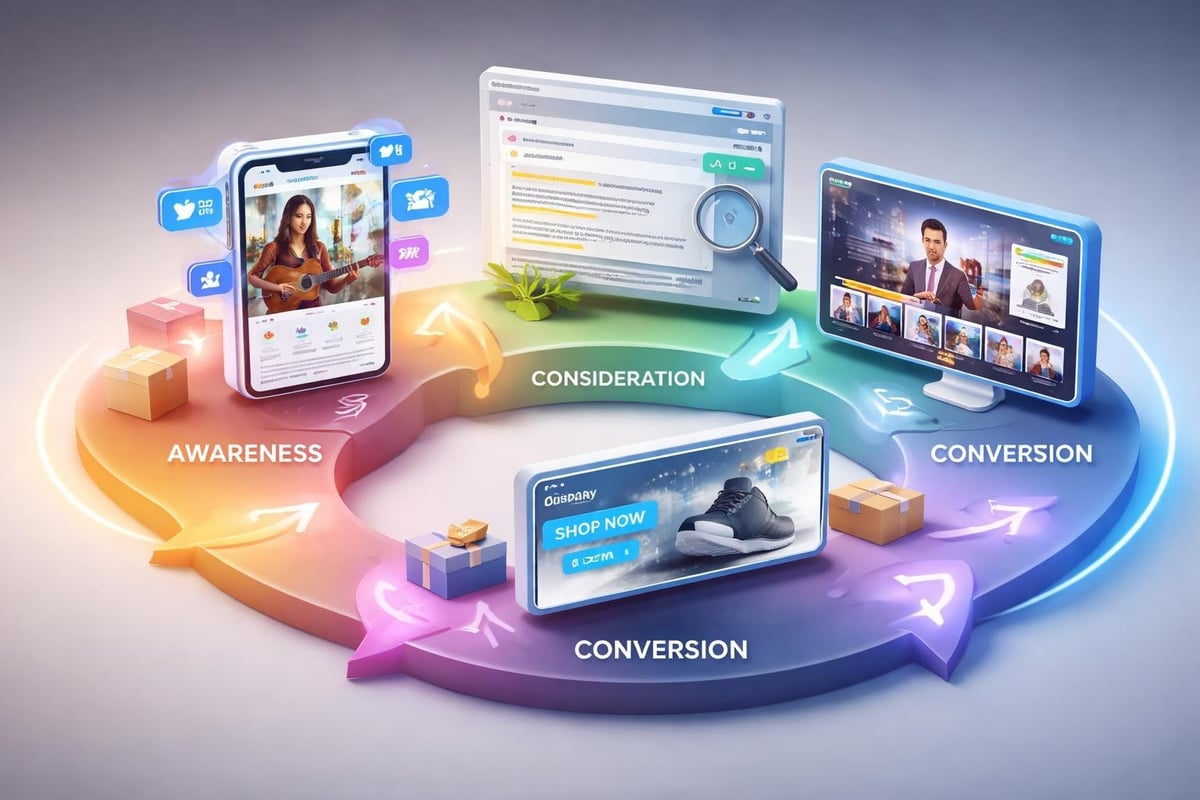
The most successful digital marketing adverts campaigns rarely rely on a single platform. Instead, they create coordinated presence across multiple channels that work together to guide prospects from initial awareness through consideration and conversion. This multi-touch approach recognizes that modern buyers interact with brands seven to twelve times before making purchase decisions.
Search Advertising Fundamentals
Search-based digital marketing adverts appear when potential customers actively seek solutions to specific problems. This intent-driven nature makes search advertising particularly valuable for service businesses where customers need immediate help. Google Ads dominates this space, though Bing Ads captures a smaller but often less competitive audience segment.
Effective search campaigns begin with comprehensive keyword research that identifies the exact phrases prospects use when looking for your services. This research reveals not just what people search for, but the intent behind those searches. Someone searching "emergency plumber near me" demonstrates immediate need and high commercial intent, while "how to fix a leaky faucet" indicates research mode.
Campaign structure significantly impacts performance. Organizing keywords into tightly themed ad groups allows for message matching between search queries, ad copy, and landing pages. This relevance improves Quality Score in Google's auction system, reducing cost per click while improving ad position.
Key search advertising metrics to monitor:
| Metric | What It Measures | Target Range |
|---|---|---|
| Click-Through Rate (CTR) | Ad relevance and appeal | 3-8% for search |
| Cost Per Click (CPC) | Auction competitiveness | Varies by industry |
| Conversion Rate | Landing page effectiveness | 5-15% for local services |
| Cost Per Acquisition (CPA) | Total cost to gain a customer | Below customer lifetime value |
| Quality Score | Ad relevance and landing page experience | 7-10 (out of 10) |
AI automation strategies are increasingly important for managing search campaigns at scale, particularly for businesses running hundreds of keywords across multiple service areas.
Social Media Advertising Strategy
Social platforms offer digital marketing adverts capabilities that complement search by reaching prospects before they actively seek solutions. Meta's advertising system (Facebook and Instagram) provides exceptional targeting granularity based on demographics, interests, behaviors, and custom audience uploads. LinkedIn serves B2B advertisers targeting specific job titles, industries, or company sizes.
The creative requirements differ dramatically from search advertising. While search ads can succeed with straightforward text highlighting your offer, social advertising must interrupt browsing behavior with compelling visuals and messaging that provides immediate value or triggers emotional response.
Video content continues growing in importance across social platforms. Research shows generative AI adoption in video advertising is accelerating as advertisers seek cost-effective ways to produce diverse creative variations for different audience segments.
Audience Development and Retargeting
The most powerful aspect of social digital marketing adverts lies in sophisticated audience targeting and retargeting capabilities. Custom audiences allow you to upload customer lists, website visitors, or engagement data to reach people already familiar with your brand. Lookalike audiences use machine learning to identify new prospects sharing characteristics with your best customers.
Retargeting campaigns address the reality that most website visitors leave without converting. By showing ads to previous visitors as they browse social media, you maintain brand presence and encourage return visits. Retargeting typically generates 2-3x higher conversion rates than cold prospecting campaigns while reducing acquisition costs.
Effective retargeting segments audiences based on behavior specificity. Someone who viewed your pricing page demonstrates stronger interest than someone who only read a blog post. Your digital marketing adverts strategy should reflect these intent differences through varied messaging and offers.
Landing Page Development for Ad Traffic
The effectiveness of digital marketing adverts depends heavily on landing page quality. Directing paid traffic to generic website homepages wastes budget by forcing visitors to navigate and search for relevant information. Conversion-focused landing pages align message match between ad copy and on-page content while eliminating distractions that lead visitors away from conversion actions.
Essential landing page elements include:
- Headline that directly echoes the ad promise
- Clear value proposition explaining what you offer and why it matters
- Social proof through testimonials, reviews, or case study results
- Specific call-to-action with low friction conversion path
- Mobile optimization ensuring fast load times and easy form completion
- Trust signals like certifications, awards, or security badges
Single-purpose pages focused on one offer and one conversion goal consistently outperform multi-purpose pages. If you run separate campaigns for different services, each should direct to dedicated landing pages speaking directly to that service need.

Testing variations systematically improves performance over time. A/B testing different headlines, images, form lengths, or button colors identifies which elements resonate best with your audience. Even small improvements in conversion rate dramatically impact overall campaign return on investment when compounded across thousands of clicks.
Budget Allocation and Performance Tracking
Strategic budget distribution across platforms and campaigns maximizes overall return from digital marketing adverts spending. Beginning advertisers often spread budgets too thin across too many platforms, preventing any single campaign from achieving sufficient volume for meaningful optimization. Concentrated investment in one or two platforms typically produces better initial results.
Platform allocation should reflect customer behavior research and initial testing results. If your target audience primarily uses Facebook and doesn't engage on LinkedIn, allocating budget to LinkedIn wastes resources regardless of platform capabilities. Start where your customers are, achieve profitability, then expand to additional channels.
Within platforms, budget flows toward top-performing campaigns, ad sets, and individual ads. This performance-based allocation requires regular monitoring and adjustment. Campaigns generating leads below your target cost per acquisition deserve increased investment, while underperforming campaigns need optimization or pausing.
Attribution and Multi-Touch Analysis
Understanding which digital marketing adverts drive results requires proper attribution modeling. Last-click attribution credits the final ad interaction before conversion, but this approach undervalues awareness and consideration touchpoints. Multi-touch attribution distributes credit across all interactions in the customer journey, providing clearer insight into how different platforms and campaigns work together.
Google Analytics provides free attribution reporting, though limitations exist in tracking across devices and platforms. More sophisticated attribution platforms integrate data from multiple advertising sources, CRM systems, and offline conversions to create comprehensive performance pictures.
Common attribution models and their applications:
| Model | Credit Distribution | Best Used When |
|---|---|---|
| Last Click | 100% to final interaction | Simple, short sales cycles |
| First Click | 100% to initial interaction | Measuring awareness campaign impact |
| Linear | Equal credit to all touchpoints | Understanding full journey contribution |
| Time Decay | More credit to recent interactions | Longer consideration periods |
| Data-Driven | Machine learning allocation | Sufficient conversion volume exists |
The growth trajectory of digital marketing continues accelerating as businesses recognize the measurable advantages over traditional advertising channels.
Automation and Artificial Intelligence Integration
Modern digital marketing adverts platforms incorporate increasing levels of automation and artificial intelligence to improve campaign performance. Smart bidding strategies use machine learning to adjust bids in real-time based on conversion likelihood, device, location, time of day, and dozens of other signals. This automation often outperforms manual bid management by identifying patterns humans would miss.
Responsive ads automatically test different headline and description combinations to identify top performers for each search query or audience segment. Dynamic creative optimization assembles ads from component libraries, matching images, headlines, and calls-to-action to individual viewer preferences and behaviors.
However, automation requires proper setup and ongoing supervision. Machine learning algorithms optimize toward the goals you define, so incorrect conversion tracking or poorly chosen optimization metrics lead automated systems to optimize for the wrong outcomes. Human oversight remains essential for strategy, creative direction, and catching technical issues.
The integration of AI in marketing operations extends beyond ad platforms themselves to content creation, audience research, and campaign planning. Recent research on AI-driven advertising frameworks demonstrates how multimodal AI systems enable hyper-personalization at scales previously impossible.

Lead Management and Follow-Up Automation
The effectiveness of digital marketing adverts extends beyond the initial click and conversion. Without systematic follow-up, leads generated through paid advertising fail to convert into customers. Marketing automation platforms connect ad campaigns to email sequences, SMS messaging, and CRM systems that nurture leads through personalized communication.
Automated follow-up begins immediately when prospects submit forms, ensuring no lead waits hours or days for response. Speed matters tremendously in service businesses where customers contact multiple providers. Studies consistently show that businesses responding within five minutes capture significantly higher conversion rates than those taking longer.
AI voice agents and chatbots provide instant engagement for website visitors arriving from digital marketing adverts campaigns. These systems qualify leads through conversational interactions, book appointments directly into calendars, and route high-value prospects to human team members. This automation reduces manual workload while improving customer experience through immediate response.
Local Market Targeting Strategies
For businesses serving specific geographic areas, local targeting capabilities in digital marketing adverts platforms enable precise reach while eliminating wasted spend on audiences outside service territories. Location targeting options include radius targeting around physical locations, city or zip code selection, and exclusion of areas where you don't operate.
Google's Local Services Ads provide specialized formats for home service businesses with pay-per-lead pricing and prominent placement above traditional search ads. These campaigns require business verification and license documentation but deliver highly qualified leads from customers specifically seeking local providers.
Geo-targeting strategies should align with service capacity and market density. A narrow geographic focus concentrates budget in core service areas, while broader targeting captures opportunities in adjacent markets. Local SEO strategies complement paid advertising by improving organic visibility for location-based searches.
Location targeting best practices:
- Set radius targeting based on actual service areas and drive times
- Adjust bids upward for high-value locations near your business
- Exclude residential areas if you serve only commercial properties
- Use location-specific ad copy mentioning cities or neighborhoods
- Create separate campaigns for different service territories with unique offers
Mobile location targeting adds additional precision by reaching people currently within defined areas. This capability benefits businesses where location signals immediate need, such as emergency services or retail stores promoting in-store visits.
Creative Development and Testing
The creative elements in digital marketing adverts directly impact click-through rates and conversion performance. Effective ad creative communicates clear value propositions, addresses specific customer pain points, and includes compelling calls-to-action that motivate immediate response. Generic messaging about being "the best" or "most experienced" rarely generates strong performance compared to specific benefit statements.
Image and video selection should prioritize relevance and authenticity over stock photography perfection. Audiences increasingly favor real business images, actual customer results, and genuine team members over polished stock visuals. User-generated content often outperforms professionally produced creative by feeling more trustworthy and relatable.
Headline testing represents the highest-impact creative optimization opportunity. Testing five to ten headline variations identifies messages that resonate most strongly with your audience. Winning headlines can then inform messaging across other marketing channels, website copy, and sales conversations.
The emergence of creator economy advertising reflects shifting consumer preferences toward authentic, personality-driven content over traditional brand advertising.
Ad Copy Frameworks That Convert
Structured copywriting frameworks provide templates for creating effective digital marketing adverts messaging. The problem-agitate-solution framework identifies a customer pain point, amplifies its impact, then presents your service as the resolution. The before-after-bridge structure paints pictures of current frustration and desired future state, positioning your offering as the bridge between them.
Specificity improves performance across all frameworks. Rather than claiming "fast service," specify "same-day appointments available" or "24-hour response guaranteed." Instead of "affordable pricing," share "financing available with $0 down" or "price matching on written estimates." Concrete details create credibility and help prospects self-qualify their fit.
Questions in headlines engage readers by triggering mental responses. "Tired of missed customer calls?" speaks directly to business owners frustrated by lost opportunities. "Looking for a plumber who actually shows up on time?" addresses common service provider frustrations. Questions work when they articulate genuine concerns your audience experiences.
Performance Optimization Cycles
Continuous improvement through systematic testing and optimization separates profitable digital marketing adverts campaigns from money-losing efforts. Monthly optimization cycles review performance data, identify underperforming elements, implement improvements, and measure results. This iterative approach compounds small gains into significant performance improvements.
Search term reports reveal actual queries triggering your ads, exposing irrelevant traffic and new keyword opportunities. Adding negative keywords blocks waste spending on searches that won't convert. Expanding into high-performing search terms captures additional relevant traffic. This ongoing keyword refinement improves campaign efficiency month after month.
Monthly optimization checklist:
- Review conversion tracking accuracy and fix any breaks
- Analyze search term reports and add negative keywords
- Pause ads with click-through rates below 2%
- Increase budgets on campaigns exceeding conversion goals
- Test new ad creative variations against current winners
- Check landing page load speeds and mobile usability
- Review audience performance and adjust targeting
- Update seasonal offers and promotional messaging
Device performance analysis often reveals significant differences in conversion rates between mobile, tablet, and desktop traffic. If mobile visitors convert at lower rates, bid adjustments can reduce mobile spend while maintaining desktop presence. Alternatively, mobile-specific landing pages might improve mobile conversion rates.
Compliance and Platform Policy Adherence
Digital marketing adverts platforms enforce strict policies governing ad content, landing pages, and business practices. Violations result in ad disapproval, account suspension, or permanent bans. Understanding and following platform policies prevents disruptions to campaign delivery and protects advertising account standing.
Common policy violations include misleading claims, prohibited content categories, trademark infringement, and destination URL issues. Claims about results or performance require substantiation. Health-related products and services face additional restrictions. Before-and-after images in certain industries need specific disclosures.
Landing page quality policies require functional websites with clear privacy policies, contact information, and relevant content matching ad promises. Malware, excessive pop-ups, or misleading content trigger policy violations even if ads themselves comply. Regular landing page audits ensure continued compliance as policies evolve.
Staying current with platform policy updates prevents surprises. Google, Meta, and other platforms regularly modify advertising policies, sometimes introducing new restrictions or relaxing previous limitations. Email updates from platform partners and policy documentation reviews should occur quarterly at minimum.
Coordinating Paid and Organic Strategies
Digital marketing adverts perform best when coordinated with organic marketing efforts rather than operating in isolation. Paid advertising strategies and organic content marketing address different stages of customer awareness while reinforcing consistent brand messaging.
Paid campaigns generate immediate visibility and traffic for new businesses or service launches while organic content builds over time. Conversely, established organic rankings reduce dependency on paid traffic by capturing clicks without ongoing cost. The ideal approach balances both channels based on business goals, competition levels, and budget availability.
Content developed for organic search often provides excellent material for ad creative and landing pages. Blog posts answering common customer questions become ad headlines. Case studies demonstrating results transform into social proof elements. This content reuse maximizes return on creation investment while maintaining message consistency.
Retargeting connects the two strategies by showing ads to organic visitors who didn't convert initially. Someone finding your business through organic search, reading several blog posts, then leaving, might convert after seeing retargeting ads maintaining brand presence. This multi-touch approach leverages strengths of both paid and organic channels.
Digital marketing adverts deliver measurable, scalable growth when approached strategically with proper targeting, creative testing, and conversion optimization. The complexity of managing campaigns across multiple platforms while tracking performance and coordinating automation requires specialized expertise many businesses lack internally. Pioneer Marketing helps Colorado Front Range businesses build profitable advertising systems through data-driven Google Ads and Meta campaign management, conversion-focused landing pages, and AI-powered lead follow-up automation that turns clicks into customers. Whether you're launching your first campaigns or optimizing existing efforts, our team creates advertising infrastructure that generates predictable lead flow and measurable return on investment.