SEO gets you found for free. SEM gets you found right now. Put seo sem digital marketing together and you have a system: paid ads bring in leads today while organic rankings build the pipeline that pays off for years. This guide walks through how the two work together, whether you run a local service business or a regional company trying to grow.
Understanding the Core Components of Search Marketing
SEO and SEM chase the same goal, showing up when customers search, from different angles. SEO earns organic rankings through content quality, technical work, and authority. SEM buys placement at the top of results, starting today.
The real difference is timing and how you pay. SEO builds slowly and compounds as content ranks and earns backlinks. Paid search is instant but stops the moment the budget does.
How Organic and Paid Search Complement Each Other
Smart businesses do not pick one. Paid campaigns show you which keywords convert, which sharpens your SEO content plan. Strong organic rankings improve Quality Score and lower your cost per click. Each channel makes the other cheaper.
Here is the timeline and investment side by side:
| Strategy | Time to Results | Cost Structure | Longevity | Best For |
|---|---|---|---|---|
| SEO | 3-6 months | Upfront + ongoing | Compounds over time | Long-term growth |
| SEM | Immediate | Pay-per-click | Stops when budget ends | Quick wins, testing |
| Combined | Immediate + sustained | Balanced investment | Maximum coverage | Complete market dominance |
The winning play: use SEM for immediate leads while SEO builds toward lower acquisition costs. That keeps leads flowing during the early months when organic rankings are still climbing.

Building a Comprehensive Digital Marketing Framework
Search is the core, but seo sem digital marketing also pulls in social media, content, email automation, and conversion optimization. Each channel covers a different stage of the customer journey.
Content feeds SEO. Useful articles, guides, and resources attract backlinks and prove expertise. According to Search Engine Journal’s comprehensive SEO learning guide, consistent publishing signals authority and relevance to search algorithms.
Social advertising reaches people who are not searching yet, targeting by demographics, interests, and behavior. It builds awareness with folks who do not know they need you yet.
The Role of Local Search in Digital Marketing
If you serve a specific area, local search is where the money is. Google Business Profile optimization, citations, and location pages get you into the local pack, the map results that dominate mobile near-me searches.
Local SEO strategies include:
- Maintaining consistent NAP (Name, Address, Phone) across all directories
- Earning reviews from customers to build trust and ranking signals
- Creating location-specific landing pages for multiple service areas
- Optimizing for voice search queries that include geographic modifiers
- Building citations in industry-specific and local business directories
About 46% of Google searches have local intent. For a service business, that makes local a core piece of any seo sem digital marketing plan. The American Marketing Association’s SEO marketing guide makes the same point: consumers keep favoring nearby businesses.
Technical Foundations That Support All Marketing Efforts
Site performance affects both sides. Page speed, mobile responsiveness, and user experience feed your Quality Score in Google Ads and your organic rankings at the same time.
Essential Technical Optimizations
Core Web Vitals (loading, interactivity, visual stability) now directly affect rankings and conversions. A slow site wastes ad spend and ranks worse. Two penalties for one problem.
Technical SEO requirements include:
- SSL certificates for secure HTTPS connections
- Mobile-first design that adapts to all screen sizes
- Structured data markup helping search engines understand content
- XML sitemaps facilitating efficient crawling and indexing
- Clean URL structures that communicate page hierarchy
- Optimized images using compression and next-gen formats
These basics support every channel, because every visitor lands on the same site. TechRadar’s guide to mastering SEO covers the technical side in more depth.

Keyword Research as the Foundation of Strategy
Every good seo sem digital marketing plan starts with keyword research: what your customers actually type, and what they mean when they type it. Volume matters less than intent.
Search intent falls into four buckets, each needing different content:
| Intent Type | User Goal | Content Format | Conversion Stage |
|---|---|---|---|
| Informational | Learn something | Blog posts, guides | Awareness |
| Navigational | Find specific site | Brand pages | Consideration |
| Commercial | Research options | Comparisons, reviews | Evaluation |
| Transactional | Make purchase | Product/service pages | Decision |
Match content to intent and both channels improve. Informational content builds authority up top, transactional pages convert the people ready to buy.
Long-Tail Keywords and Competitive Advantage
Big head keywords get the attention. Long-tail phrases, three or more words, usually earn the better ROI: less competition, clearer intent, higher conversion rates.
For example, “digital marketing” gets huge volume, brutal competition, and vague intent. “AI-driven marketing automation for service businesses” gets a fraction of the searches and exactly the right audience. Agencies like Pioneer Marketing build strategies around these high-intent phrases to bring in qualified leads, not just traffic.
Paid Advertising Strategies That Maximize Return
SEM covers multiple platforms and formats. Google Ads owns search advertising. Facebook and Instagram shine at interest targeting and retargeting people who already visited your site.
Google Ads Campaign Structure
Good paid campaigns are organized, not just funded. Structure campaigns around your business: separate campaigns per service line, region, or customer segment.
Best practices for Google Ads include:
- Using Single Keyword Ad Groups (SKAGs) for maximum relevance
- Writing ad copy that matches landing page messaging
- Implementing conversion tracking to measure actual business results
- Testing multiple ad variations to improve click-through rates
- Adjusting bids based on device, location, and time of day
- Building negative keyword lists to eliminate wasted spend
Quality Score, Google’s blend of expected click-through rate, ad relevance, and landing page experience, drives your cost per click and ad position. Higher scores mean cheaper clicks and better placement, and that advantage compounds.
The Role of Landing Pages in Conversion
Every paid click deserves a dedicated landing page with one job. Sending ad traffic to your homepage makes visitors hunt for what they came for, and most will not bother.
Effective landing pages include:
- Headlines matching ad copy to maintain message consistency
- Clear value propositions explaining benefits, not just features
- Trust signals like testimonials, reviews, and credentials
- Single call-to-action buttons with no competing links
- Mobile-optimized forms that minimize friction
- Fast loading times to reduce bounce rates
Test the pieces: headlines, images, form fields, button colors. Small conversion gains multiply across every dollar of ongoing ad spend.
Content Marketing That Drives Organic Growth
Consistent publishing builds authority, earns links, and ranks for hundreds of long-tail keywords that would never pay off as ads. Map content to journey stages so it attracts, educates, and converts.
The relationship between outbound links and SEO shows why citing solid sources helps: Google rewards well-researched content over shallow keyword stuffing.
Topic Clusters and Pillar Content
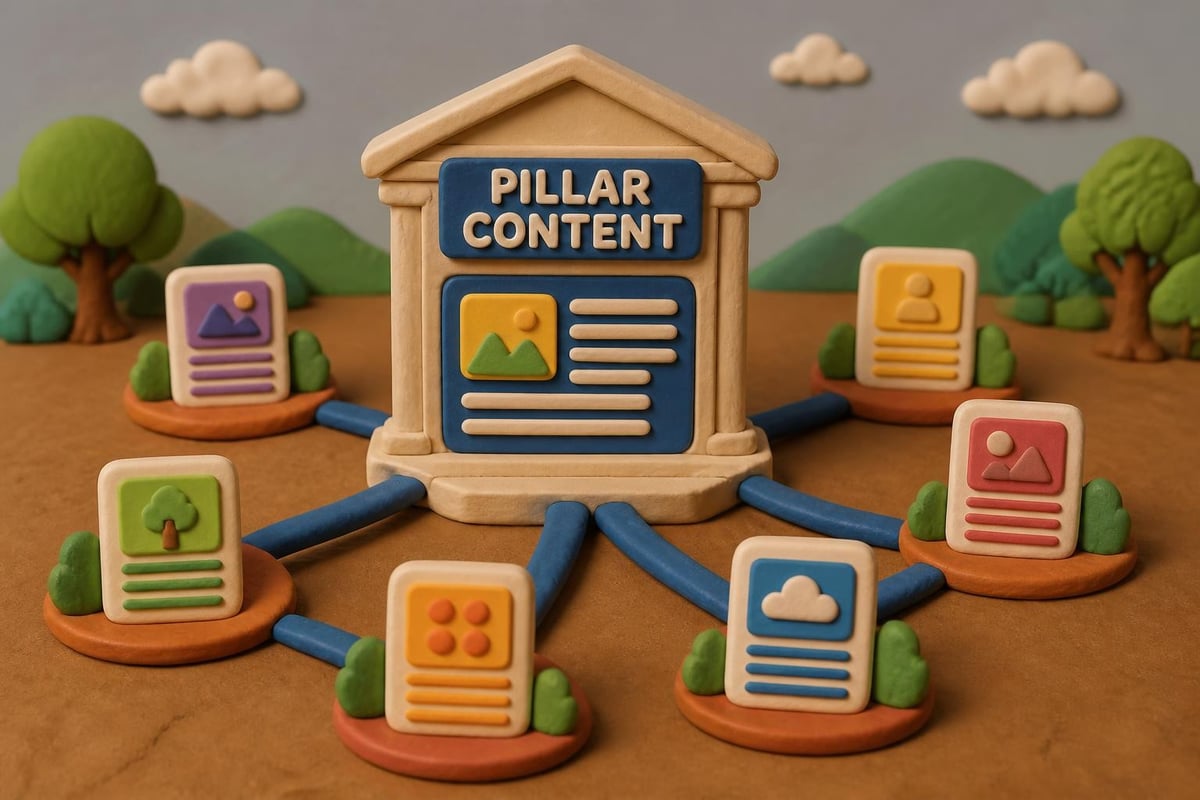
Modern SEO rewards topical authority, covering a subject thoroughly instead of scattering unrelated posts. The pillar-cluster model handles this: one hub page on the broad topic, detailed cluster posts on the subtopics.
That structure shows search engines your depth and gives visitors a clear path to related answers. Internal links between pillar and cluster pages lift the whole topic area, not just one URL.
Marketing Automation and Lead Management
Traffic only matters if it turns into revenue. Most businesses leak leads through slow responses and manual follow-up. Automation closes those gaps: instant responses, scheduled sequences, every interaction tracked.
CRM Integration and Attribution
To know which marketing actually makes money, track leads from first touch to closed sale. A CRM ties marketing data to sales outcomes and shows the real ROI for each channel and campaign.
Effective lead tracking includes:
- First-touch attribution identifying initial traffic sources
- Multi-touch attribution crediting all interactions in the journey
- Conversion tracking measuring form submissions, calls, and purchases
- Revenue attribution connecting closed deals back to marketing sources
- Automated scoring prioritizing leads based on engagement and fit
That data turns seo sem digital marketing from guesswork into arithmetic. You put budget where revenue actually comes from. Businesses working with local SEO specialists in Colorado Springs can set these systems up and see exactly how search visibility becomes revenue.
Measuring Success and Optimizing Performance
The whole advantage of digital over traditional advertising is measurement. Every click and dollar produces data. Just do not confuse vanity metrics, traffic and impressions, with business results.
Key Performance Indicators That Matter
Different channels need different metrics, but everything should tie back to revenue and acquisition cost. Leading indicators predict, lagging indicators confirm.
| Metric Category | SEO Indicators | SEM Indicators | Business Outcomes |
|---|---|---|---|
| Leading | Rankings, impressions | Click-through rate, Quality Score | Lead volume, opportunity pipeline |
| Lagging | Organic traffic, backlinks | Conversion rate, cost-per-click | Revenue, customer lifetime value |
| Efficiency | Pages per session, time on site | Cost per conversion | Customer acquisition cost, ROI |
Google Analytics, Search Console, and ad platform dashboards hold the numbers. Turning them into decisions takes expertise. Good monthly reporting explains what changed, why, and what to do about it.
Continuous Optimization and Testing
Markets shift, competitors adapt, algorithms update. What works today can quietly stop working. A/B testing tells you what your audience responds to instead of guessing from industry averages.
Testing opportunities include:
- Ad copy variations emphasizing different benefits
- Landing page layouts and conversion elements
- Email subject lines and call-to-action phrasing
- Content formats like long-form articles versus video
- Bidding strategies and budget allocation across campaigns
Small wins stack. A 10% improvement at five different conversion points compounds to 61% overall. That is the difference between a mediocre campaign and a profit center.
Integration Strategies for Maximum Impact
The real payoff of seo sem digital marketing shows up when channels work together instead of in silos. Each one amplifies the others.
Retargeting and Audience Building
Organic search brings researchers who are not ready to buy yet. Retargeting follows them around the web while they decide, so you are still in the room when they are ready.
Same idea with email: lists built through content become warm audiences for social campaigns. Warm audiences convert better and cost less than cold targeting.
Cross-Channel Content Promotion
Quality content deserves multi-channel promotion maximizing reach and engagement. Publishing a comprehensive guide supports:
- Organic rankings for related keywords
- Email campaigns providing value to subscribers
- Social media posts driving engagement and shares
- Paid promotion reaching new audiences beyond organic reach
- Retargeting ads bringing back engaged readers
One guide, five uses. You get the most from each content investment and repeat your message across touchpoints, which builds trust faster than scattered one-off campaigns.
Industry-Specific Considerations and Compliance
Some industries have it harder. Healthcare, financial services, and legal all carry regulatory restrictions and ad policy landmines on top of normal competition.
Google Ads restricts or bans advertising in plenty of categories, and a policy mistake can suspend your whole account. For businesses in specialized or restricted industries, experienced help prevents expensive lessons.
Local Service Ads for Home Service Providers
Plumbers, electricians, HVAC contractors, and other home service pros should look hard at Local Service Ads: pay-per-lead ads that sit above regular search ads. They require a Google Screened or Google Guaranteed badge, earned through background checks and verification.
Local Service Ads offer advantages over traditional search advertising:
- Pay only for qualified leads, not clicks
- Prominent placement with trust badges
- Direct phone connection to potential customers
- Integration with review management
- Lower cost per acquisition than standard search ads
Pair Local Service Ads with strong organic local SEO and you can own the results page for immediate-need customers in your service area.
The Future of Search and Digital Marketing
AI, voice search, and shifting user behavior keep redrawing the map. The businesses that adapt keep their edge.
Voice search runs on conversational, question-shaped queries. As smart speakers spread, optimizing for natural language matters more every year.
Machine learning bidding adjusts in real time using thousands of signals no human can track. It takes setup and testing, but automated strategies usually beat manual bidding once dialed in.
Privacy Changes and First-Party Data
Cookie deprecation and privacy laws like GDPR and CCPA push marketers toward first-party data. Email lists, CRM systems, and owned audiences get more valuable as third-party tracking fades.
That favors businesses that earn direct relationships over ones renting attention from platforms. Email and SMS are channels you control. No algorithm update can take them away.
Get seo sem digital marketing working as one system, paid for speed, organic for staying power, automation to catch every lead, and growth stops being a guessing game. Pioneer Marketing builds exactly that for Colorado businesses: local SEO, paid advertising, and intelligent automation aimed at predictable lead flow and measurable revenue. Whether you are starting from zero or scaling what works, the integrated approach wins.